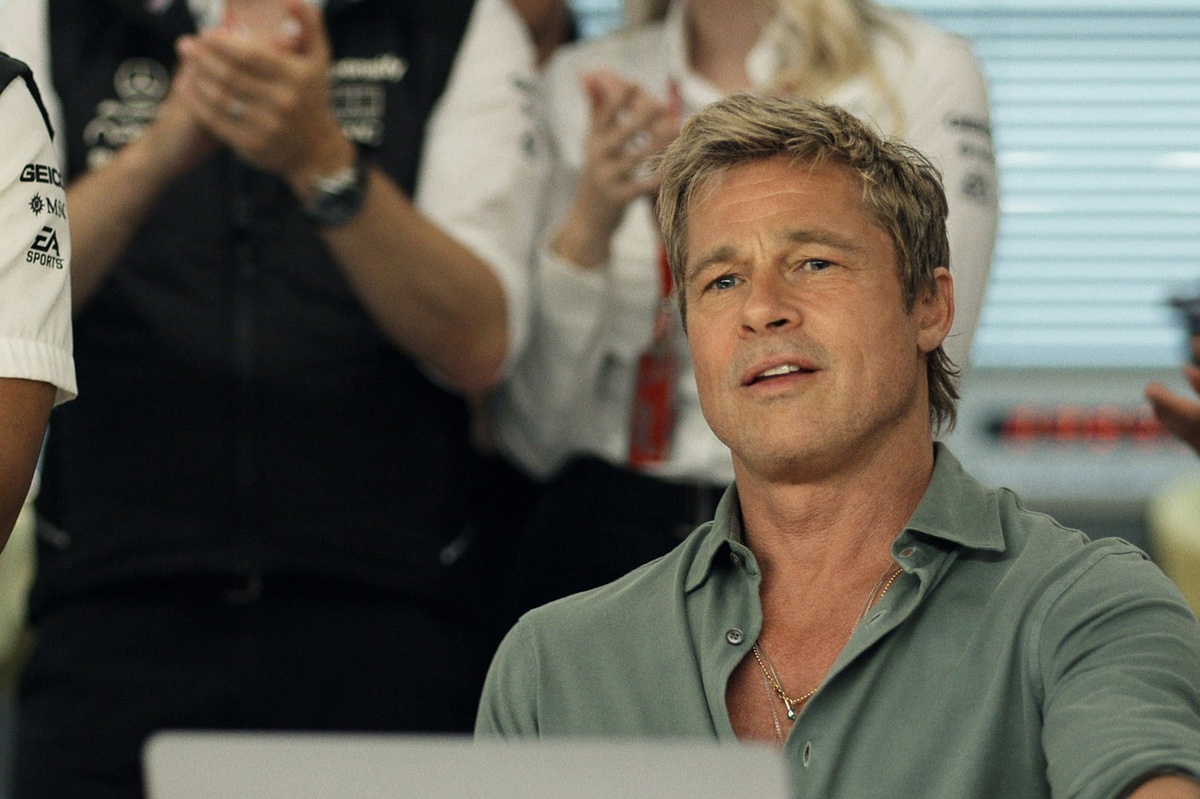
As Brad Pitt’s F1 movie lands on Apple TV on 12 December, American fans are about to get an at-home replay of a film that has done something pretty special: it made Formula 1 feel like a mainstream US blockbuster.
Long before the movie’s streaming debut, F1 already had a lot to tell of its success in the States. As we’ve mentioned countless times before on this website, Netflix’s Drive to Survive had primed the country, persuading it to embrace the championship, which was for so long stubbornly European. Now, the US “accounts for the largest share of respondents of any individual country”, according to the 2025 Global F1 Fan Survey, with 52 million fans.
Viewership exploded and social media stats skyrocketed as a younger, more digitally switched-on demographic began tuning in. ESPN saw a 135% jump over eight seasons. When the movie was released, with Pitt of all people leading and Lewis Hamilton one of the many talented people sitting behind the camera, fans of F1 could do nothing but embrace it.
A New York premiere for a European sport
The movie’s public moment came in the US with a suitably scaled premiere at Radio City Music Hall in New York City. Complete with red carpets and even a surprise visit from Hollywood’s Tom Cruise, the premiere saw Apple’s marketing machine come out in full to celebrate a global championship.
As the streets of the Big Apple were lined with cars, team principals and drivers, the United States was fully awakened to what only years ago was a niche obsession.
Box office success
The most obvious sign of the US’s warm welcome came at the box office. It opened to $57million in the United States and Canada, topping the domestic box office on its first weekend ahead of projections.
By the end of its cinematic run, F1 earned around $189.5million in the US and Canada, with $631million globally. It became the highest-earning racing film ever made and the most successful part of Pitt’s filmography.
Brad Pitt and Tom Cruise
Brad Pitt and Tom Cruise
In a country where F1 is dwarfed by the likes of the NFL, NBA, MLB and even NASCAR, these numbers were a surprise. It does, however, prove that with A-list talent, real-world access and heart-stopping visuals, US audiences are more than happy to buy a ticket.
What American audiences really thought
F1 earned mixed reviews. Some outlets loved it while others believed that the human story didn’t quite match the racing excitement. But the public – the real audiences that sought out tickets and paid to watch – was overwhelmingly positive.
Rotten Tomatoes sits on a 97% audience score.
Did the movie actually move the needle for F1 in America?
There is more and more evidence that the movie did more than just sell popcorn. It’s attracted millions of people to the championship who simply weren’t fans before this, boosting interest in races and TV coverage. A number of circuits this year saw record ticket sales, and the popularity of races in the US hasn’t been higher.
The timing of this suits, too. In October, Apple won the US media rights to Formula 1 with a five-year contract starting in 2026. This will see the technology company broadcast live grands prix, qualifying, and other sessions to the US market.
For US viewers, this means the same platform hosting the movie will also be the home of the championship itself. And it comes just in time for Americans to cheer on the grid’s new team, Cadillac.
It’s all coming together for F1 in America.
To read more Motorsport.com articles visit our website.
