For cyclists the most dangerous shark in the world isn’t the Great White but a lesser-known, entirely metaphorical species, one that quietly circles us in middle age: the risk of heart problems. Only about 40 people suffered unprovoked shark-attacks in 2024, whereas thousands of riders were “bitten” by this figurative predator. The word unprovoked matters: just as surfers can be taken by surprise, many cyclists feel perfectly fit and calm before a heart incident suddenly strikes.
Like an overconfident surfer riding a tube, I was blissfully unaware of the danger encircling me. I had assumed I was better apprised of the risks, as the author of a book, The Midlife Cyclist, all about how to survive and thrive as an older rider. I have cycled for as long as I can remember, and competed for decades in road racing, time trialling, and off road. I knew my body well – or so I thought until, at the end of 2024, I began to feel far more fatigued than normal. At 62 years old, I had been working long hours, and my commute to the railway station, usually half an hour, was now taking nearly 40 minutes. Cycling had become a joyless slog.
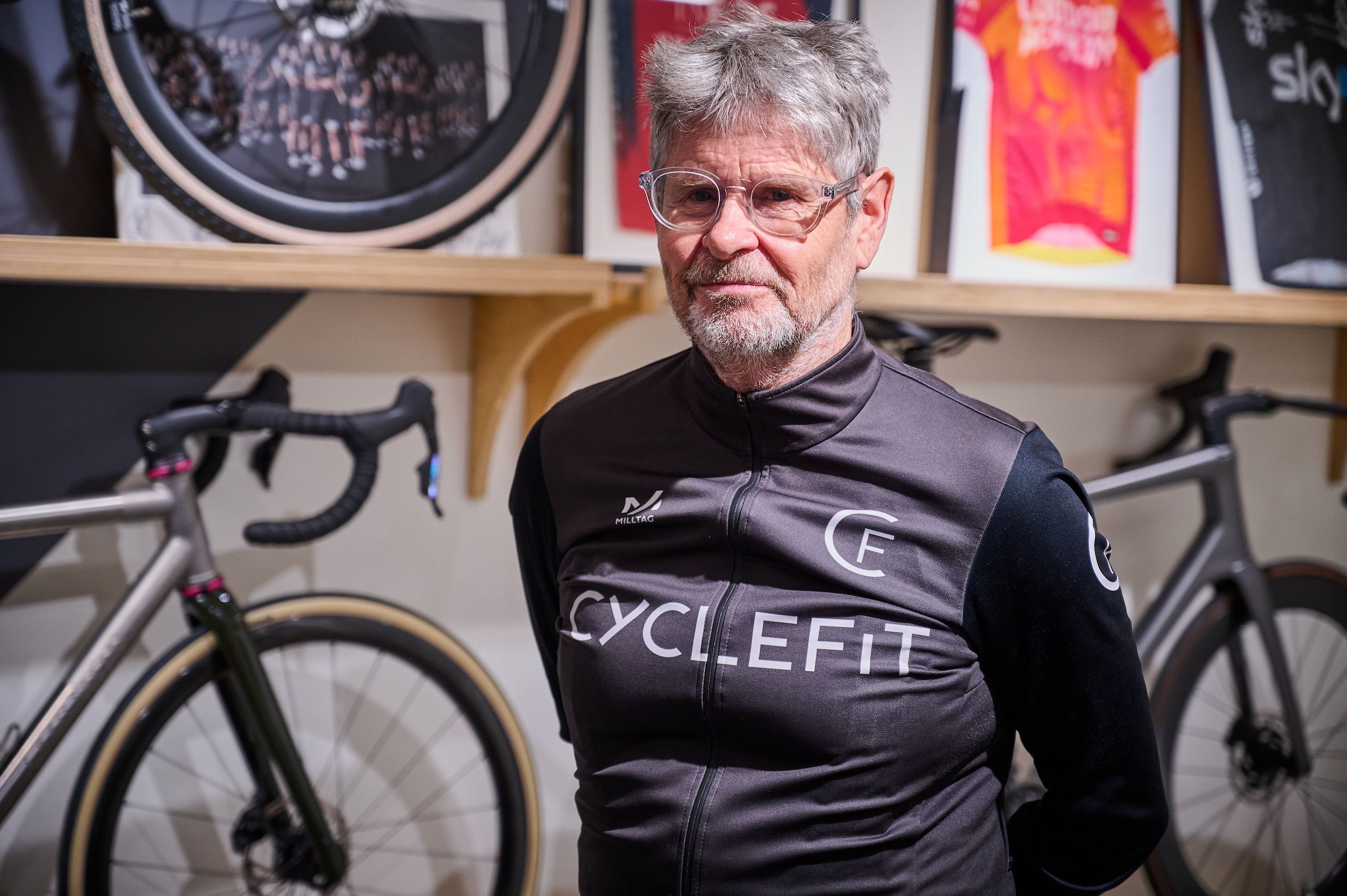
Cavell is a lifelong cyclist who for many years regularly competed in road races
(Image credit: Phil Cavell)
Climbing the stairs at work left me breathless, and I felt faint if I stood up too quickly. Eventually I accepted these symptoms as warning signs and, upon mentioning them to my wife, soon found a cuff on my arm and sensor on my finger. “Your pulse is 26 and blood-pressure is 85/50,” my wife said with a frown. The next morning I was sent for tests – bloods, BP, pulse and ECG – before being sent home to wait for the results.
I deteriorated over the weekend and was taken into A&E on the Sunday evening. Everything happened quickly and calmly as I was expedited to the cardiac ward and connected to various machines. For the next six days every beat of my heart was monitored and recorded, even while I was deep inside an MRI scanner. The medical team confirmed I had a condition called Mobitz type-two heart block, whereby the electrical signals from the heart’s upper chambers are progressively failing to reach the lower chambers.
Looking at the alien ECG and pulse read-out, I observed my heart’s weird dance – first rumbling around 24bpm, then skipping up to 50bpm, before plummeting back to 24 again. Essentially my heart had gone into limp-home mode; the ante-room to complete shutdown. Forty or 50 years ago, patients with this condition were sent home for quiet bed rest with the advice to get their affairs in order.
Failing to spot the signs
I had known for years that I had an abnormally low heart rate, known as bradycardia. My resting pulse was typically around 32bpm, and seven years ago I started to experience unusual heart rhythms and long heart pauses at night. I made the recommended changes to my lifestyle, slept more, cut out alcohol, and tried to de-stress my life. Yet I was still in denial about the seriousness of the problem.
My hypocrisy was breathtaking. First, I write a book about midlife cycling heart health best principles, then I relentlessly fail to join the dots around my own precarious health. It’s almost too painful to admit that I was also, at the same time, writing my second book, about racing cyclists’ unwillingness to listen to their bodies. I am humbled by what has happened to me – but am I any wiser?
After a week on the cardiac ward, I was wheeled into an operating theatre and fitted with a pacemaker. Once back on the ward, my heart had lost its funky syncopation and was metronomic once more. One of the younger medics called by to check my pacemaker’s function, connecting to it via Bluetooth to optimise the settings.
For the usually chilled-out surfer, the extruding, metal-grey dorsal fin advancing in their direction is a serious blot on the otherwise azure horizon. The shark’s-fin-shaped heart rate trace is the equivalent blot for the middle-aged cyclist. Suddenly we have a real worry on our hands. Is it OK to keep riding once we’re aware our heart is behaving strangely? Is it foolish even to be asking that question?
The most common cardiac issue in midlife cyclists is atrial fibrillation (AF). AF is caused by disordered electrical signals generated within the heart’s upper-chambers (atria), and most often presents as an abnormally high reading on your heart monitor, with a consequent 30% immediate drop in power. “Atrial fibrillation is five times more common in masters endurance athletes than among their sedentary peers,” says cardiologist Dr Nigel Stephens. Exact figures do not exist, but around 5–10% of long-term endurance athletes are affected by AF, compared to around 1–2% of the non-athletic population. Men are much more susceptible than women.
Booze is an aggravating factor too. Recent research has shown that even moderate intake of alcohol, when combined with intense endurance exercise, significantly increases the incidence of AF in veteran athletes. Intense endurance and alcohol do not mix well in older athletes. Thankfully AF is a very treatable condition – typically with a combination of medication and lifestyle changes. A procedure called an ablation is sometimes recommended, which seeks to remove the heart cells responsible for the jumbled rhythms.
Just as booze should be moderated, so too hard efforts, especially those that push us beyond our usual range – at least until you have been thoroughly checked and screened. Maximal efforts are inherently stressful on our biology. “These very hard efforts may aggravate silent conditions such as hypertension and aortic aneurysms,” says Stephens. “Screening for these conditions is important for some riders.” Midlife cyclists intending to train hard and/or race should visit their GP and request a QRISK score, which evaluates heart risk based on many variables including age, sex, blood pressure, cholesterol levels, family history, and body mass index (BMI).

Cavell is a fount of cycling knowledge – yet he was in denial about his own serious health problem
(Image credit: Future)
Returning to cycling
I am now assessed every six months at the pacemaker clinic, and Stephens is helping me optimise the pacemaker’s settings to allow me to get back to my more normal riding. For me, there remain some important unanswered questions. What caused my Mobitz II heart block? Were my cycling and my lifestyle to blame? “We don’t know what causes your form of heart block,” says Stephens. “In the elderly, it is usually associated with wear-and-tear fibrosis [scarring].” It’s possible that the explanation lurks somewhere in my medical history, but as yet the science can’t give me definite answers.
Is there a link between my bradycardia, decades of racing and subsequent heart problems? “No, your lifetime of exercise probably did not cause your heart block, nor did your bradycardia, which is typical of an athlete,” says Stephens, acknowledging the adaptive changes in the heart that occur in all endurance athletes. In other words, although I didn’t recognise the circling shark, at least I hadn’t provoked it.
For midlife cyclists like me who want to continue riding, there are some important rules of thumb. First, we should never ignore a change in symptoms or how we feel – which was a big mistake on my part. Second, don’t panic. Thanks to modern medicine, most heart problems affecting older athletes are eminently treatable, and timely diagnosis and treatment generally produce a more favourable outcome. Don’t wait for it to get worse – seek help now.
As cyclists, we have an advantage: we’re in touch with our bodies. A missing 50 watts or unexplained dip in performance are noticed and can be acted upon. Likewise any new, unexplained symptoms such as fatigue, feeling faint, or significant changes in pulse rate, blood pressure, or heart rate variability (HRV). If you experience an unusually high heart rate while training or racing, you should stop and seek medical attention.
In the end, my encounter with this metaphorical shark has forced a reckoning. I’ve discovered the hard way that even a lifetime of fitness does not grant immunity from the silent currents of age, stress and biology. What it can grant us, however, is awareness – the ability to feel when something is amiss, and the discipline to act before the danger closes in. My pacemaker is now my quiet companion, ensuring my heart ticks away with the steady rhythm I once took for granted, and my riding has begun to recover a sense of lightness and joy. I’m grateful for that.
What I’ve learned, above all, is this: our bodies are constantly whispering information, and midlife demands that we listen more carefully than ever. Fitness is not a shield but a tool, one that helps us recognise changes early and respond with clarity rather than denial. The shark will always circle, but we needn’t drift helplessly into its path.

Back on his bike: With pacemaker calling the rhythm, Cavell is getting back in the groove
(Image credit: Future)
Older riders: an evolutionary experiment
When I wrote my book The Midlife Cyclist, helped by cardiologist Dr Nigel Stephens, I explored an unsettling truth: we are the first humans in 12,000 generations to push our bodies intensely into ages when most of our ancestors were already dead. Modern endurance athletes are, in effect, a live epidemiological study. Crash-test dummies in lycra.
Exercise is without doubt the greatest health-protecting ‘medicine’ the pharmaceutical industry never invented, but its dose-response relationship is not linear. We train to provoke a biological and neurobiological reaction: apply acute stress now to stimulate long-term adaptation. But you can’t compress eight hours of sleep into two, nor can you fast-track recovery.
When recovery is ignored, we accumulate allostatic load – the combined wear and tear from training, poor sleep, alcohol, pollution, arguments, work stress and everything else our biology perceives as threat. Too many stressors too close together overwhelm the body’s ability to return to equilibrium. We become fatigued, irritable, sore, mentally foggy and on the brink of illness. Ageing slows every stage of recovery, further complicating the equation.
Most of the time, exercise is profoundly good for the heart – but, as Stephens noted when I interviewed him, “there are some abnormalities and some conditions in the heart which are aggravated, or even caused by, being physically active.”
WHEN BPM SIGNALS SOS
A slow heart rate is often a badge of honour for cyclists, indicating great cardiovascular fitness. But a BPM too low can augur serious problems, as Dr Nigel Stephens (nigelstephens.co.uk) explains.
There are no absolutes, but less than 50bpm at rest is slow and defined as ‘bradycardia’. Less than 40bpm is very slow and usually requires some medical evaluation. A low heart rate may be of no concern – natural genetic variation or an adaptation indicating increased fitness. It is often easy to distinguish by doing an exercise test. If the heart rate rises to match the demands of exercise, generally all is well.
A quite common cause is vasovagal syndrome. Here, the vagus nerve may inappropriately slow the heart. It is generally benign and managed with lifestyle measures rather than medical technology. It may be due to wear and tear in the heart’s own pacemaker, the sinus node. Typically seen older people, vasovagal syndrome may cause dizziness and fatigue and may require a permanent pacemaker.
A more serious cause, as in Phil’s case, is heart block. Here, the electrical signal from the sinus node is not conducted reliably to the pumping chambers (ventricles). It may be slow conduction (first degree), intermittently fail (second degree) or completely fail (third degree). In third-degree, the ventricles still pump, thanks to their intrinsic rhythmicity, but very slowly with no rise with effort. Higher grades of heart block carry a risk of complete blackouts and, for some, sudden death. They are generally effectively treated with a permanent pacemaker.
This feature was originally published in the 11 December 2025 print edition of Cycling Weekly magazine – available to buy on the newsstand every Thursday (UK only) while digital versions are available on Apple News and Readly. Subscriptions through Magazine’s Direct.
