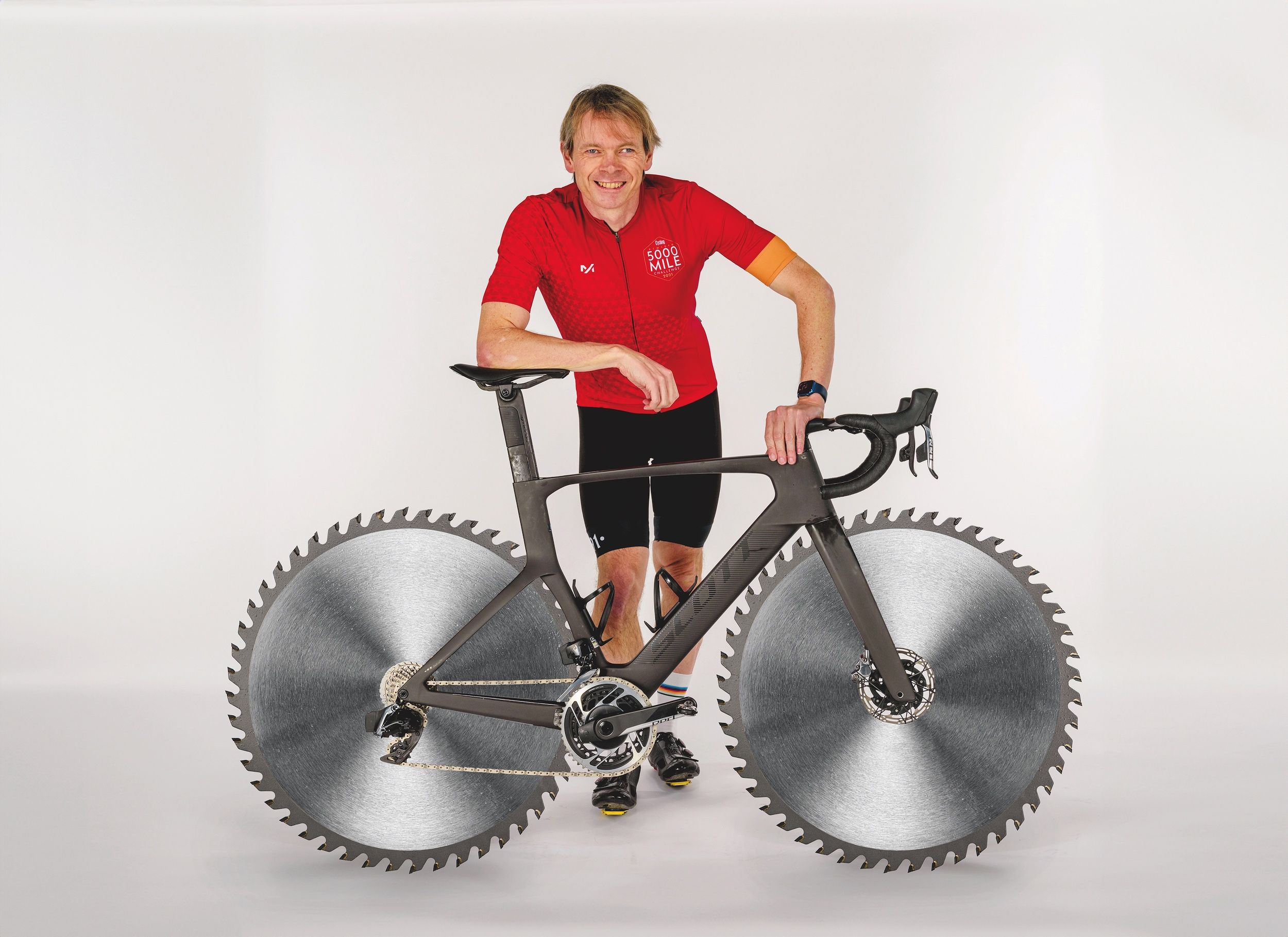
For a long time I thought that the biggest change I’d seen since I’ve been a bike rider was in clothing. New fabrics, better chamois pads, better fit, more sizes. It’s 10 times better, and at only 20 times the price. I don’t know in what festering mountain all the awful old polyester kit is refusing to rot, and I care not.
But recently I’ve realised that kit is no longer the biggest change. It’s the best road bike tyres. If you can’t remember the tyre technology of 15 years ago, you wouldn’t be able to imagine it. It was a time of superstition and witchcraft. Of science-defying magic-formulae passed from generation to generation.
Great inventions of cycling: The drop handlebar
Drop bars go back further than you think. The geometry of a penny-farthing, with the big wheel coming right up between the rider’s legs and the steerer above that, meant that a flat bar would produce an upright, elbows-out position with the hands a few inches in front of the chest.
A bar that drooped like a moustache over the rider’s thighs was the only way to produce a rideable position. When bicycles started using smaller wheels and a chain in the 1880s, the drop bar stayed, at least for racers. It kept the hands low enough while keeping the bike wheelbase about right and having a steerer and head tube long enough to make the bike stiffness.
In the early era only the very end of the drop was ever gripped. It was the introduction of cable brakes in the early 20th century that led to riders adopting a position higher on the bar, using the metal hood of the brake as an additional grip. Drop bars are little changed from then till now, other than several million variations of bend, width and depth. These tweaks are partly driven by marketing, partly by changing use, and partly by the need to compensate for whatever fashion is going on with frame dimensions and stem height.
Nothing compensates for changing frame design quite as easily as a pair of bars shaped to put your hands where they were always meant to be. Modern bars are rather retro.
Dear Doc
Dear Doc, A couple of weeks back I found a crack in my carbon frame. Panicked, I took it to a local specialist shop and showed it to a mechanic. He contemplated the crack for several moments.
Then he licked the end of his finger, and wiped it over the crack, which immediately disappeared. So I’ve discovered that the easiest way to repair a crack in a carbon frame is with bike mechanic saliva.
Unfortunately the only way to get it seems to be out of a live bike mechanic, and this is deeply inconvenient.
Yours,
Francis McCabe.
