Unexpected variations
[Note that Jon Speelman also looks at the content of the article in video format, here embedded at the end of the article.]
Just under a month ago at the 4NCL, I forced the draw in a position which – when the engines were let loose on it – turned out to be winning. Obviously this wasn’t ideal, and I was a little displeased with myself, but the winning line was sufficiently unexpected that I felt that it was very “missable”. In the moves leading up to the final position I had missed a couple of my opponent’s moves and also, in my mind’s eye, put my queen en prise in one variation so it was really fair enough. The game appears in the pgn and these two diagrams encapsulate the critical phase.
Here I played
23.d5
almost instantly, and was very annoyed with myself when I realised that after
23…cxd5
if 24.Bc3, Black has …Ne4, which is obviously unclear. After a while, I decided on the sacrifice
24.Bxh6
which is clearly enough to draw, hoping that when I got there, I would find something more. It continued
24…gxh6 25.Qd2 Ng8
Of course not 25…Kg7? 26.Rxc8
26.Qd3 Nf6 27.Qe3 Ng8
And here I bit the bullet and played
28.Qd3?
to force the draw.
It’s pretty obvious that to continue the attack, you have to play
28.Rxc8 Qxc8 29.Qd4+ f6
but regaining the exchange looked unclear, and I couldn’t see anything else. Can you do better and find the next move and crucially what it threatens? The idea is both very simple and conceptually difficult in the midst of a sacrificial attack.
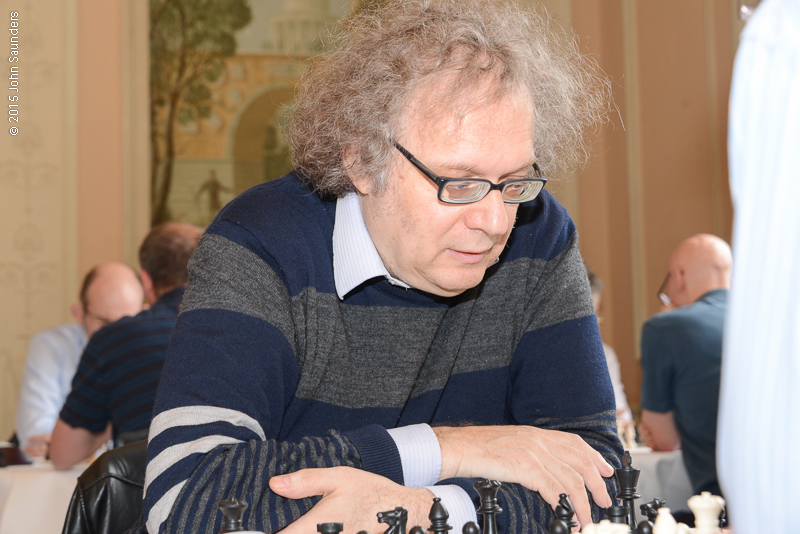
Jon Speelman | Photo: John Saunders / John Nunn 60th Birthday Blitz Tournament (2015)
I’m writing(a day late) just after the end of Wijk aan Zee. I’ve watched so many tournaments over the years but this must be one of the very best that I’ve ever seen. With such a young and ambitious lineup, the majority of games have been fiercely fought, often in positions which were unfamiliar – at least to me.
The meta story was of the two Uzbek players being on fire, the Indians under par, and youth very much on the ascendant (there was little else on offer). Most notably, 14-year-old Yagiz Kaan Erdogmus, whom Magnus Carson has dubbed “the strongest 14-year-old in history”.
I don’t stream very much any more, but I did do a couple of rounds including the final one on Sunday, and Erdogmus’ defence in a very dangerous looking position was very impressive.
21.Rxf7!
Morally forced since otherwise …Be6 will equalise.
21…Rxf7 22.Qg6
Now there is only one defence. Can you find it? It’s
22…Bg4!
Bluebaum now tried
23.Rf1
Data, plans, practice – the new Opening Report In ChessBase there are always attempts to show the typical plans of an opening variation. In the age of engines, chess is much more concrete than previously thought. But amateurs in particular love openings with clear plans, see the London System. In ChessBase ’26, three functions deal with the display of plans. The new opening report examines which piece moves or pawn advances are significant for each important variation. In the reference search you can now see on the board where the pieces usually go. If you start the new Monte Carlo analysis, the board also shows the most common figure paths.
While streaming, I thought that 23.Qxg4 was better. Can you find the answer to 23…Raf8 (which seemed obvious to me)? And can you find the clever defence that Black should play to equalise completely?

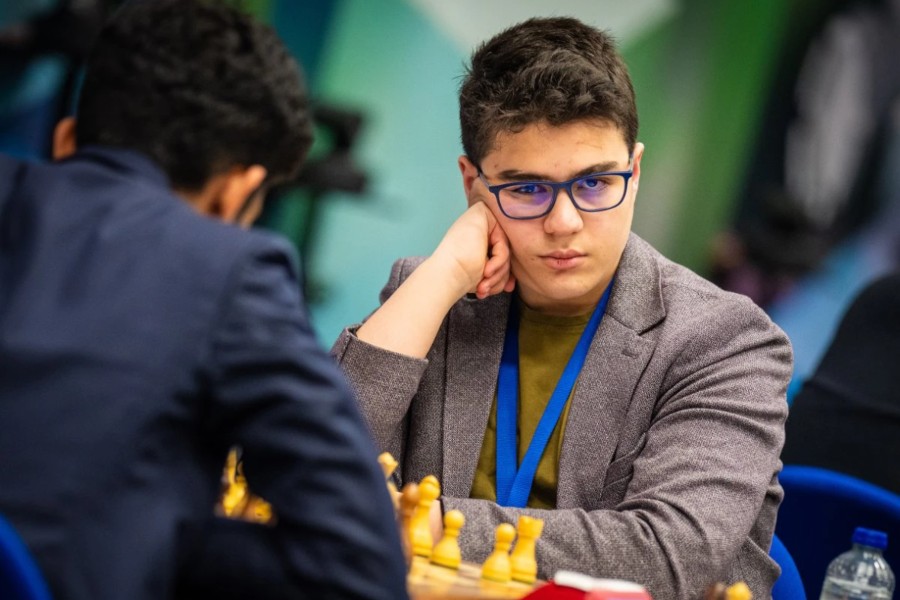
Yagiz Kaan Erdogmus | Photo: Tata Steel Chess / Lennart Ootes
Select an entry from the list to switch between games
The King’s Indian Defence is one of the most dynamic openings in chess – and Pirc structures share much of the same DNA. With colours reversed (the King’s Indian Attack), these setups can be just as powerful. What may look modest at first often transforms into highly complex middlegames, where timing, precision, and a deep feel for dynamics make all the difference.
Free video sample: Introduction
Free video sample: Misplaced Pieces
