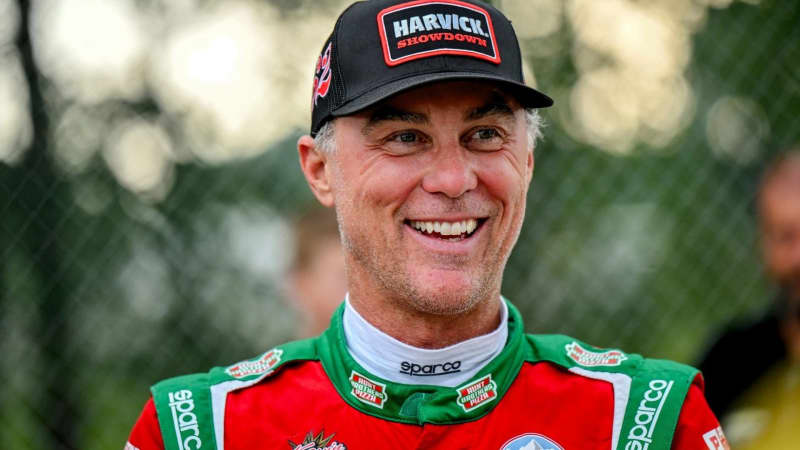
NASCAR is set to bring back the Chase format after persistent calls from fans and industry insiders to restore the points system. While the sanctioning body did not revert to the full-season format across all 36 races, it reinstated the original Chase concept to strike a balance between consistency and victories. Among other veterans, the former NASCAR Cup Series champion Kevin Harvick also believes the move is a viable compromise.
Competitors sought greater value from cumulative performance over multiple races, while television partners favored a Chase structure that would make the final 10 weeks more compelling. To Harvick, the development carries a familiar ring, prompting him to remark that“what’s old is new again.”
Advertisement
After the last few seasons clouded by controversy, antitrust litigation, and criticism over the legitimacy of crowning a champion through the playoff system, the return of the Chase will be a big shift. Harvickalso sees the change influencing grassroots racing. He believes the Chase could alter not only NASCAR’s competitive framework, but to some extent, it might also impact the dynamics at local tracks.
“The Cup series in NASCAR is what the parade. When they go to playoffs formats and change things, or restarts, or whatever it is, they are the leader of the racing industry,” he said in a recent video posted on X. In his view, the sport’s direction at the top filters down through the broader ecosystem.
“That kind of sets a tone for the short tracks. I think you’ll probably see some of that back up. We saw that in Dirt Late Model Racing, Lucas Oil, Late Models, are back up on their championship formats. The racers, they like the purity of what we do. And having every week matter, you can’t be out here… They run 40-45 dirt races this year. And a lot of these guys will chase championships, and they want every week to matter.”
That said, with the reintroduction of the Chase format, mistakes will once again carry weight. When drivers err, the impact will be reflected in the points they score, forcing teams to repair crashed cars and return to the track to scrape for incremental gains. That hunt for single points throughout a season will enhance the sport’s credibility and reward resilience as much as speed.
Advertisement
Under the renewed structure, every single lap of both the regular season and the final 10-race Chase matters, as all points accumulate over the campaign. Sustained excellence will become the defining metric. The shift, however, will complicate the path for specialists.
Drivers who thrive at road courses or niche layouts and previously relied on a win-and-you’re-in wildcard may now face a steeper climb, as qualification hinges solely on the points table.
They must deliver consistent results across all track types to secure a berth inside the top 16. Meanwhile, Kyle Busch pointed out a concern with the format that a crash during the regular season could derail a contender, since winning a single race no longer guarantees automatic entry into the Chase.
Reflecting on the previous iteration of the format, Busch noted that getting “wrecked once or twice” would eliminate a hopeful outright, leaving them without a title chance. And with contact frequency increasing as drivers run over each other, he suggested the new environment might level the field, as widespread attrition in the last 10 races will make sustaining consistency even more difficult.
Advertisement
The post Kevin Harvick Reflects on NASCAR’s Return to the Chase Format and What It Means for Grassroots Racing appeared first on The SportsRush.
