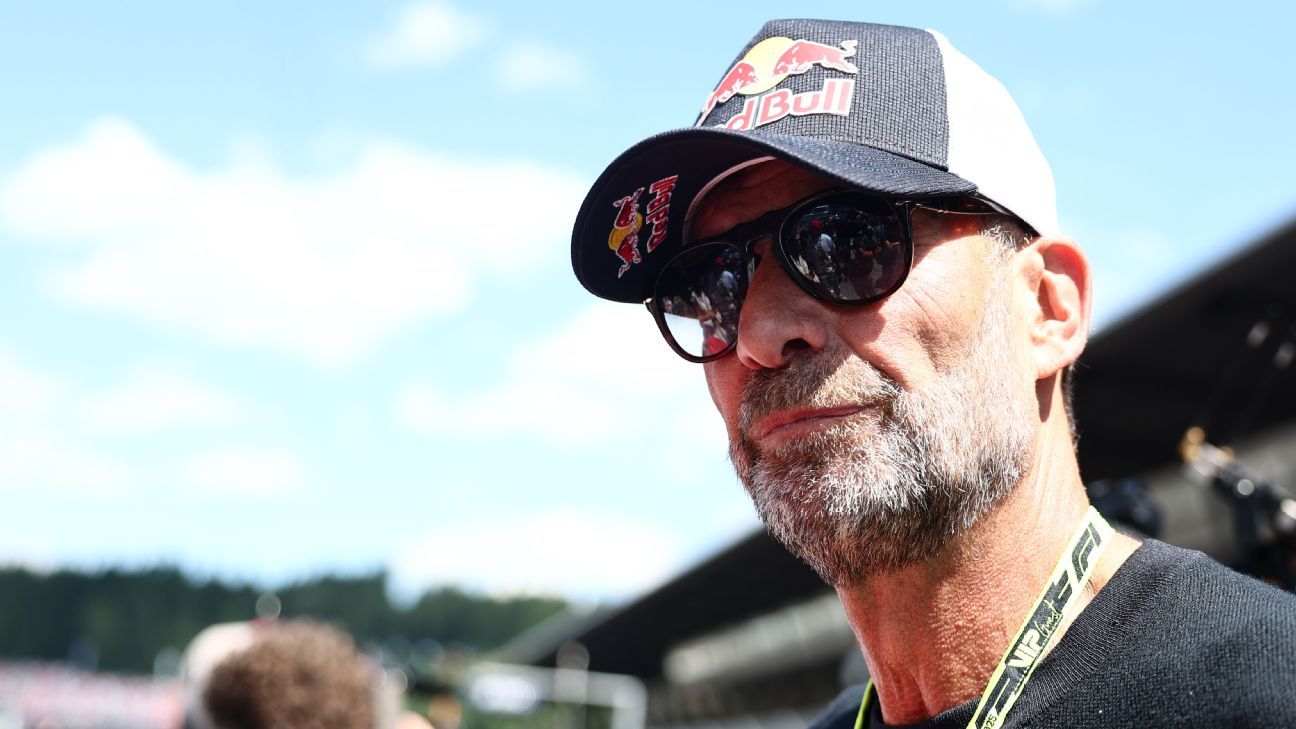
When Jürgen Klopp joined Red Bull as its new “head of global soccer” in January 2025, fans in Germany and England were stunned. Known for his time at Mainz, Borussia Dortmund and Liverpool, three clubs with cherished fan culture and storied histories, it seemed odd to many fans and observers of the game when he became part of a multi-club ownership construct that has often been criticized for artificially building up teams. At the same time, those around the 58-year-old manager suggested that he would be merely a figurehead, shaking hands and generally being the face of Red Bull’s efforts in football.
A week shy of his first anniversary with the energy drink giant, it is fair to say that Klopp is far more than that.
The perception of his role at Red Bull changed rather quickly when he showed up at RB Leipzig training sessions and became involved in transfer business. Oliver Mintzlaff, who previously served as Leipzig’s chief executive and is now Red Bull’s CEO of corporate projects, called Klopp the company’s “marquee signing without any fee.”
Red Bull’s portfolio of clubs is among the most far reaching in world football: There’s Leipzig (which it majority owns, although crucially it does not have a controlling vote, complying with German football ownership regulations), RB Salzburg in its home country of Austria, the New York Red Bulls in MLS, Red Bull Bragantino in Brazil, RB Omiya Ardija in Japan, and the company bought stakes in Paris FC and Leeds United in 2024. The multi-club ownership structure is growing, and Red Bull is as ambitious as ever.
From the dugout to the dressing room to the boardroom
“I talked to [Klopp] on the phone for maybe one-and-a-half to two hours,” Johan Bakayoko said after moving to Leipzig from PSV Eindhoven. “We really talked about everything, and I thought to myself he really understands football.”
Klopp wasn’t just giving the highly touted Belgium winger a trademark smile and a handshake at the contract signing. He had steered Bakayoko toward Leipzig despite several other suitors. “Of course, he understands football, and I got the feeling that he really knew what should be done to take me where I want to be,” Bakayoko added. “And that had a big impact on me.”
In the end, Leipzig paid an €18 million transfer fee to complete the signing, though the 22-year-old has registered three goals in his first 786 minutes of football for Leipzig.
Bakayoko was arguably the headline arrival in an extensive summer rebuild for Leipzig. After losing Benjamin Sesko to Manchester United, Loïs Openda to Juventus and Xavi Simons to Tottenham Hotspur, the Bundesliga side spent a reported €92 million in transfer fees on players aged 22 or younger: Bakayoko, Yan Diomande, Conrad Harder, Ezechiel Banzuzi and Andrija Maksimovic.
So far, it’s proved to be shrewd business. The club sits fourth in the Bundesliga, just three points behind second-placed Borussia Dortmund, following a hugely disappointing 2024-25 in which Leipzig finished seventh and failed to qualify for European competition.
That poor campaign came with consequences. In March, Leipzig parted ways with manager Marco Rose.
Rose played 157 games for Klopp at Mainz between 2002 and 2008. Despite the two having a two-decade relationship, Klopp eventually supported the decision to sack his former charge.
The two were at odds after the game at Borussia Mönchengladbach on March 29. Klopp had given an agreed-upon motivational speech to the players before kickoff, but contrary to discussions beforehand, Rose then followed that up with a talk of his own. Leipzig lost, and Rose was sacked the next day.
A couple of weeks prior, Klopp had stood in the way of Rose’s dismissal. After the Gladbach incident, though, he was no longer against it. Ole Werner took the reins in July and has so far exceeded expectations.
Klopp has to live with the fact that the lines between him and his supposed “buddies” are drawn at every turn. When New York let go of manager Sandro Schwarz and sporting director Jochen Schneider at the end of the 2025 MLS season, a German sports outlet ran with the headline “Klopp throws his buddy out.”
Just like Rose, Schwarz played under Klopp at Mainz, and the two are quite close. As the past 12 months have illustrated, those relationships have not protected Klopp’s friends when the development of a Red Bull-funded or -owned team is at odds with their continued employment in the organization.
The firings of Rose and Schwarz, however, don’t mean Klopp is uninterested in being surrounded by familiar faces. Because Leipzig’s managerial search took quite some time during the summer, Klopp wanted to hire someone with experience who could scout coaching candidates long before one is needed. He chose Jürgen Kramny for the job — yet another former player from his Mainz days.
Kramny managed VfB Stuttgart and Arminia Bielefeld between 2015 and 2017 but had been out of the limelight before joining Red Bull. He coached a fifth-division side last season.
“Why did no one have Coach X, who manages to finish 12th [with a team] with whom others would have been relegated, on their radar? Because we didn’t look [closely],” Klopp explained his decision to hire what is essentially a manager scout.
Creating new roles and improving the overall strategy of Red Bull’s football endeavors, along with lengthy discussions with prospective signings, have been Klopp’s central purpose. Such responsibilities align seamlessly with his desire to build things, which he did at Mainz, Dortmund and Liverpool. All three were struggling before Klopp took over, and he even initiated a second rebuild at Anfield before he closed that storied chapter of his career.
However, even though the usually energetic German seemed burned out toward the end of his tenure at Liverpool, it is hard to imagine that Klopp will remain a boardroom figure for the rest of his career. While a return to Liverpool seems farfetched, there are plenty of other big-name clubs who would be interested in his services.
When Klopp joined Red Bull, it was indicated he could leave his role if a major opportunity — managing Germany, for example — were to arise. Whether such a departure would go smoothly is another matter. Mintzlaff seemingly hopes that Klopp has no desire to leave the company.
“Jürgen has made clear that he doesn’t want to be a coach at the moment,” Mintzlaff said. “Of course, it could be that this changes in this period of his life.”
Mintzlaff stressed that Klopp has many ideas and intends to move things forward at Red Bull. That is a blessing for the company because, unlike in Formula 1, the energy drink giant is still fighting for acceptance in the football world, particularly in Europe.
As for Klopp, he might not be at football’s forefront as he was for more than a decade, but he is still the same vivacious conductor. And it is hard to imagine that he won’t return to the dugout sooner or later.
