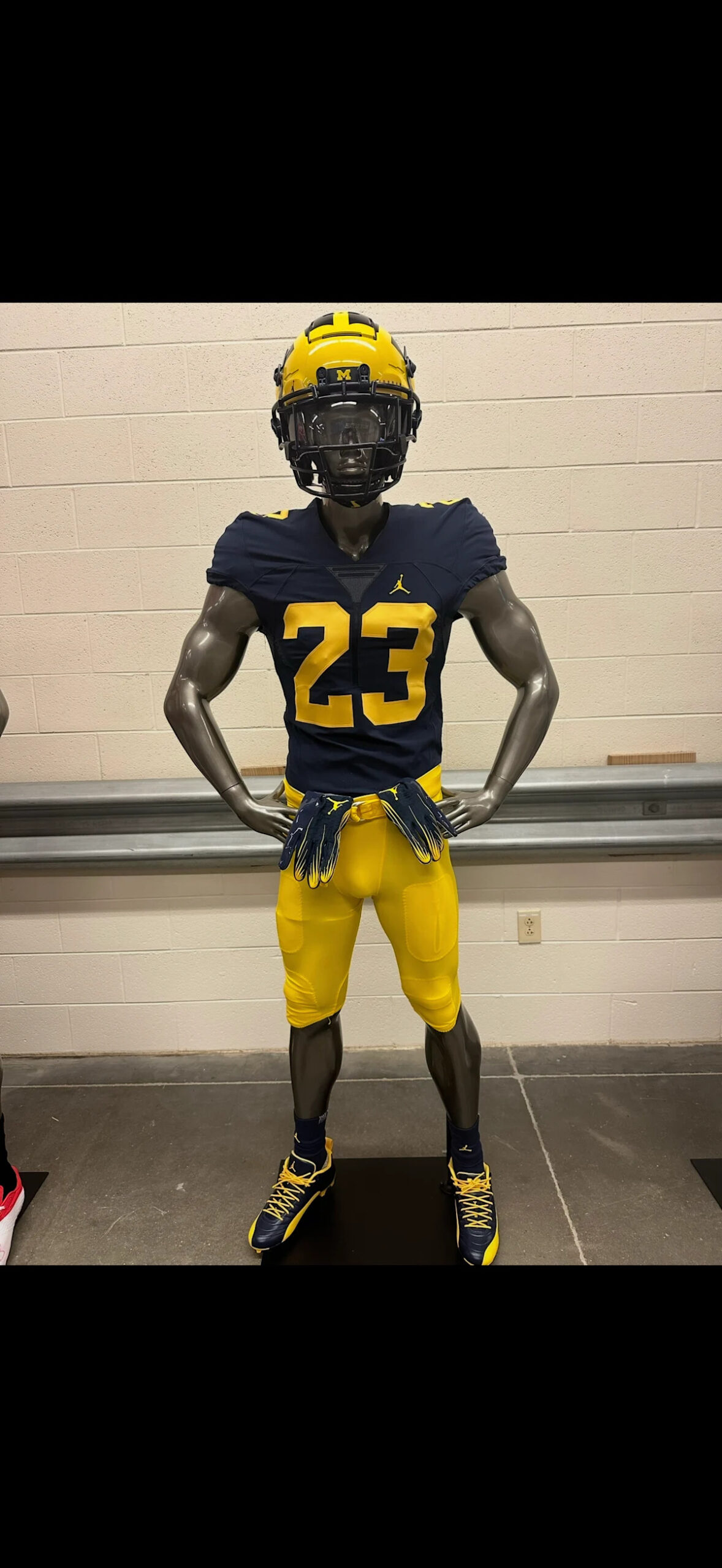
On January 23, 2026, the NCAA Division I Cabinet officially greenlit a transformative change for the landscape of collegiate athletics: the approval of commercial sponsorship patches on team uniforms. Effective August 1, 2026, programs across the country will be permitted to feature up to two commercial logos on their jerseys, marking a definitive end to the “amateur-only” aesthetic that has defined the sport for over a century.
For a program like Michigan Football, steeped in tradition and anchored by the iconic winged helmet, this decision represents a fascinating crossroads between preserving a historic brand and competing in a modern, revenue-sharing era.
Advertisement
The New Rules of the Game
The NCAA’s new policy provides clear guardrails for how these advertisements will appear:
• Quantity: Teams can display up to two patches on uniforms and apparel, with an additional logo permitted on equipment (such as helmets or pads) during the regular season.
• Size: Each patch is limited to a maximum of 4 square inches.
• Scope: While approved for the regular season and conference championships, the patches are currently restricted during NCAA-run championships (like the NCAA Tournament in basketball), though the College Football Playoff—which is not an official NCAA championship—is expected to allow them.
Advertisement
The driving force behind this shift is the House v. NCAA settlement, which allows schools to share up to $20.5 million in annual revenue directly with student-athletes. To fund these multi-million dollar commitments, athletic departments are aggressively hunting for new cash flows.
What This Means for Michigan Football
Michigan occupies a unique space in this discussion. As the winningest program in college football history, the “Block M” and the winged helmet are global symbols. Athletic Director Warde Manuel has previously indicated a pragmatism toward the move, noting that Michigan already wears patches for bowl games (like the Rose Bowl) and neutral-site openers.
1. The Financial Windfall
Advertisement
Industry valuations suggest that a jersey patch for a “blue blood” program like Michigan could command between $6 million and $12 million annually. For the Wolverines, this revenue is not just “extra profit”—it is a necessity. With the university committed to revenue sharing with athletes to remain competitive in recruiting, the jersey patch becomes a vital tool to bankroll the player-payment pool without depleting the general athletic budget.
2. The Battle of Tradition vs. Commercialization
Few fanbases are as protective of their uniform as Michigan’s. The Wolverines only recently added the Jumpman logo to their jerseys in 2016, a move that was met with widespread acclaim because of the brand’s prestige. Adding a corporate logo—perhaps a Michigan-based giant like Ford, Rocket Mortgage, or Delta—will be a delicate balancing act.
Expect Michigan to take a “premium” approach. Unlike some smaller programs that might accept any high-paying bidder, Michigan will likely seek a partner whose brand colors and values align with the “Leaders and Best” mantra, ensuring the patch feels like a partnership rather than a billboard.
Advertisement
3. Recruiting and the “New Era”
In the modern NIL (Name, Image, and Likeness) environment, visibility is currency. Aligning with a major corporate sponsor on the jersey can lead to co-branding opportunities for the players themselves. If a player is seen every Saturday wearing a specific brand’s logo, it opens doors for personal endorsements with that same company, further sweetening the recruiting pitch for top-tier talent.
Looking Ahead
As the 2026 season approaches, Michigan will join the ranks of the NBA, MLB, and NHL in the “patch era.” While some purists may scoff at the sight of a corporate logo on the maize and blue, the reality is that the financial structure of college football has changed forever.
Advertisement
By leveraging its massive global reach, Michigan has the opportunity to turn 4 square inches of jersey space into a competitive advantage that keeps the program at the top of the Big Ten and the national stage.
