Interesting battles in six-day match
In almost every chess game there comes a moment when you just can’t go on without tactics. You must strike, because nothing is more annoying than missing a winning combination in the decisive situation, and thus giving away the advantage you have worked for the whole game. So it is vital to train tactics properly – and Master Class Tactics offers you the perfect tool for this! On this Fritztrainer, IM Oliver Reeh has compiled his favourites from the CBM column “Tune your Tactics” issues 219 to 227.
Free sample video: Introduction
Free sample video: Do you know the Archangelsk? / Sukovic – Kazakousky
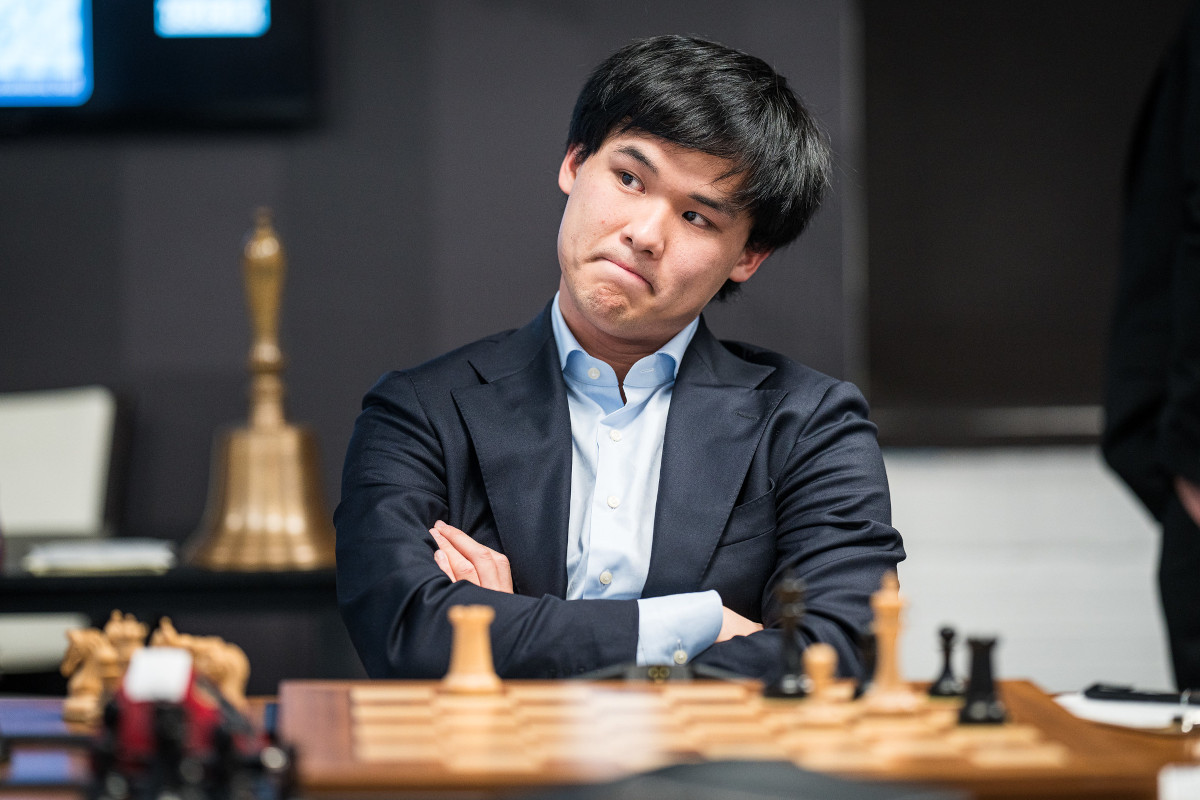
The Battle of the Minds 2026 was a 12-game head-to-head contest staged in Sharjah, United Arab Emirates, from 7 to 12 February. The encounter brought together US grandmaster Awonder Liang and Emirati grandmaster Saleh Salem in a six-day match combining rapid, classical and blitz chess. The time control for the classical segment was 90 minutes per player with a 30-second increment, while 15+20 and 3+2 controls were used in the rapid and blitz sections, respectively.
Four rapid games were played on the opening day, followed by one classical game per day across four days. The match concluded with four blitz games on the final day. In the scoring system used, each rapid and blitz game counted for one point, while each classical game was valued at two points.
Liang established an early advantage by scoring 2½–1½ in the rapid portion. After a short draw in the first game of the classical phase, the following three encounters were closely fought. Salem secured a victory with the black pieces in the second classical game, which was followed by a 102-move draw. Liang then responded by winning the final classical encounter with white, preserving the margin he had built at the outset.
In the blitz session, all four games were won by the player with the white pieces. Thus, Liang’s performance in this segment ensured an overall match result of 8½–7½ in his favour.
Although Liang dropped 4.8 rating points after drawing the classical section against his lower-rated opponent, he remains above the 2700 mark and continues to be one of seven United States players rated 2700 or higher in the live ratings list. At federation level, the United States currently head the average rating table (based on each nation’s top ten players) with 2727, followed by India on 2712 and China on 2654.
Liang 1-0 Salem
Classical game #4
All games
In this video course, Grandmaster Ivan Sokolov explores one of the most intriguing and under-examined areas of modern chess: reversed opening systems, focusing on the Reversed Grünfeld and the Reversed Dutch. At first glance, these two systems seem unrelated. However, they share a common strategic challenge: the value of tempi, structure, and psychology when familiar openings are played with colours reversed. Drawing on his long professional experience, Sokolov explains why these positions are far more subtle than they appear and why traditional engine evaluations often fail to capture their true complexity.
Free sample video: Introduction
Free sample video: Larsen’s b4 Plan vs Reversed Stonewall Setups: Larsen – Spassky
