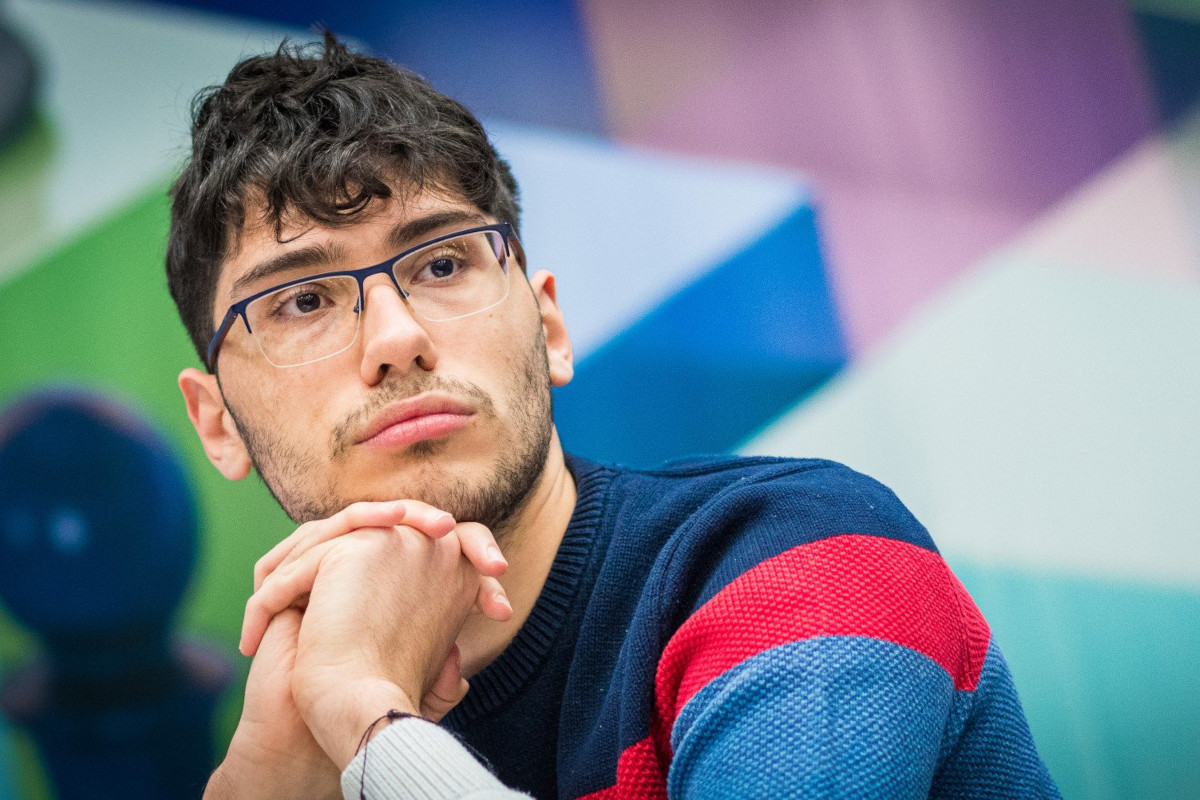
London Chess Classic, Elite Tournament, Round 1
All ten participants in the Elite Tournament at the London Chess Classic have an Elo rating above 2600, with Alireza Firouzja topping the field at 2762. Yet many observers still wonder how ambitious the 22-year-old, long regarded as one of the world’s greatest talents, truly is.
He has already reached number two in the world rankings twice, became the youngest player ever to cross the 2800 mark, peaked at 2804, and qualified for the Candidates Tournaments of 2022 and 2024. But at both events he fell short of expectations and never came close to contending for first place — or the World Championship match that comes with it.
At the Grand Swiss 2025 in Samarkand, a win against Matthias Blübaum in the final round would have secured him a spot in the 2026 Candidates, but Blübaum managed to hold a difficult position to a draw. As a result, Firouzja finished only third and narrowly missed out on his third Candidates appearance.
He also declined the opportunity to reach the Candidates via the World Cup, choosing not to play in Goa.
Sam Shankland, Firouzja’s opponent in round one of the London Classic, was in Goa and only went out in the quarterfinals, losing the tiebreak to Andrey Esipenko. Against Firouzja, however, he could only scrape a draw — with considerable effort and a bit of luck.
The Grünfeld is a highly dynamic opening in which Black’s position often seems to hang together by a single thread; and yet, this apparently precarious equilibrium appears to be enough to make it entirely viable — up to the highest level.
Gawain Maroroa Jones and Nodirbek Abdusattorov, the number two seed, also played a theoretical duel. However, it was very short and, on closer inspection, offered no theoretical insights. In a line of the Caro–Kann Defence, Jones — known as a strong theoretician — opted for a knight move in a well-known position on move nine, a choice that almost forces a draw by repetition.
The Caro Kann is a very tricky opening. Black’s play is based on controlling and fighting for key light squares. It is a line which was very fashionable in late 90s and early 2000s due to the successes of greats like Karpov, Anand, Dreev etc. Recently due to strong engines lot of key developments have been made and some new lines have been introduced, while others have been refuted altogether. I have analyzed the new trends carefully and found some new ideas for Black.
The other three games of the opening round also ended in draws.
Results
Standings
Games
Schedule
