Big picture, the NBA is in a really good place. We’re seeing record-setting attendance. Viewership is up significantly year-over-year. The league just struck a $76 billion media deal. Franchise values are higher than ever.
But it’s not perfect. To steal the HoopIdea motto from my pals Royce Webb and Henry Abbott: Basketball is the best game ever. Now let’s make it better.
Advertisement
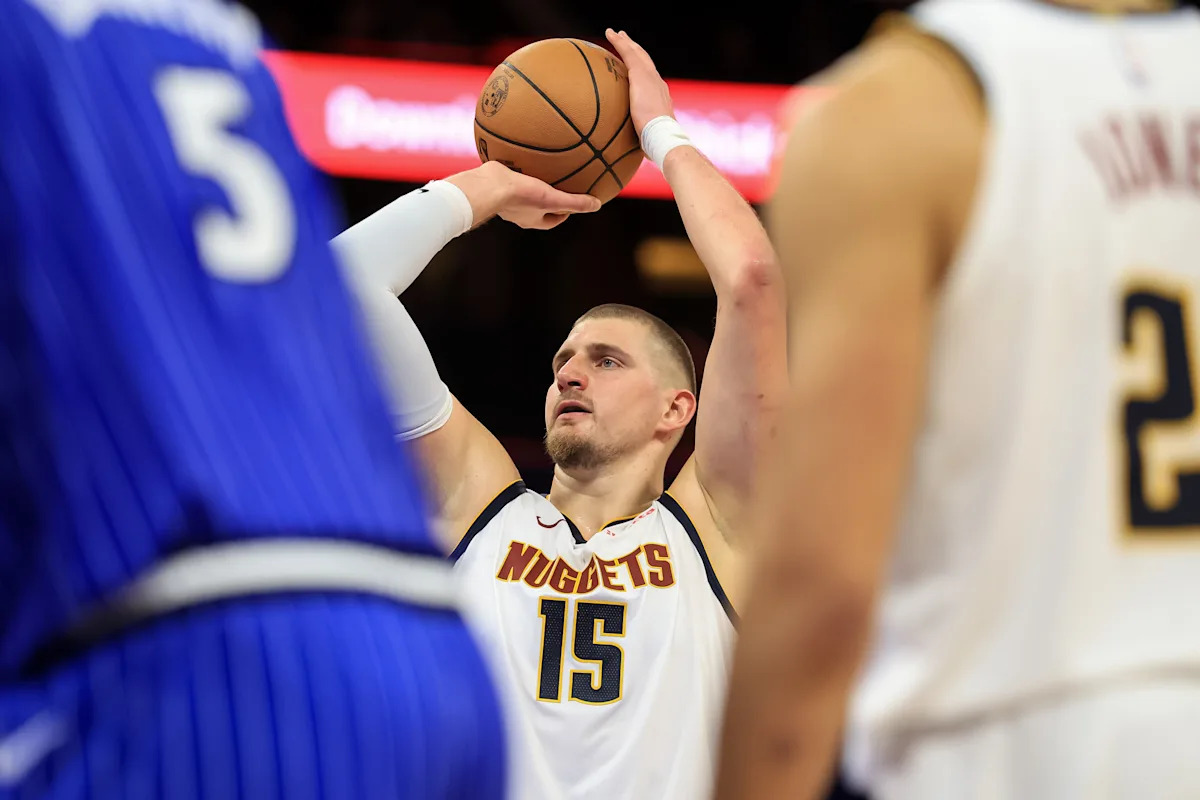
The biggest slack in the system is that star players aren’t playing enough games. The biggest names used to miss only one out of every 10 games. Nowadays, we’re seeing one out of every three games. Nikola Jokić, arguably the best player in the game, is the latest superstar to be sidelined for a big chunk of the season. At the moment, the Jokić injury has brought a lot of hot-button topics to the forefront.
So, let’s get to it. Here are seven New Year’s resolutions for Adam Silver and the NBA to consider.
1. Make it a 58-game regular season
It’s time. Play each team twice. Once at home, once on the road. Raise the stakes for every game. Kill the dreaded back-to-back. Football-ify the weekly schedule (say, Tuesdays and Sundays). Lower the risk of injury. Let everyone breathe. Let everyone prosper.
Advertisement
In 2019, Kevin Arnovitz reported that the league and its teams formally explored the 58-game idea as part of a comprehensive plan to add a not-yet-established in-season tournament and play-in tournament. Those two tournaments have been a success. Now it’s time for the other part of that to come to fruition: the 58-game season.
Any momentum of a 58-game season came to a screeching halt during the pandemic-shortened seasons, which did not see a dramatic improvement on the injury front. Commissioner Adam Silver has argued that the league studied the COVID-affected seasons and found no evidence that reducing games would lead to a corresponding improvement in player health. You don’t need to be a rocket scientist to see why using the pandemic seasons as a control group would be a foolish idea.
The NBA knows the best product is when games are spaced out without back-to-backs and plenty of days allowing for the body to recover. Proof of that understanding has been staring at us all along: look at the playoffs! The NBA doesn’t allow back-to-backs in the playoffs. I wonder why! Games lost due to injury go way down in the playoffs, partly because players are willing to play through bumps and bruises when the stakes are highest. But star participation skyrockets in the playoffs, I would posit, because the NBA has built in proper recovery time and bodies aren’t still raw from the night before.
Advertisement
Beyond the upside of injury prevention, I’m a firm believer that a 58-game season would do wonders for the NBA product. It would solve much of the tanking problem. Fewer games means more teams in the hunt for playoff and play-in spots for a larger chunk of the season. Furthermore, and this is a huge one, it would standardize the schedule so every fan and every team would know what day of the week they’re playing. College football has Saturdays. NFL has Sundays. Fans build their entire week around football. It’s appointment viewing. NBA has … well … it depends. A 58-game schedule would make appointment viewing a reality.
I also don’t think a 30% reduction in games would lead to a 30% reduction in revenues. At least not in the long run. If players aren’t run into the ground trying to play 100 games a year (with playoffs), they’re more likely to have longer (and more reliable from a fan/TV partner perspective) careers.
2. Abolish the draft. Establish rookie free agency.
Charlie Munger once said, “Show me the incentive and I’ll show you the outcome.” By giving the bottom-three teams the best odds at the No. 1 pick, the NBA is indirectly asking teams to lose on purpose to maximize the chance that the next superstar falls into their laps.
Advertisement
Instead of a draft, the league should televise a Rookie Signing Week and — gasp! — allow the most-qualified individuals to choose their workplace. Rather than guaranteeing ping-pong balls, the league should replace draft odds with a cap exception proportional to their previous record. The worst teams would have marginally more money to offer the Cooper Flaggs of the world, but the advantage would only go so far. Organizational competence would matter much more when teams have to pitch the best prospects about why they should be the team they sign with. Right now, organizational incompetence is what matters most.
Would Cooper Flagg have landed in Dallas if he had a choice? (Photo by Mike Lawrie/Getty Images)
(Mike Lawrie via Getty Images)
Anyone clutching their pearls about the Los Angeles Lakers or New York Knicks loading up on talent should take a deep breath. Elite players want to be the star. That means playing time, the ball in their hands and, yes, money. If you don’t believe me, look at how top recruits choose their college program.
Massachusetts native AJ Dybantsa chose BYU. Dylan Harper and Ace Bailey went to Rutgers. Cade Cunningham handpicked Oklahoma State. Anthony Edwards opted for Georgia. Allen Iverson attended Georgetown. Shaq landed at LSU. Notice none of these programs reside in Miami, Los Angeles or New York.
Advertisement
Yes, blue-chip programs like Duke, Kansas and Kentucky have cleaned up top-shelf talent in the one-and-done era, but that can only happen in a system that clears rosters every year, and colleges can promise a prospect that they’d be The Guy. That doesn’t fly in the NBA. Also, small-market teams should rejoice because last time I checked Durham, N.C., Lawrence, Kan., and Lexington, Ky., are not coastal metropolises.
Let’s be real: the NBA Draft and Draft Lottery are an awkward charade. Remember how Cooper Flagg looked ill when Dallas won the lottery? If we’re being honest, the optics and general idea of the draft aren’t super awesome to begin with. It’s littered with wrong hats, delayed trade calls and sad 19-year-olds with nerve-wracked families lingering in the green room. Let the players pick their proverbial hat and watch bedlam ensue as each team has to reassess once top players go off the board. It’d be amazing television.
3. Eliminate the 65-game rule — or any game requirement — for awards
It was a bad idea to begin with, and I have zero idea why the NBPA signed off on it in the first place. The policy indirectly paints star players in a horrible light by suggesting that they were taking games off for load management/rest, and not actually, you know, injured. It clearly hasn’t been a motivator. Since it was established in 2023, star players are missing the cut more, not less.
Advertisement
In reality, the media was already holding players accountable and rewarding players that played more games. In fact, there has been only one player in an 82-game season that won MVP while playing fewer than 65 games: Bill Walton in 1977-78. It’s a classic case of a cure being worse than the disease.
By implementing the rule, every MVP and All-NBA conversation (hello, Nikola Jokić and Giannis Antetokounmpo!) is now stained by constant injury talk rather than using that oxygen for praising a player’s greatness. Instead, many people will accuse SGA of skating to another MVP award that will artificially and potentially eliminate Jokić, Antetokounmpo, Dončić and Wembanyama. If the goal is to promote player health and champion those that play the most games, it is doing the opposite. Get rid of it.
4. Let top seeds choose playoff opponents
Think of the drama! Think of the spice! Think of the … fairness? Yes, fairness!
Advertisement
The integrity of the playoff system is being threatened by, yes, injuries. In the past, when the league was healthier and stars suited up almost every game, the playoff seeds were a fair representation of the best teams. But because player health has become such a scourge and disrupts the standings, we could have a situation in which a top seed faces a loaded team that fell in the league hierarchy due to a star player (or players) getting sidelined for long stretches.
[Jones: New Year’s resolutions for all 30 NBA teams]
Congrats to the OKC Thunder for earning the top seed, now you have to face … Nikola Jokić and the Nuggets! Hey, Detroit, kudos to you for winning the East, good luck against the No. 8 seed featuring … checks notes … Giannis Antetokounmpo!
To avoid this scenario and inject more excitement in the playoff structure, the NBA should allow the top seeds (Nos. 1-3 in the first round; top seeds again in the semifinals) to choose their opponents. It’s a more efficient system that rewards regular-season performances, builds storylines and makes the playoffs a lot juicier. It’ll also clear up the weird loophole that the No. 1 seed has the least amount of time to prepare for its first-round opponent thanks to the play-in tournament.
Advertisement
5. Bring back traditional home/away jerseys for national TV games
The NBA added prestige to the NBA Cup by changing the floors to highlighter colors and signaling to the audience that This Is Different. But what if we added prestige by … going back to normal.
Let’s restore some recipes and go back to the good old days when — and stay with me now — home teams wore white. I know! Crazy! Let’s dial it back and make sure that, for big games, teams wear the standard jerseys rather than seemingly flip through different jerseys every game. Please, we need Celtics green and New York white at Madison Square Garden. This is elemental to the NBA experience.
If the game isn’t on national television, then teams can choose whichever jersey they want. But for the big games, bring back some normalcy in an increasingly confusing world.
Advertisement
6. Tighten up the gather-step rules
It’s too easy to score in the NBA. The Chicago Bulls and Atlanta freakin’ Hawks just scored 302 points in regulation and no one batted an eye. The worst offense in the league, the Indiana Pacers, score 108.1 points per 100 possessions, per NBA.com/stats. You know where that would rank in the 2000-01 season? Not 15th. Not 10th. Not fifth. It would be first! Better than the Kobe-Shaq Lakers that won 56 games with an offensive efficiency of 107.0 points per 100 possessions that led the league. In fact, the injury-marred Pacers are scoring more on a per-possession basis than any of the Kobe-Shaq Laker teams.
Scoring inflation has happened fast. You know the 12-20 Utah Jazz led by Lauri Markkanen and Keyonte George? They’re currently scoring at a higher rate than the KD/Steph Warriors’ best offensive season. I know. It’s disorienting.
We need to bring defense back. We can start with bringing back the travel to the spirit of the rule. Players have studied travel rules and stretched legal basketball innovations to the extreme and, I would argue, way past the limit. Gather step plus one step.
Advertisement
Call it The Grayson Allen Rule. Look at this play. I don’t know what this is, but this is not basketball.
Whatever rule that makes that an illegal play, I’m all for.
And this?
Yeah, that can’t be legal. Except it is. When @mdwbasketball (go follow that account btw) says it’s legal, it’s legal. I just don’t think it should be legal.
It’s too easy to score in the NBA. Let’s pull it back a bit and call travels like we used to.
7. Allow referee press conferences
Frankly, it’s overdue. With gambling allegations and investigations ensnaring Chauncey Billups, Terry Rozier, Damon Jones, Malik Beasley and Jontay Porter (who has pled guilty, unlike the other names on this list), trust in the integrity of the game may be at its lowest since the Tim Donaghy scandals. And I’m not just talking about angry fans on social media. Recently, the NBA had to step in and announce four five-figure fines in just one week, penalizing teams and players for publicly criticizing officials.
Advertisement
It’s time to further ensure transparency and integrity of the game by having referees available to speak freely with credentialed reporters after the game and have that media session broadcast on public channels.
On most nights, ref press conferences may not be needed. But allowing at least one beat reporter from each team to be present for a postgame press conference would be a big win for the trust in the system. Such a forum would cultivate an educational and informative context for rules to be explained, decisions clarified and calls defended. Currently for every game, the NBA assigns a pool reporter who has to submit questions ahead of time and the resulting Q&A is posted in text form on its website. For instance, is this at all helpful or productive?
Advertisement
In my opinion, current measures don’t go far enough. The NBA has already opened the door by allowing the crew chief to announce a coach’s challenge ruling to the fans over the PA system. Having the crew chief sit and answer questions in a professional setting among reporters would be a step in the right direction. By and large, referees are good at their jobs. Let them show us.
