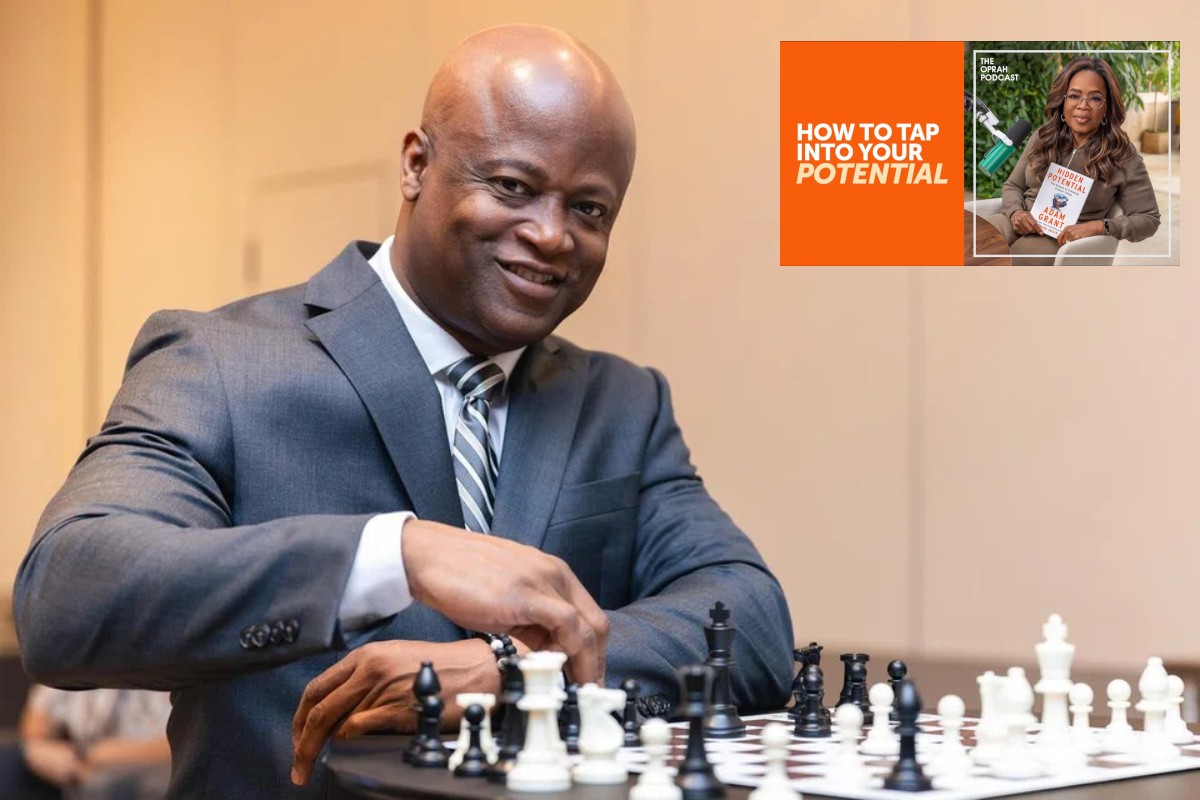
Unlocking one’s hidden potential
Maurice Ashley appeared on The Oprah Winfrey Show as part of an episode devoted to themes of human potential, learning and character development.
The programme centred on a wide-ranging conversation with organisational psychologist and Wharton professor Adam Grant, whose latest book, Hidden Potential, provided the conceptual framework for the discussion. Ashley joined the broadcast as a guest whose personal and professional trajectory offered a concrete illustration of the ideas explored in the book.
The episode focused on the premise that achievement is shaped less by innate talent than by the cultivation of character traits such as resilience, curiosity and perseverance. Grant discussed research and personal experiences showing how progress depends on learning processes rather than raw effort, and on the ability to grow through discomfort and failure. Within this context, he introduced the story of the Raging Rooks, a middle-school chess team from Harlem that reached the pinnacle of national scholastic competition in the early 1990s, despite lacking the advantages typically enjoyed by elite private schools.
Grant outlined the obstacles faced by the team: limited financial resources, no access to world-class coaching infrastructures, and no early talent identification programmes comparable to those found in elite academic or sporting environments. Nevertheless, the Raging Rooks reached the finals of the US national championships and ultimately won the title. While this could be framed as an underdog story, Grant emphasised that its deeper significance lay in the team’s approach to learning and preparation. Central to that approach was their coach, a then-young immigrant chess player named Maurice Ashley, who would later become the first African-American international grandmaster.
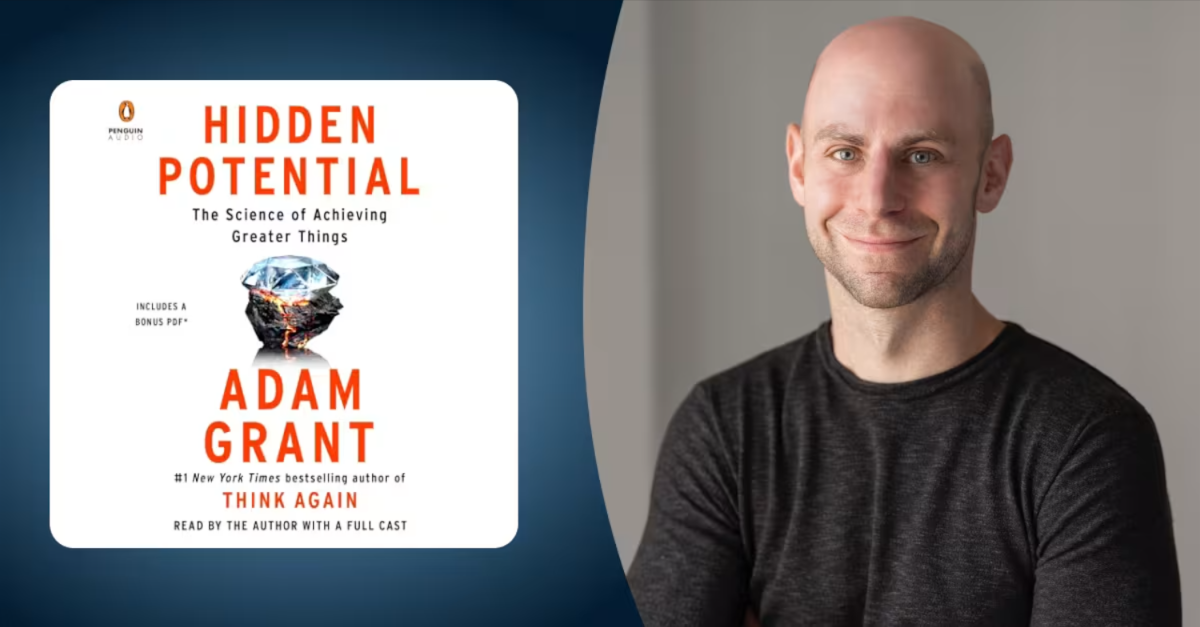
Photo: Audible
Grant described Ashley’s coaching methods as unconventional, noting that he deliberately inverted many of the standard assumptions about how successful chess players are developed. Rather than relying on rigid hierarchies, memorisation or early specialisation, Ashley focused on motivation, self-belief and independent thinking. According to Grant, this model offered broader lessons about education and performance, suggesting that effective learning environments prioritise character and adaptability over narrow measures of ability.
Ashley joined the conversation remotely from Florida and reflected on his own relationship with chess. He recalled discovering the game at the age of fourteen, shortly after moving from Jamaica to Brooklyn. He described chess as inherently compelling, pointing to its historical depth, symbolic richness and mythic qualities. The names and movements of the pieces, he explained, evoke a world that is both ancient and imaginative, while the game’s complexity ensures that it can never be fully mastered. For Ashley, chess became an enduring intellectual challenge precisely because it resisted final answers.
He also spoke about his competitive career and the psychological demands of pursuing the grandmaster title. Ashley recounted a decisive moment when fellow GM Alexander Shabalov observed him struggling in a critical game and offered a paradoxical piece of advice:
To become a grandmaster, one must first be a grandmaster.
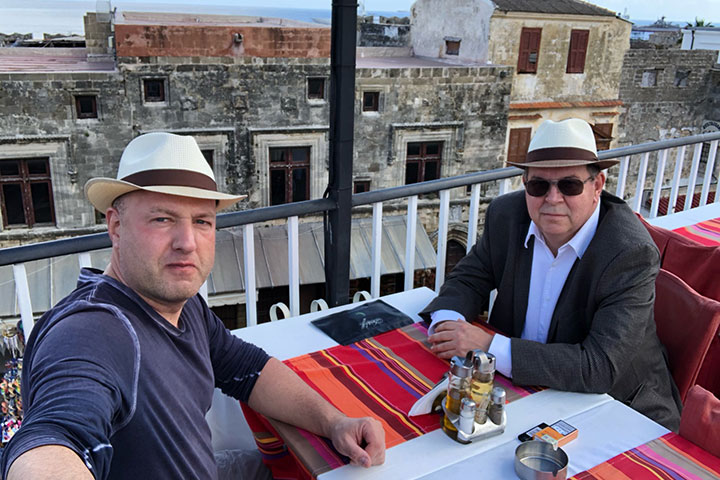
Two accomplished and revered veterans from the US chess scene – Alexander Shabalov and Alex Yermolinsky | Photo: A. Yermolinsky
Ashley explained that this insight shifted his focus away from external benchmarks – such as ratings, norms and tournament results – and towards the internal process of developing confidence, composure and decision-making under pressure. When he eventually secured the GM title in 1999, he felt that the achievement merely confirmed a transformation that had already taken place.
The discussion then turned to Ashley’s work as a teacher and mentor, particularly with young players from disadvantaged backgrounds. Ashley noted that he had not initially set out to become an educator, but that the experience of working with children proved deeply engaging. He described young students as highly receptive when treated with respect, and stressed that their eagerness to learn often flourishes when expectations are raised rather than lowered. Teaching, he observed, became an integral part of his own development.
Ashley connected these experiences to the themes of his book, Move by Move: Life Lessons On and Off the Chessboard, which uses chess as a metaphor for life decisions. He highlighted several lessons drawn from the game, including the importance of learning from defeat, listening carefully to one’s opponent, and recognising mistakes as opportunities for improvement.
I am FRITZ, and I have been redefining the world of chess for over 30 years. Whether in New York against Garry Kasparov or in Bonn in a 4:2 victory against the then world champion Vladimir Kramnik, millions of chess fans followed my ‘man versus machine’ duels. And even after 30 years, I’m still in top form: in 2023, I won the official chess software world championship and in 2024, I won the vice world championship title!
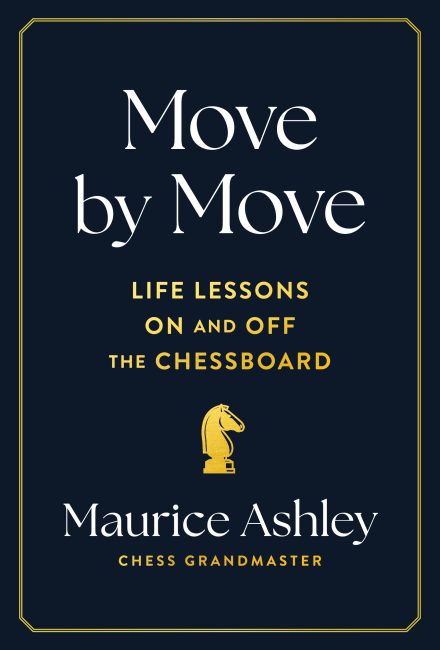
Move by Move: Life Lessons On and Off the Chessboard
In chess, Ashley noted, losses provide immediate and concrete feedback, and progress depends on the ability to absorb those lessons without discouragement.
The episode concluded with reflections on access and opportunity. Ashley spoke about the satisfaction of introducing chess to children who might otherwise never encounter it, and about witnessing moments when understanding and confidence take root. Oprah Winfrey underscored the broader implications of the discussion, linking Ashley’s experiences to the central argument of Hidden Potential: that growth is driven by character, learning environments and sustained effort rather than by early indicators of brilliance.
Full episode
Maurice Ashley joins at 17:42
On this DVD, Grandmaster and worldrenowned commentator Maurice Ashley reviews some of the most interesting patterns with examples meant to educate and entertain.
