Photo by ANTOINE SAILLANT
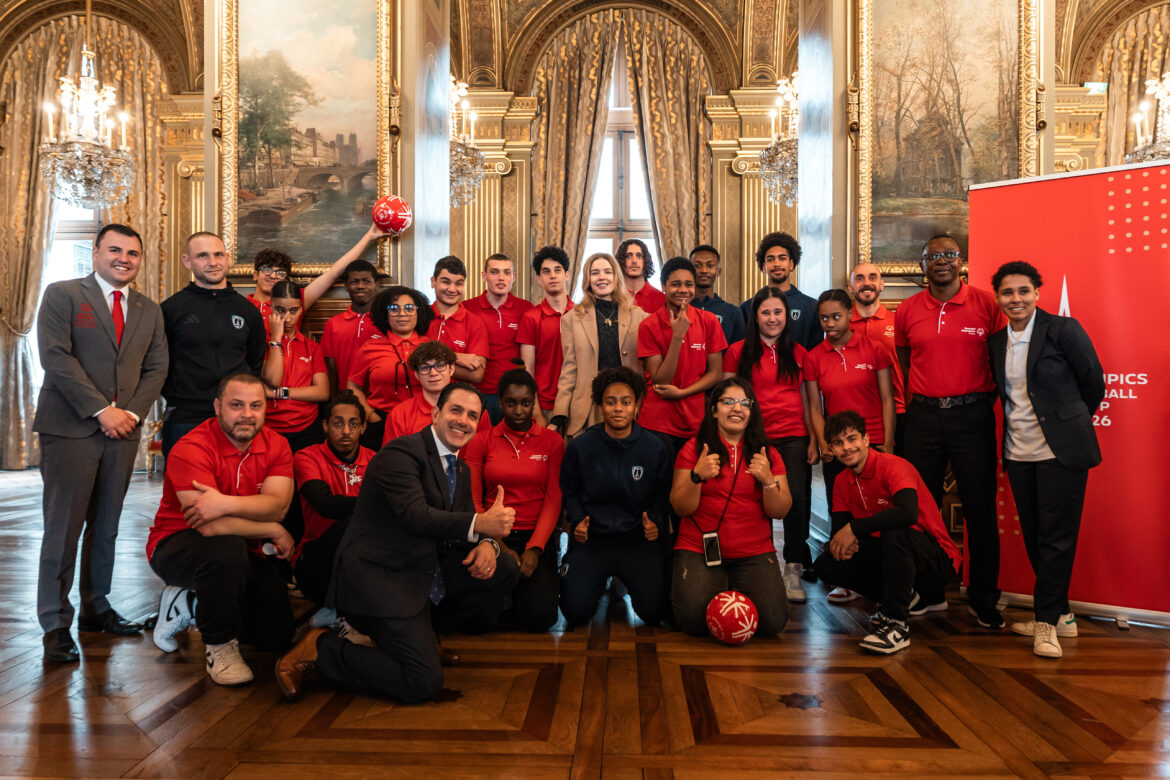
On 19 February, Special Olympics, Special Olympics France, and the Special Olympics Unified Football World Cup Paris 2026 Local Organizing Committee welcomed over 200 guests and partners to the historic Paris City Hall to announce the 24 teams selected to compete in the Cup.
This is the third edition of the Cup and the first time it will take place outside of the United States after the first two were held in Chicago in 2018 and Detroit in 2022.
The Unified Football World Cup, broken up into two divisions (Men’s and Women’s) each with 12 teams, will take place from 5 to 11 July in Paris where they will battle it out for the opportunity of being crowned champions.
The announcement of teams is the first step in outlining the competition field for the two divisions.
For the Men, host France was selected first, followed by Bharat (India), Brazil, China, Ecuador, Israel, Jamaica, Libya, Paraguay, Senegal, Spain, and UAE.
Similarly for the Women, France was selected first, followed by Azerbaijan, Canada, Costa Rica, Cote d’Ivoire, Egypt, Guatemala, Hong Kong, Namibia, Slovakia, Thailand, and USA.

Photo by ANTOINE SAILANT
Draw Ceremony
The next milestone on the road to the Cup is 16 April Draw Ceremony at French Football Federation headquarters in Paris, where group-stage matchups for both the Men’s and Women’s divisions will be set.
With the tournament featuring 12 Men’s and 12 Women’s teams, and a champion crowned in each division, there will be two draws done on the 16th outlining the round-robin matchups in both tournament’s Group Stage play.
To begin the ceremony, host Special Olympics France will be drawn first and placed in Group A. The Draw is structured to ensure each group reflects representation from multiple continental regions. This process will then be repeated for Groups B, C, and D in both men’s and women’s competitions.
The Unified Football World Cup
The Opening (5 July) and Closing Ceremony (11 July) of the Cup will take place at Charléty Stadium which is where the Finals will also be held. No Cup matches will be played on 9 July to allow for a day of rest between competition days.
Competition venues include Charléty Stadium, PUC Stadium, Dalmasso Stadium, Cité Internationale Universitaire de Paris (CIUP), and West Stadium (CIUP).

Photo by ANTOINE SAILLANT
Other events hosted alongside the Unified Football World Cup are Unified sports experiences, Young Athletes programming, Unified celebrity match, Healthy Athletes (hosted at Salle Pierre Charpy, Charléty), community Torch Run, and the Special Olympics International Board of Directors Meeting.
The legacy of the first two Unified Football World Cups has helped Special Olympics establish sport development plans that are now being used to execute other global single-sport events with the most recent being the Unified Volleyball World Cup Poland 2025 and the Unified 3×3 Basketball World Cup San Juan 2025.
Single-sport events serve as a critical catalyst for sport development by helping to further dispel stereotypes and implied limitations of individuals with intellectual and developmental disabilities both on and off the field of play.
They also support the growth of individual sports with the help of international and national sport federations directly increasing the depth and understanding of sport within the international sport community while also engaging new demographics to learn, try, and enjoy sport through the help of Special Olympics athletes.
The goal of the Special Olympics Unified Football World Cup is to leverage the power of sport to leave a lasting legacy of inclusion that impacts people with and without intellectual disabilities for generations to come.
