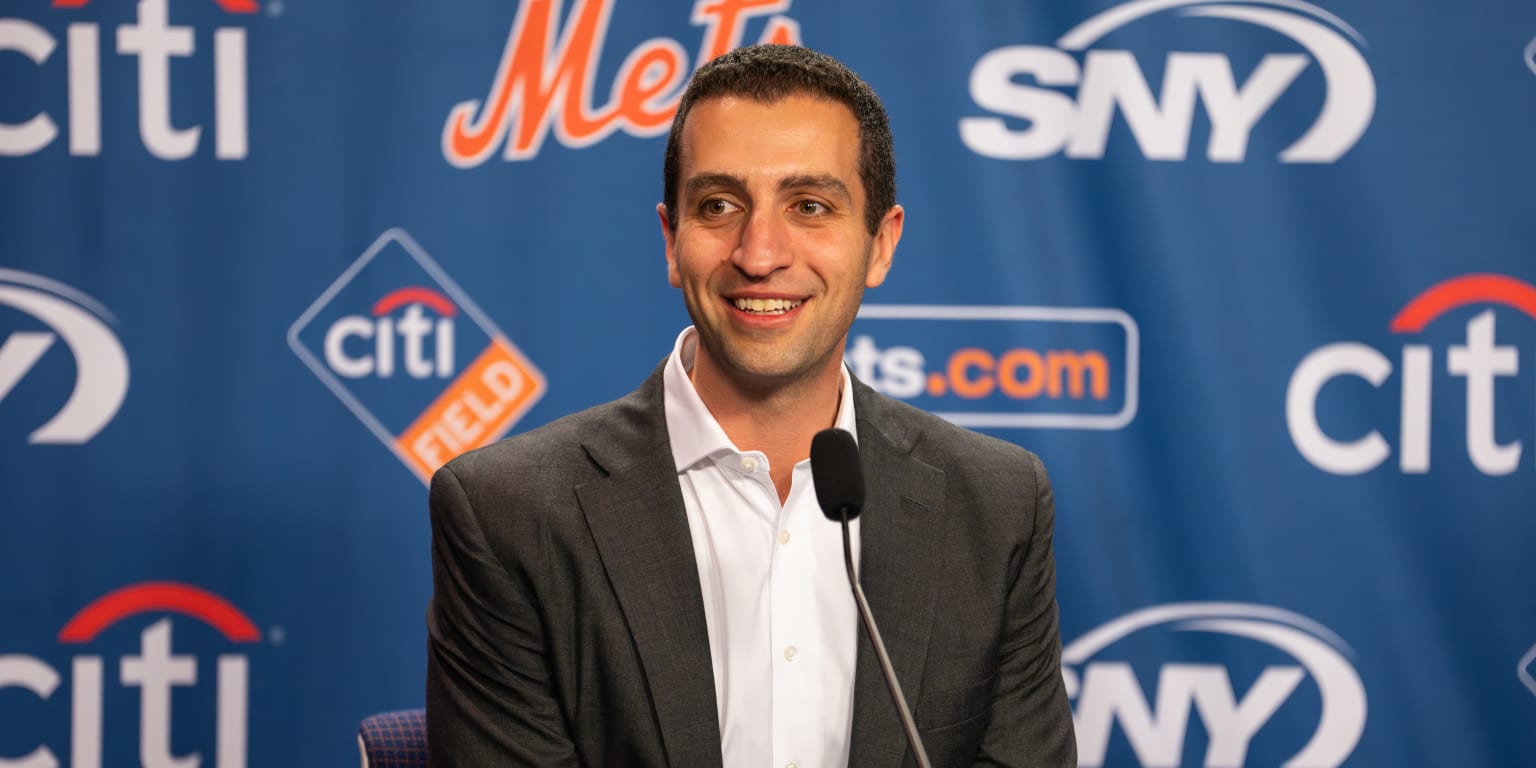
NEW YORK — The Mets’ trade of Jeff McNeil to the A’s on Monday seemed to mark a point of delineation for president of baseball operations David Stearns. The core of this team is gone for good. How the Mets reimagine it will play a significant role in determining their success in 2025.
While there are still plenty of paths the Mets can take this winter, certain areas will be focal points.
Offensive help is coming … but it may not be splashy
Those expecting Kyle Tucker or Cody Bellinger to land in Flushing may have their wishes fulfilled … but perhaps only if those players experience an unexpectedly light free-agent market. The Mets do need an outfielder and fully intend to add one between now and Opening Day, buttressing themselves against the possibility that No. 2 prospect Carson Benge may not be immediately ready to contribute. But the Mets don’t want to block Benge, and they don’t want to commit long-term to an external outfielder if it’s not strictly necessary.
In this case, Mets officials don’t view it as strictly necessary. After just having made the difficult decision to move on from Pete Alonso, the Mets are not eager to sign another player to a long-term deal that would take him into his mid- or late 30s. Philosophically, Stearns is not opposed to long-term contracts. But several factors work against him agreeing to another one this year, including the fact that it’s not a strong free-agent class overall.
Last year, the Mets gave Juan Soto a 15-year contract because they considered him a future Hall of Famer who reached free agency at the uncommonly young age of 26. This year, no such player exists, making it unlikely the Mets will make a splashy signing unless they can land a top free agent on a shorter-term deal. They’re comfortable heading into next season with a slightly lesser offense than the one they had this year, given some of their prospects are nearly ready to contribute.
If the Mets don’t land Tucker or Bellinger, alternatives do exist on the market as well, including their old center fielder Harrison Bader. And there is, of course, always the trade market.
The rotation remains an area of concern
Starting pitching has been a priority for these Mets since the start of the offseason and continues to be today. Ideally, the Mets will land the type of frontline starter who could impact them in the playoffs. But similar to the outfield, Mets officials would rather not extend on a long-term deal that won’t age well. They’ve also largely balked at the trade market, which has proven just as expensive.
The good news is that Dylan Cease’s seven-year, $210 million contract did not rejigger the market the way other free-agent starters might have hoped. Framber Valdez, Ranger Suárez and Zac Gallen are among those starters still on the board, and it’s entirely possible some of them could see their markets fall to a level where the Mets might feel comfortable. If not, Mets officials remain confident in their ability to find gems deeper in the pool of available players, despite a lack of success doing so last year.
Even more than a frontline starter, the Mets want someone who can add stability — read: innings — to their rotation. After 2025, it would be difficult for them to count on Kodai Senga or Sean Manaea for that, and many of their other rotation options are young and relatively untested.
A new position-player core is forming
The Mets did not set out to blow up the core this offseason, but that was mostly because some of the levers for doing so were complicated. While it was always possible that the Mets could let Alonso walk, for example, finding a trade partner for Brandon Nimmo and his large contract was no guarantee. Same for McNeil, whose salary had long since outstripped his production.
But the Mets did move on from all three of those players, which should allow a new core to gel. That includes Soto and Francisco Lindor, of course, and then … we’ll see.
Benge should be a factor at some point in 2025 and, if the Mets have their way, for a long time after that. Brett Baty will have every chance to start at third base, while Mark Vientos, Ronny Mauricio and Luisangel Acuña all remain in-house (for now). More pertinently, the Mets have an exciting young wave of prospects coming in Benge, Jett Williams, A.J. Ewing, Nick Morabito and others. They won’t all become part of the next core. But some of them certainly will.
