ORLANDO, Fla. — Amid the spectacle of the College Football Playoff’s opening weekend — and the nagging sense that we’re watching a sport we no longer love — here’s the uncomfortable question no one in power seems eager to answer:
Is college football slowly turning off the very fans who built it?
Advertisement
The other day on our radio show, we asked a simple poll question: “What’s your excitement level for this year’s College Football Playoff?” The result wasn’t close. The runaway winner was: “Mild at best.”
No, it wasn’t a scientific poll by any means. But it was taken in a college-football-crazed state, in a city that hosts three bowl games, from listeners who have spent decades scheduling fall Saturdays around kickoff times. These are not casuals. These are the lifers.
And they sound tired.
College football has always thrived on passion — irrational, inherited passion. We fell in love with this sport because we were loyal to our hometown or home-state schools. Because our dads and moms went there. Because our grandparents wore the colors. Because even when our teams were bad, they were ours. We believed players loved our schools the way we did. We believed coaches were stewards of something bigger than themselves.
Advertisement
That belief is gone.
What we’re left with now is a sport that feels increasingly transactional, untethered from its own history, and openly hostile to the idea of loyalty. The transfer portal and NIL didn’t just change college football — they rebranded it. Players are no longer student-athletes growing into men within a program; they’re year-to-year contractors shopping their services to the highest bidder. And coaches are no longer culture builders; they’re free agents with obscene contracts and super-agents who are already negotiating new deals with new teams by midseason.
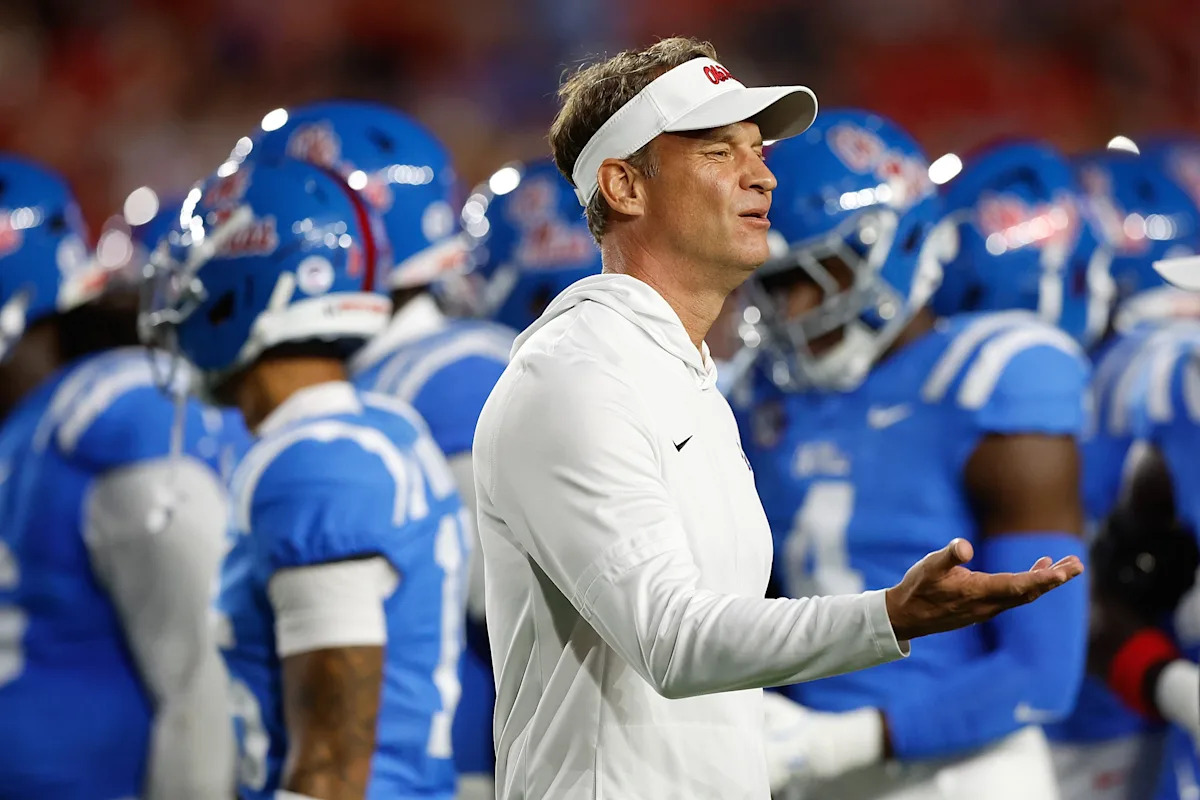
Lane Kiffin didn’t even wait for the College Football Playoff selection committee to put his Ole Miss team in the 12-team field before bolting for his next big job. Think about it: the head coaches from three CFP teams will be elsewhere next season, meaning in the most important tournament in the sport that a quarter of its leaders already had one foot out the door before the playoff even started.
That’s not continuity. That’s chaos.
Advertisement
And the collateral damage is everywhere. Bowl games — once the measuring stick of success — are now disposable. This year alone, Notre Dame opted out because it got snubbed by the CFP committee while Kansas State and Iowa State opted out because they lost their coaches. Bowls used to mean something. They were a reward, a destination, a final chapter. Now they’re an inconvenience.
Missouri coach Eli Drinkwitz didn’t mince words when he said earlier this week: “College football is sick.” He warned that the sport is “cracking” — not metaphorically, but structurally. Rules without consequences. Participation agreements nobody honors. Tampering without punishment. Freedom without guardrails.
UCF coach Scott Frost went even further. He said the quiet part out loud: “It’s broken.” And for that honesty, he was attacked. Not because he was wrong — but because he threatened those who benefit from the disorder. Frost described a world where participation agreements are ceremonial, salary caps are fiction and booster money determines competitive balance more than coaching or development ever could.
That’s not college football. That’s the NFL without contracts, unions or rules.
Advertisement
Minnesota coach P.J. Fleck summed it up best: “College football does not have any of what the NFL has in place. … I don’t think the general public actually knows what it looks like when you peel back the onion.”
And that’s the point. Fans (and coaches) are finally peeling it back — and they don’t like what they see.
Conferences now stretch from coast to coast, stripping the sport of its regional soul. Rivalries that once defined generations are disappearing in favor of television windows. Which brings us to a fair question for UCF fans: With USF no longer on your schedule, who’s your big rival? Answer: You don’t have one.
A sense of place used to matter in college football. Geography mattered. Identity mattered. Tradition mattered. Now everything is optimized for TV inventory and gambling markets.
Advertisement
Don’t get me wrong, college football is still idiot-proof. It will march on. ESPN needs the programming. Sportsbooks need the content. Saturdays will still be filled with games, spreads and parlays. The machine will not stop.
But what happens when the true fans — the ones who stayed and cheered through the losing seasons, NCAA sanctions and decades of irrelevance — start checking out emotionally? When excitement becomes obligation? When loyalty feels foolish?
We’re already seeing the signs. Fans less invested in bowls. Fans less connected to rosters that turn over annually. Fans who no longer recognize their own conferences. Fans who watch out of habit, not hope.
This isn’t about opposing player compensation. Players deserve to be paid. It’s not about nostalgia for unpaid labor or closed systems. It’s about structure, fairness and meaning. A sport without rules isn’t freedom — it’s anarchy. And anarchy is exhausting.
Advertisement
College football was never supposed to be perfect. It was supposed to be personal. It was supposed to mean something beyond the scoreboard. It was supposed to connect campuses, communities and generations.
Right now, it feels like a sport in disarray where even coaches and administrators are just hopeless spectators to its unraveling. It’s so bad that they are begging the federal government to get involved. Can you name another multi-billion-dollar business that actively seeks governmental regulation?
The scariest part isn’t that coaches like Frost and Drinkwitz are speaking up.
It’s that we longtime fans are starting to quietly nod along and wonder why we’re still watching.
Yes, the College Football Playoff arrived this weekend and it’s never been bigger.
But, sadly, the sport itself has never felt emptier.
