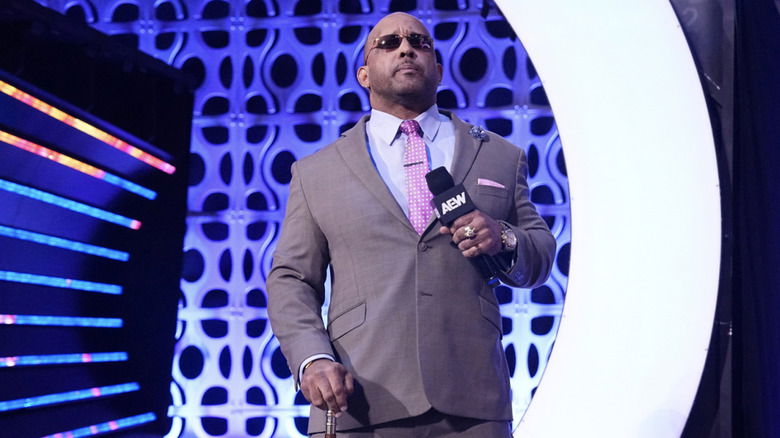
In the Latest Update tied to AEW News and broader Wrestling Rumors about in-ring safety protocols, Montel Vontavious Porter offered insight into how performers can maintain audience engagement during a ringside concussion check or injury pause. Speaking on his Marking Out podcast, the AEW on-screen manager and occasional competitor discussed how momentum can be preserved depending on whether the uninjured wrestler is working as a heel or a babyface.
From a heel standpoint, MVP emphasized creating visible tension while officials assess the injured competitor. “I would say that if you have a capable healer who knows what he’s doing, my first impulse would be…to try to get at that guy a few times and make them pull me back,” he explained. He then outlined the contrasting babyface approach. “If I’m a healer, if I’m a babyface, I’d show aggressive concern…I want to beat him up, but I don’t want to see him hurt.” The guidance reflects the importance of character consistency even during unscripted-looking pauses that are sometimes part of structured match storytelling.
MVP also referenced a moment from his first WWE run that shaped his understanding of how to manage those situations. Recalling a match involving Finlay, he described how crowd control remained central even during a stoppage. “Somebody took a nasty bump, and they stopped the match for a minute, and they were checking on the babyface that Finlay was working against…Finlay, he’s still working the crowd as a heel. You know, he’s still kind of pacing,” MVP said. He added, “And Finlay conveyed to the wrestler as soon as you’re up and you’ve got a moment…he told the ref to tell them. The ref went over and said, when you get up and they ring the bell, dive on Finlay, and just start beating his a*…The crowd came right up.”*
From an industry standpoint, the Backstage Update underscores how veteran performers approach injury optics in modern wrestling. As AEW News and WWE News coverage increasingly highlight medical protocols and in-ring safety, MVP’s comments illustrate how performers balance realism, crowd psychology, and character alignment without disrupting narrative continuity.
