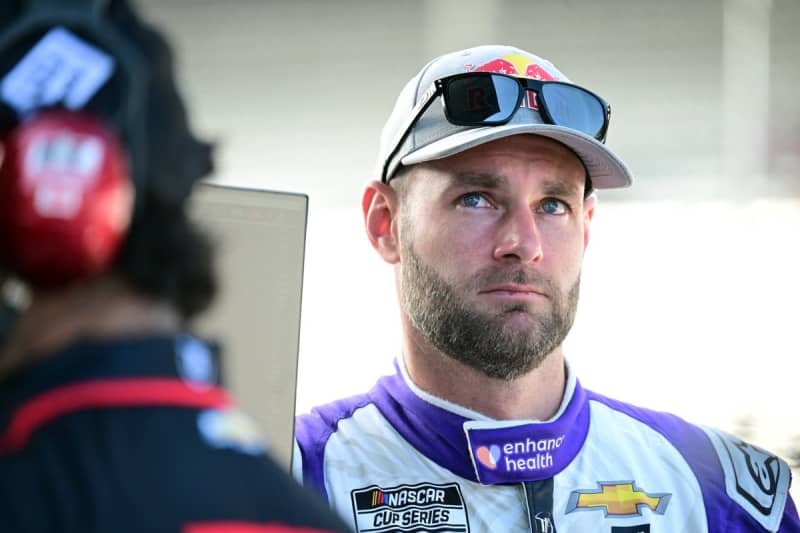
The NASCAR community and garage haven’t stopped buzzing since the new format was announced. Our one and only Kiwi, Shane van Gisbergen, back in 2025, made his epic name starting from Mexico’s chaotic road course. Trackhouse Racing’s gamble on the New Zealander really paid off with SVG’s five road course wins. But with the new format taking away the ‘win-and-you’re-in’ aspect, it definitely doesn’t seem good news for the Kiwi.
NASCAR’s playoff evolution sparks insider concerns
NASCAR unveiled a bold format shift on January 12, 2026, reviving “The Chase” as a 10-race showdown for the top 16 regular-season points earners, scrapping eliminations and ‘win and you’re in’ spots. Wins will now deliver 55 points instead of 40.
Advertisement
During the Inside the Racepodcast, Alex Weaver pressed Steve Letarte and Kim Coon about the future of underdogs in this new format:
“What does this do for smaller teams or for teams like a Trackhouse Racing, who brought in SVG to dominate these road courses, and he was winning them all to advance to the postseason?”
Letarte mentioned that wins are still going to be very important, echoing Mark Martin and Dale Earnhardt Jr.’s advocacy, suggesting SVG’s road mastery could cement legacy without title contention.
“Winning is enough for SVG to have an illustrious NASCAR career even if it limits his ability to run for a championship.”
Advertisement
Coon was not ready to give up on the argument and compared the old elimination format to a “six lane highway” that has been squeezed to “two lanes,” thereby reducing the appeal for teams waiting for non-oval experts.
“It’s a lot tougher for a team to want to invest in you if it’s not a win in your end.”
She argued SVG’s swift Cup ascent hinged on rapid road victories; without eliminations, he’d have raced longer in Trucks or Xfinity.
Letarte ran the numbers and revealed that if under the standings alone, SVG’s dominance might have pushed him to 16th in points, then that is a very thin margin showing how close the format is to a tightrope.
Advertisement
Weaver pointed to SVG’s Mexico win, saying, “A lot of SVG’s wins were dominating wins. So would he have gotten seventy-five points that day… You have no idea what he’s gonna wind up with if he continues to dominate.”
Coon highlighted that it chokes the inflow of global talent, thus weakening NASCAR’s international position.
While SVG’s mastery on road courses has surely made him stand out, ovals will still be the main game to crack in NASCAR. For Trackhouse, adaptation will be key. Although road wins are iconic, the championship paths now will be very challenging for specialists.
Meanwhile, another veteran, who played a key role in the implementation of this new format, spoke about why it’s a win for the sport.
Advertisement
Mark Martin explains why NASCAR fans should accept this format
NASCAR Executive VP Steve O’Donnell addressed fan pushback, calling the new 16-driver Chase format a “good compromise” between old playoffs and a full 36-race season.
Some fans wanted every race to count toward the title from start to finish, but O’Donnell focused on improving the racing and storytelling.
He recalled past playoffs where a driver like Chase Briscoe, finishing 18th, made the playoffs, while the winner, Ryan Blaney at Bristol, was overlooked.
“The story was all about the eighteenth-place finisher instead of the winner,” he said. “We wanna build heroes, and it’s hard to win these races. It’s hard to be in the top ten.”
Advertisement
NASCAR aims to highlight top performers and exciting finishes to draw fans back. Mark Martin added real-world details fans often miss. “There are contracts, team contracts, contracts for sponsors, and it’s a lot more complicated than our fans really realize,” he explained.
He called the shift to top-16 points leaders for a 10-race Chase “a great compromise,” easier than jumping straight to 36 races.
Martin left the door open for future changes: “The jump from ten to thirty-six is not nearly as unlikely.” This connects directly to drivers like SVG at Trackhouse Racing.
His victories on road courses contribute to the hero image that O’Donnell desires, even if his performance on oval tracks prevents him from consistently finishing in the top 16 points.
Advertisement
For smaller teams, having a stable sponsorship deal in this format provides some breathing room. It allows them to balance the win bonuses with the steady finishes required for entry into the Chase.
The post NASCAR’s Championship Format Could Alienate Drivers Like SVG, Warns Insiders appeared first on EssentiallySports.
