-
Tim Bontemps
-
Brian Windhorst
Close
Brian Windhorst
ESPN Senior Writer
- ESPN.com NBA writer since 2010
- Covered Cleveland Cavs for seven years
- Author of two books
NBA trade season tipped off Wednesday night with a former franchise player finding a fresh start.
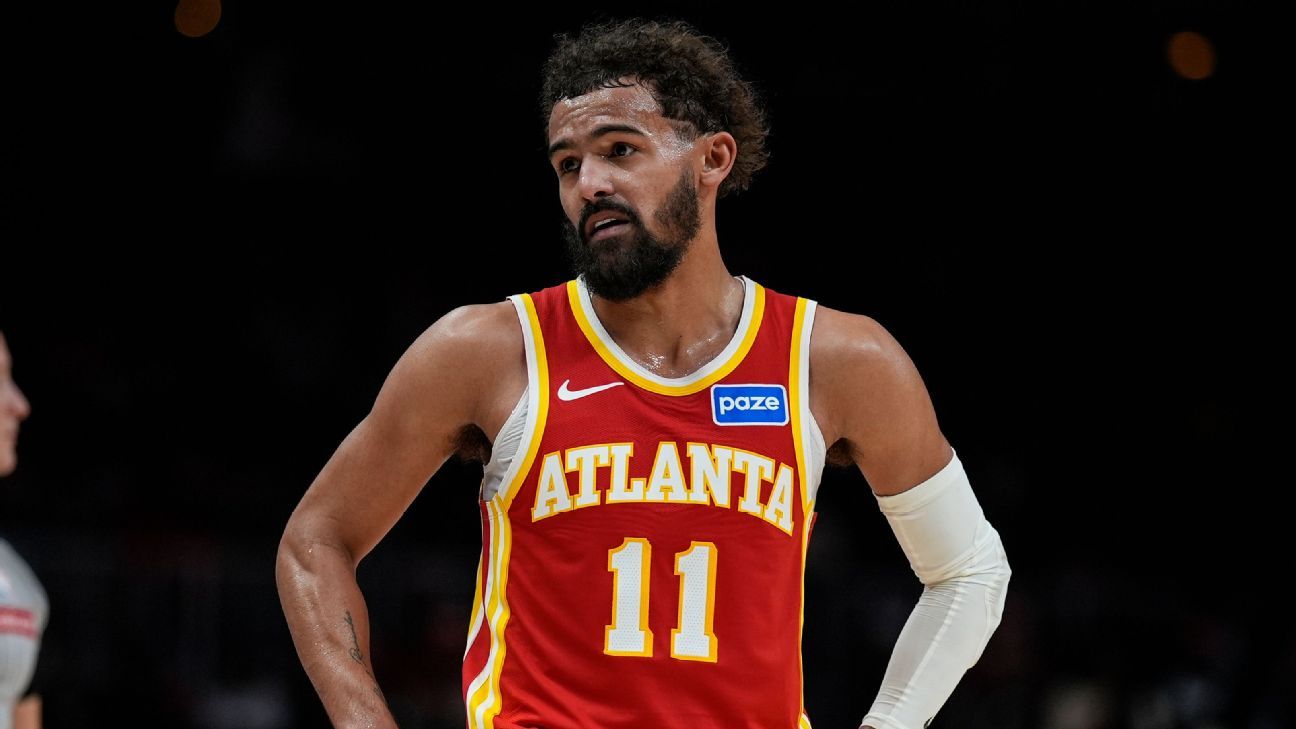
Trae Young, the face of the Atlanta Hawks for most of the past decade and arguably the franchise’s most consequential player since Hall of Famer Dominique Wilkins, was sent to the Washington Wizards for guards CJ McCollum and Corey Kispert.
Why did Atlanta and Washington do this deal now? What’s next in the evolution of both franchises? This is a fascinating deal with ripple effects for both teams and throughout the NBA. Let’s dive into all of them, plus examine how the Young trade could affect other simmering potential deals across the league.
Jump to a section:
Trade impact on Hawks | Wizards
League insiders examine the deal
More deadline moves for Atlanta?
Why Wizards couldn’t pass on Trae
Are more star trades on the horizon?

Why did Atlanta do this trade?
When Atlanta chose not to extend Young this past offseason, it started the countdown to the end of his tenure with the team that drafted him No. 5 in 2018.
The Hawks, who did sign guards Dyson Daniels and Nickeil Alexander-Walker to four-year contracts worth $162 million, had made it clear that the future of the franchise didn’t necessarily include the 27-year-old Young.
That’s when Young and his agents began looking for an off ramp — and a team that would pay him through his prime years. Young did have some leverage; he could have declined his player option for 2026-27 and walked via unrestricted free agency this July.
Atlanta chose not to wait, a decision made easier by Atlanta’s 2-8 record in the 10 games Young played this season — the guard was sidelined nearly two months because of a quad injury — and a defense that slipped 14 points per 100 possessions when he was on the court.
1:14
Why Stephen A. doesn’t think much of Wizards’ trade for Trae Young
Stephen A. Smith reacts to the Hawks trading Trae Young to the Wizards.
This now means the Hawks can fully lean into a young core featuring likely first-time All-Star Jalen Johnson, last year’s No. 1 pick Zaccharie Risacher, last year’s Most Improved Player Daniels and Alexander-Walker, who has proved to be an excellent free agent signing.
That grouping, with either Onyeka Okongwu or Kristaps Porzingis playing center, has been very successful this season. Add a potential top-6 pick in the 2026 NBA draft via the New Orleans Pelicans or Milwaukee Bucks and around $30 million in cap space, and Atlanta now has the chance to grow into a consistent contender in the Eastern Conference.
“Other than a few details, this trade was essentially a three-way deal where the Pelicans got Jordan Poole, the Hawks got CJ McCollum and the Wizards got Trae Young,” one East executive told ESPN, referencing the Poole-McCollum swap from last June.
“If that had all happened in the summer in one move, there may have been some more questions for Atlanta. But the way this season has played out and with how terrific Jalen [Johnson] has played as a creator, it makes more sense now.”
Why did Washington do this trade?
This was a value move that the Wizards couldn’t pass up. Young is a four-time All-Star and multiple-time league assists leader at a position of dire need.
He can facilitate offense for recent draft picks in shooting guard Tre Johnson (No. 6 in 2025), big man Alex Sarr (No. 2 in 2024) and forward Kyshawn George (No. 20 in 2024). And the cost of taking on Young’s $49 million player option for the 2026-27 season wasn’t an issue for a team that was projected to hit the offseason with $80 million in cap space. (Washington also cleared $14 million by sending Kispert to the Hawks.)
“This is pre-agency,” a second East executive said. “The Wizards are using cap space in this deal that they would’ve had this summer.”
The Wizards are hoping to mimic one of two recent moves. In 2019 as Oklahoma City was entering a roster restructuring period after trading Paul George and Russell Westbrook, bringing in veteran point guard Chris Paul helped develop young teammates in the roster, including future MVP Shai Gilgeous-Alexander. The other was from 2023 when the Houston Rockets, in a situation more similar to where the Wizards are now, were hoping to turn their situation around after drafting a number of prospects and aggressively acquired veteran point guard Fred VanVleet in free agency.
What did the league think of the deal?
The prevailing opinion from sources around the league was that Atlanta did well to move away from a player in Young who is both extremely expensive and plays a position, point guard, that might be the NBA’s deepest.
“I know from a value proposition why you look at it,” an East scout said. “But if I’m the Wizards, just keep being bad, and stuff will figure itself out. I’m not sure why they felt the need to do this.”
A Western Conference executive pointed to Young’s defensive deficiencies, coupled with the rise in offensive production around the league, as making it difficult to bet on Young’s future value.
“Offense is so easy now,” the executive said. “One of the worst teams in the league can still easily put up 115 points in a game. … It’s hard for these small point guards to have real value with how the game is played now.”
Meanwhile, the strong expectation around the league is Young will sign an extension with the Wizards. The league’s evaluation of this deal, multiple executives said, hinges on what contract Young agrees to with the Wizards and his production over the next few seasons.
What’s next for the Hawks?
Before the 2024-25 season, the Hawks were capped out into the future and were out of draft picks because of the steep price they paid to acquire Dejounte Murray from the San Antonio Spurs.
The Hawks’ front office has made four key moves since. They traded Murray to New Orleans and acquired Daniels; moved De’Andre Hunter to Cleveland to create the cap flexibility to sign Alexander-Walker; completed a draft-night deal with the Pelicans that landed them a potential high lottery pick in the 2026 draft; and now they have traded Young in a cap-clearing move. Rival executives saw the contracts they have given Johnson, Alexander-Walker and Daniels as savvy.
It’s not yet clear how their move this summer to acquire Porzingis, who has dealt with illness throughout the season and is on an expiring contract of his own, will play out. But the Hawks’ roster became younger and more balanced after Wednesday’s trade.
There has been discussion between the Hawks and Mavericks about Anthony Davis, sources said, but talks aren’t currently active, though it’s something to monitor over the next month. But with a likely high lottery pick coming to Atlanta, along with a young core and future salary flexibility, the Hawks don’t appear to be in a hurry.
What’s next for the Wizards?
The Wizards’ 2026 first-round draft pick goes to the New York Knicks if it falls outside the top eight. That cannot and will not happen.
They won’t say it publicly — just like the Utah Jazz, who are in the same situation in the Western Conference, won’t either — but keeping that protected pick would seem to be Washington’s top priority.
The Wizards, thanks to some strong recent play by McCollum, have won five of their past seven games, and it’s unclear when, or how much, Young is going to be on the court for Washington this season.
“They could say it’s a coincidence,” a second scout said, “but them doing this deal now after McCollum was leading them to wins they don’t need probably played a role.”
Young is coming off a sprained knee and a quad bruise. Expect the Wizards to give him all the time he needs — and probably lots more — to heal.
This situation calls to mind the Toronto Raptors doing what they could to protect their own pick last season by dealing for Brandon Ingram at the trade deadline. Ingram, like Young, was up for a new contract.
Ingram, who was dealing with a nasty ankle sprain at the time, did not play a single minute for the Raptors last season after they acquired him, even after agreeing to a three-year, $120 million extension at the time of the trade.
“This is what life is like under our [draft] lottery system, with partially protected draft picks,” one executive said. “You have one team [the Hawks] that doesn’t have its pick trading a player because they were losing too much when he was playing.
“And you have another team [the Wizards] who desperately needs to keep its pick who may find a reason not to play the same player because they might win too much if he plays.”
What does this mean for the rest of trade season?
With Young off the board, the question is whether he’ll be the biggest name traded this deadline season or whether another star deal — be it Giannis Antetokounmpo, Davis or some surprise entry (a la Luka Doncic last season) — materializes between now and Feb. 5.
Antetokounmpo again dismissed the idea of a trade in an interview with The Athletic on Wednesday, declaring he will never ask out of Milwaukee. Sources have continued to reiterate for weeks that the Bucks have no intention of moving him, and will instead scour the trade market to upgrade around the two-time MVP forward.
The Davis situation is more fluid. Between the dynamics of the Mavericks still searching for a long-term replacement at general manager to a desire to build long term around No. 1 pick Cooper Flagg, to the fact Davis — who will turn 33 in March, has a lengthy injury history and is owed $58 million next year and has a $62 million player option for the 2027-28 season — has a tepid market, it’s hard to see how and from where a deal would come.
“I don’t understand why they wouldn’t just keep him,” a third East executive said. “Just let things play out, get to the summer time when it’s easier to make this kind of move anyway, and see where things stand.”
Said a third East scout: “[Dallas] ownership wants to see those guys play together before they do anything, and until they do that I don’t think they’ll rush into doing anything. … I’m not optimistic it’s anywhere close to where they hope his value is.”
There’s a real possibility Young is, indeed, the biggest name traded between now and Feb. 5. Between the dearth of picks available across the league and so many teams stuck in difficult and move-limiting financial situations, multiple scouts and executives predict a slow trade deadline.
Then again, that’s what people thought last year — only for arguably the most stunning trade in the history of the league to take place less than a week before the deadline.
One of the teams involved in the Doncic trade — the Lakers — are a prime example of why this deadline might be quiet. Despite the team’s glaring flaws, particularly on defense, the Lakers have limited draft assets and are just a million dollars below their first-apron hard cap for the season, giving them little flexibility to make the improvements to the roster necessary to truly become a threat in the West.
“They just need to fast-forward to the offseason,” another West executive said. “They can’t realistically add to the roster. They don’t have a solve.
“They’re focused on keeping cap space and trying to do moves on the margins, and it’s hard to find a lot that makes sense.”
