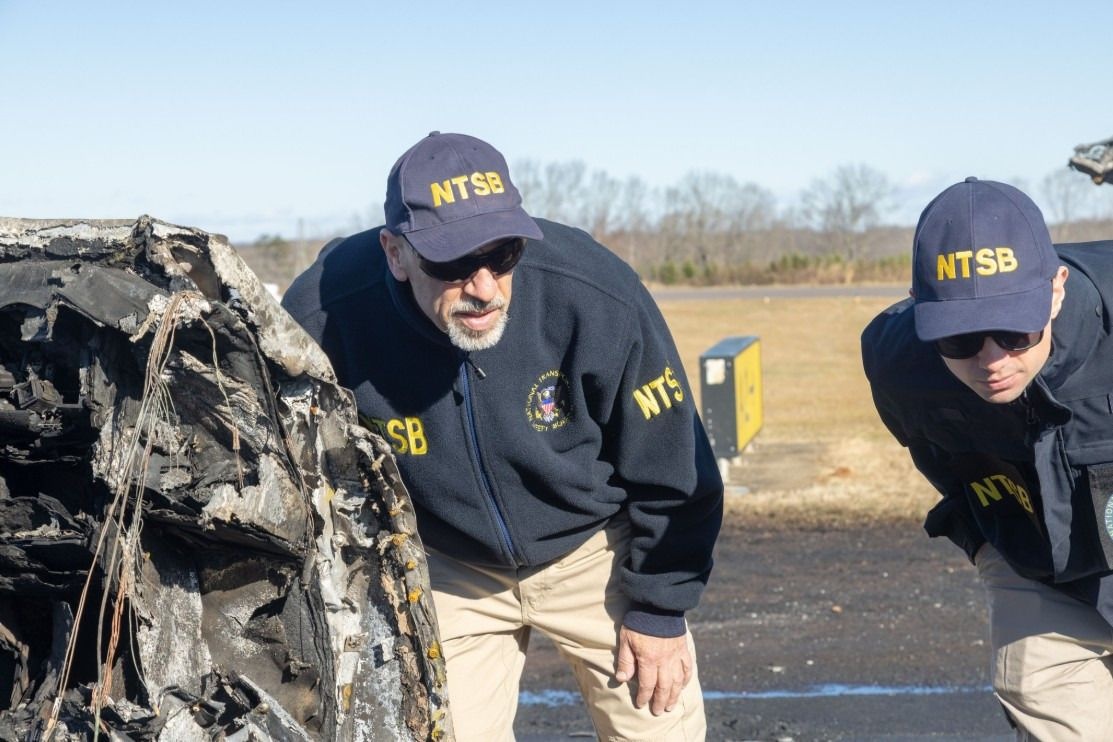
A Saturday press conference offered just a brief update from the National Transportation Safety Board concerning the aviation incident on Thursday morning that claimed the lives of NASCAR driver Greg Biffle, his family, and three others.
By Friday, the NTSB had formally begun its investigation into the incident that took place at the Statesville Regional Airport but had scant details as preliminary interviews and data acquisition had just started.
Read Also:
Investigation timeline into fatal Greg Biffle plane crash released

NASCAR legend Greg Biffle and family killed in plane crash
That was largely the theme of a Saturday morning update conducted, once again by Board Member Michael Graham and Investigator-In-Charge Dan Baker.
“We still do not know the circumstances which led the aircraft … to attempt to return to the airport,” Graham said in an opening statement. “But that is the focus of our investigation.”
However, Graham did confirm a text message exchange that took place between Cristina Grossu Biffle, the wife of the former NASCAR star and her mother, which had been previously reported on Thursday.
Cathy Grossu told CBS on Friday that she was texted back and forth with her daughter that morning.
“Then she said something like ‘We’re in trouble, emergency landing.’ And I texted back, ‘What’s wrong with the plane?'” Grossu told the network. “Then the next thing was (the SOS alert) that you get from your automatic Apple phones when you have an accident or something. And so I knew that something was wrong.”
On Friday, Graham said he wasn’t aware of that message and asked for additional details from those with firsthand knowledge and received it between press conferences.
“This morning, I can confirm that the NTSB is aware of one brief text message from a passenger aboard the aircraft to a family member that read ‘emergency landing’ (but) we are not aware of any other communications from passengers on board the aircraft to those on the ground,” Graham said.
Graham added that the NTSB still isn’t sure who was the pilot for the 10 minutes between take-off and the failed emergency return to the airport.
Biffle was a licensed pilot as were Dennis and Jack Dutton.
“I do not have any additional information about who was in the left seat at the time,” Graham said. “We do anticipate that all the information about all the pilot rated occupants will be included in our preliminary report.”
That is expected to come within 30 days although the final analysis from the agency will take 12 to 18 months to complete.
Graham said the NTSB has a degree of confidence who the pilot was but needs to verify that before publishing.
“At this point, we have a lot of really good information,” Graham said. “We’re fairly confident with the left seat occupant but we need to verify that. We need to be accurate in what we do. And from a survival standpoint, which is part of what we investigate, we want to know where everyone was sitting and that is a little more difficult in a crash like this.”

In the 12 hours between the two press conferences, Graham said the NTSB has conducted numerous witness statements and are validating the evidence procured.
“Early indication from multiple sources indicate that the plane was stable on approach, configured for landing with the landing lights on,” Graham said. “But the aircraft was coming in low.
“That information is consistent with the debris field our team continues to survey and is consistent with the first points of impact on the airport runway light stanchion located approximately 1800’ from the runway threshold.”
However, Graham added that there is enough technical evidence to determine why that was the case.
“It did look like the aircraft was configured properly for landing but it was low in the videos,” Graham said. “But we have no other indication over what went wrong at this time.”
Since Friday morning’s update, the NTSB has documented the debris field, aircraft wreckage conditioning, component locations and flight controls. The flight voice recorder was transported to NTSB headquarters in Washington, D.C. and the data is attempting to be recovered by specialists.
Amongst the items collected from the debris for analysis:
Ground proximity warning system Garmin multi-function display Caution warning panels Various cockpit instruments
“All of these are being sent to NTSB recorders labs in Washington, D.C.,” Graham said. “We will determine whether data and relevant information can be recovered from these units.”
Read Also:

Remembering Greg Biffle: NASCAR champion and Hurricane Helene hero
Graham said these will prove valuable in determining probably cause.
The NTSB also received the maintenance log and will use all of this information to determine the weight and balance and impact load.
Both engines have been analyzed and a drone was able to get airborne on Friday amidst a very windy day but was not able to complete that work until Saturday morning once conditions calmed down.
To read more Motorsport.com articles visit our website.
