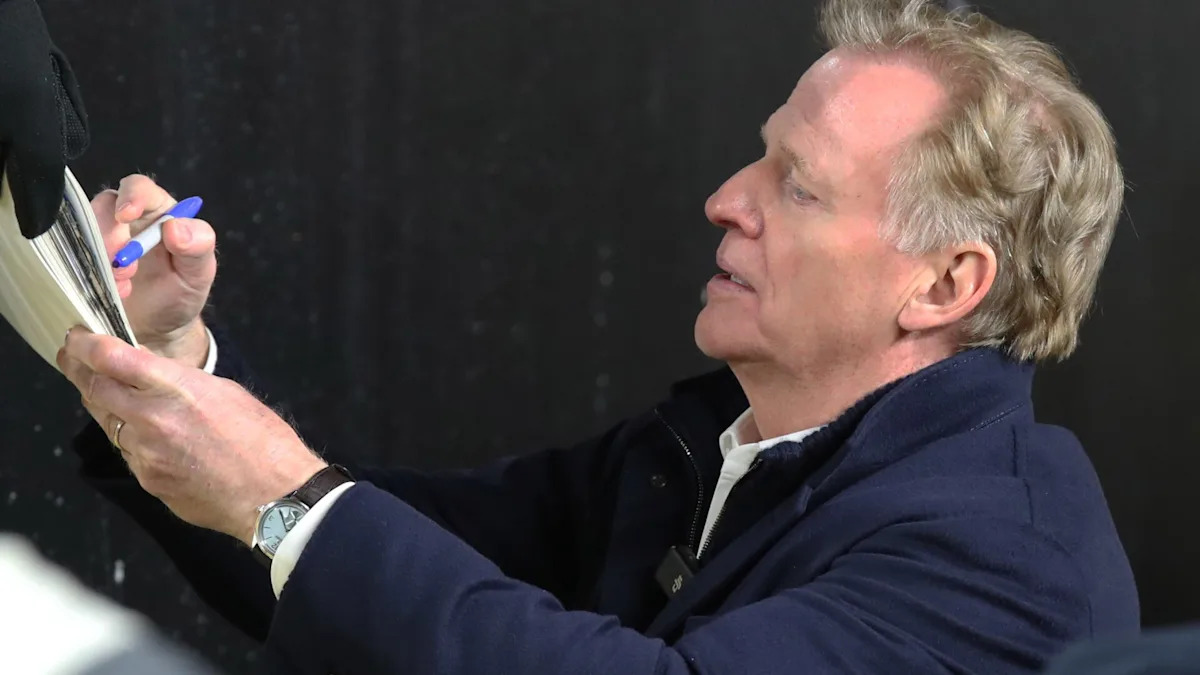
Any NFL Network (or, as of Saturday, ESPN) employees who are brainstorming questions for Commissioner Roger Goodell’s annual Super Bowl press conference on Monday should probably tread lightly, when it comes to one specific topic.
Former NFL Media reporter Jim Trotter found himself out of work after posing pointed questions to Goodell regarding NFL Network newsroom employment practices during consecutive Super Bowl press conferences. Trotter’s contract was not renewed. Trotter sued.
Advertisement
“The NFL has claimed it wants to be held accountable regarding diversity, equity and inclusion,” Trotter said in a statement when he filed the lawsuit. “I tried to do so, and it cost me my job.”
The NFL settled the case. Since then, however, “DEI” has been Frank Luntz’d into a rallying cry against the principles that underpin the acronym. Over the past year, the current administration has aggressively attacked DEI programs, in both public and private employment.
Enter the NFL’s now-completed hiring cycle (unless Klint Kubiak gets a case of Josh McDaniels-style cold feet). Of the 10 new head coaches, only one is a minority: Titans coach Robert Saleh. None are Black.
When Brian Flores sued the league and multiple teams, four years ago Sunday, the civil complaint included a lengthy quote from NFL executive V.P. of football operations Troy Vincent regarding the league’s long-term deficiencies when it comes to hiring Black coaches in a sport composed predominantly of Black players.
Advertisement
“There is a double standard, and we’ve seen that,” Vincent said. “And you talk about the appetite for what’s acceptable. Let’s just go back to . . . Coach [Tony] Dungy was let go in Tampa Bay after a winning season. . . Coach [Steve] Wilks, just a few years prior, was let go after one year . . . Coach [Jim] Caldwell was fired after a winning season in Detroit . . . It is part of the larger challenges that we have. But when you just look over time, it’s over-indexing for men of color. These men have been fired after a winning season. How do you explain that? There is a double standard. I don’t think that that is something that we should shy away from. But that is all part of some of the things that we need to fix in the system. We want to hold everyone to why does one, let’s say, get the benefit of the doubt to be able to build or take bumps and bruises in this process of getting a franchise turned around when others are not afforded that latitude? . . . [W]e’ve seen that in history at the [professional] level.”
The open hostility to DEI from the top of the nation’s government has sparked a general backlash, emboldening some to throw the letters around like some new form of slur. And so, given that the Rooney Rule (which the NFL has not abandoned) continues to be the league’s primary device for encouraging diversity, equity, and inclusion, the current climate will not be welcoming to any arguments advanced on the basis that the concerns spelled out by Troy Vincent continue to linger.
Three years ago, NFL Players Association executive director DeMaurice Smith co-authored an article in the Yale Law and Policy Review pointing out the failure of the NFL and its teams to face accountability for a situation in which the raw numbers speak volumes. Smith’s article called for, among other things, an admission that the Rooney Rule has failed — and the elimination of it.
“The NFL faces neither shareholder nor consumer accountability,” the article explained. “There is no public board of directors, there are no public compliance or audit reports, there are virtually no federal or state mandated public disclosures, nor government operational oversight. All of this should be surprising — and profoundly troubling — given the tax benefits, special antitrust treatment, stadium funding, and other publicly enabled benefits that the NFL and its member teams have enjoyed for generations.”
Advertisement
For at least the next three years, there will be no governmental oversight. If anything, the league faces scrutiny for continuing to maintain the Rooney Rule. The cancellation of the league’s 2025 accelerator program prompted concerns that the NFL is pulling back its diversity, equity, and inclusion efforts. Goodell, when pressed about the development in May, displayed sensitivity on the subject.
It all sets the stage for Monday’s Super Bowl press conference. What will Goodell be asked about the latest hiring cycle? About the accelerator program? About the league’s commitment to a subject about which it claims to remain vigilant, at a time when any vigilance may invite a late-night, all-caps, thank-you-for-your-attention-to-this-matter attack from 1600 Pennsylvania Avenue?
