For all the stories and tales enshrined at the National Baseball Hall of Fame in Cooperstown, N.Y., there are bound to be figures and impactful lives that slip through the cracks, whose details are forgotten (or willfully ignored) by the rest of the world.
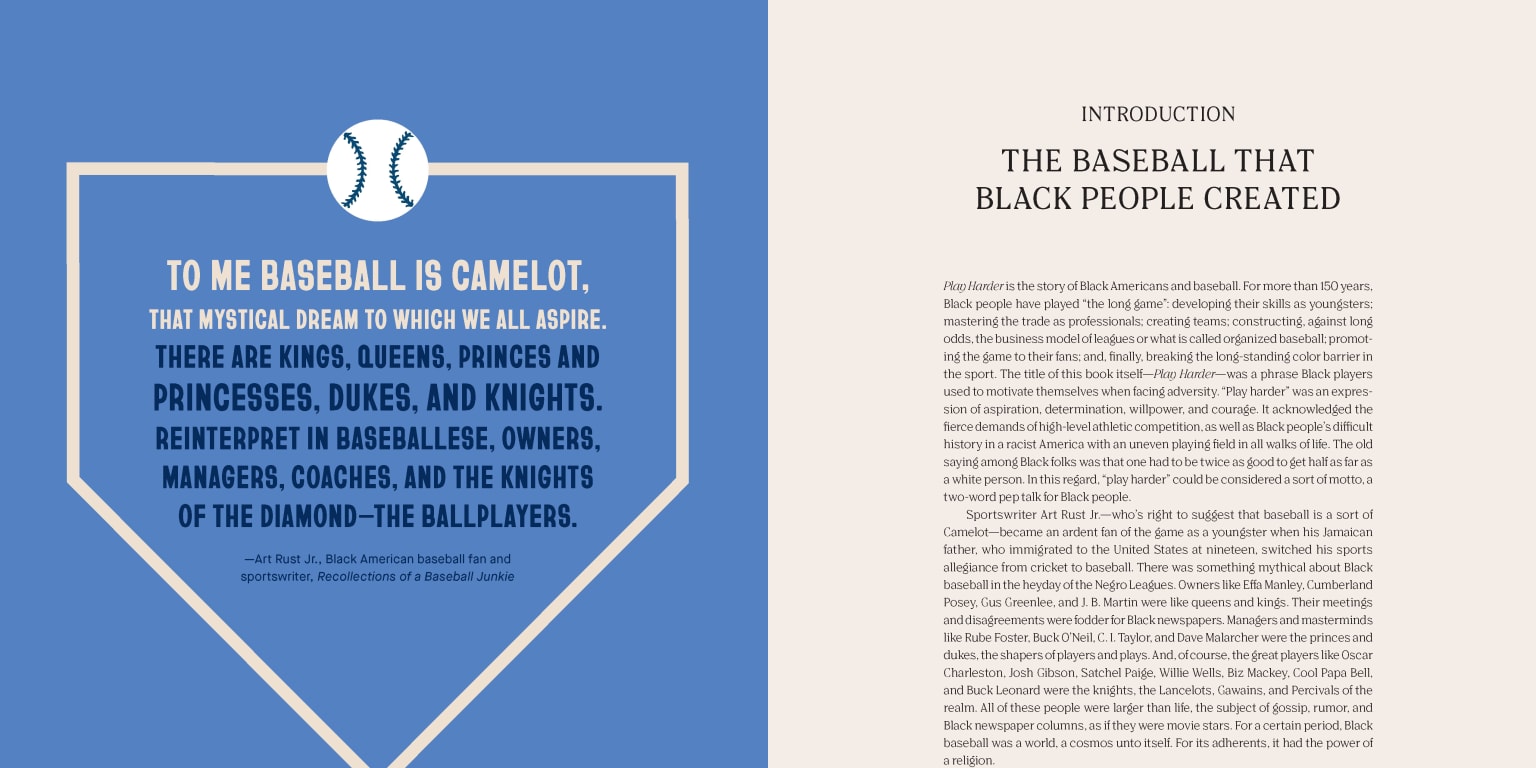
Author and historian Gerald Early, who’s been a consultant on five of Ken Burns’ documentaries — including the 1994 feature: Baseball — understands the way that Black stories in baseball and American society live in this precarious state. That knowledge partly informed his latest book, Play Harder: The Triumph of Black Baseball in America (released in April 2025), which was highlighted this month as part of the Baseball Hall of Fame’s virtual “Baseball’s American Voices” program for the country’s 250th anniversary.
“People at the Hall approached me about the book, when we first got together — the consultants along with the curators — about the possibility of doing a book, but it was kind of vague,” Early said. “So it took a little while before it finally became solidified. … Then, they approached me about writing the book. I was thrilled. I was actually quite flattered that they wanted me to do this.”
In conversation with Bruce Markusen from the Hall’s education department, Early explained how the book sprouted from a kernel of an idea into a beautiful catalog of Black baseball’s famous and unheralded figures and their stories. In an early meeting with the publisher, there was an idea to name the work after Ernie Banks’ iconic phrase “Let’s play two,” but a recent slew of biographies on the Cubs Hall of Fame first baseman nixed that plan.
Early landed on a different phrase for the title: One that was also used by Black players during the 20th century, and became a concept passed down to young African-American kids that dreamed of making it to the Majors. “Play harder” rings in the ears of the community not just as a reminder, but as a way to carry yourself on and off the field.
Early traces the history of Black baseball in America from its beginnings — working in concert with a special exhibit at the Hall of Fame. Stocked with fearmongering memos from southern towns and tales of organized games on slave plantations, Play Harder seeks to change the perception that Black baseball in the United States began with the Negro Leagues.
“The evidence shows that Black people played baseball here, probably nearly as long as white people have played baseball here,” Early said. “There’s evidence that goes back maybe as far as the 1840s that Black people have played baseball or some game that involved a bat and a ball of some sort for a considerable time.”
Unsung heroes and celebrated icons are all given ample room in Play Harder. Early wanted to leave no stone unturned: There’s Jackie Robinson and his complicated relationship with playing in the Negro Leagues, and Rube Foster and his brilliant tenure as founder of the Negro National Leagues (who Early calls one of the “great Black people in American history”). But there’s also great attention paid to people like Octavius Catto, an early civil rights activist who helped found the Philadelphia Pythians in 1865, while fighting for voting rights for African-Americans during Reconstruction.
For Early, it’s an invaluable privilege to tell these stories of Black baseball history — as well as others like Curt Flood’s battle for labor rights, Vada Pinson and Frank Robinson’s fraught interactions with the Cincinnati media and the relationship between Black and Afro-Latino players in the 20th century. Coinciding with the Hall’s exhibit, Play Harder exists as a resource to help deepen the average baseball fan’s understanding of how the history of Black participation in the sport is interwoven with the story of American society. For Early, you cannot tell one without the other.
“You’re trying to make sure that you’re able to mix history well with American social history so that it all kind of dovetails,” Early said. “This book will teach people, ‘OK, Black people were playing baseball, and this is what was happening in America, and this is what’s happening with Black people.’ It gives the book more power in telling the story, and for it to seem relevant to people in a certain way.”
