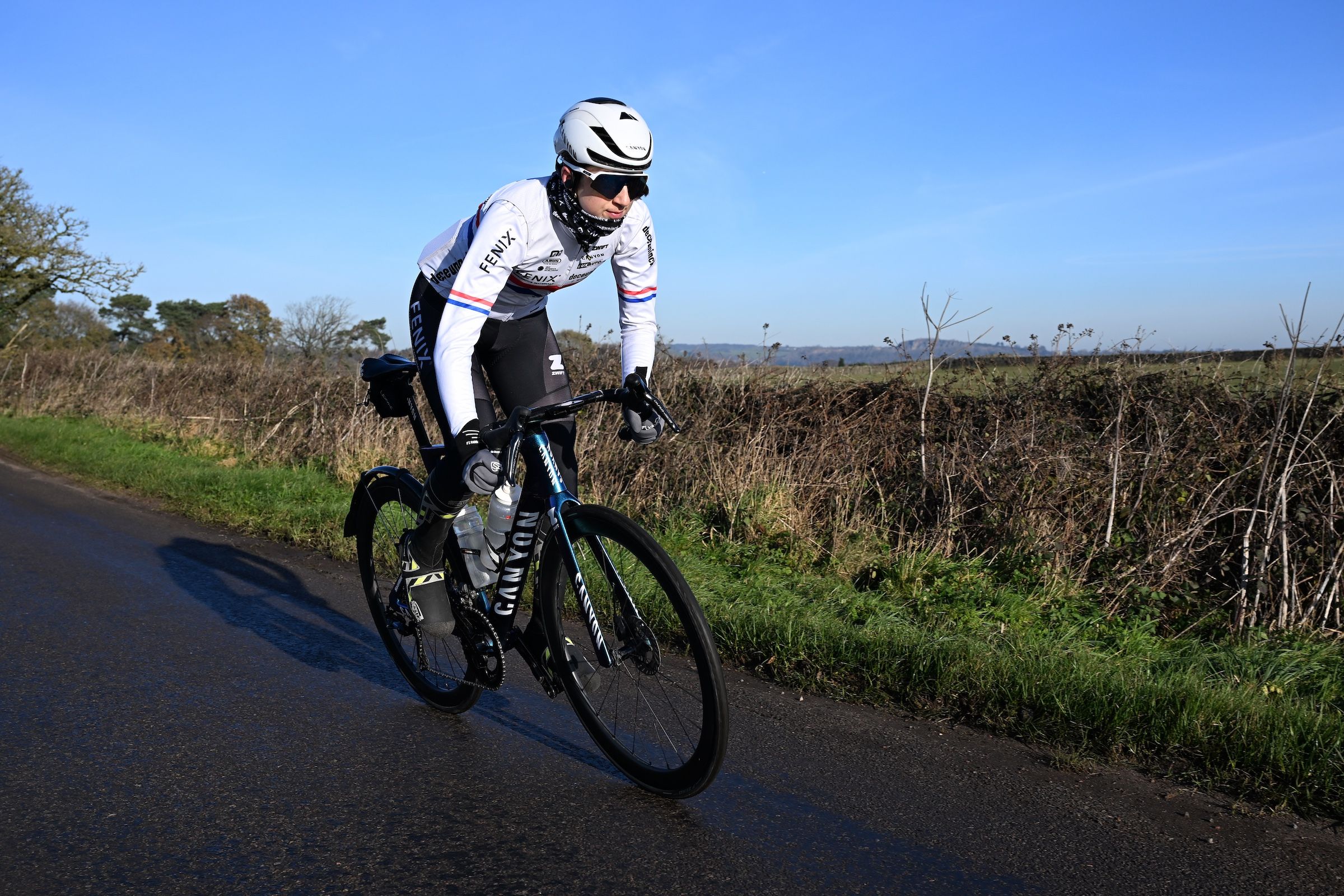
The days are short, the temperatures low and the skies more often grey than blue – but winter riding doesn’t have to be a grind. With the right approach, the coldest months can become some of the most rewarding, and the training you bank now will set up every mile of your spring and summer riding.
Cycling Weekly spoke to five current and former pros who have spent countless winters toughing it out on UK roads. Their tips, tricks and hard-earned habits will help you turn winter riding from something to suffer through into something you genuinely enjoy.
Pessimism pays off-layer up
We’ve all done it: stepped out on a chilly morning wearing less than we should because the forecast promised warmer hours ahead. More often than not, that warmth never comes, and you spend the entire ride, if not shivering, too cold for comfort. “Being too warm is better than being too cold,” says Oliver Knight of Cofidis, who is based in the Bristol area.
You can always vent heat, he reminds us: “You might think leaving the house a bit overdressed isn’t the best idea, but you can always unzip and tolerate a flappy jersey.” And in winter, when no one’s chasing speed records, a little extra drag is a price worth paying for comfort.
Keep your friends close, your rain jacket closer
Blue skies can be deceptive, and every pro agrees: the best waterproof cycling jacket you own should accompany you on every ride, no matter how promising the forecast. Whether it’s on your back or tucked into a pocket, it’s your insurance policy against a suddenly grim turn in the weather. “Even in summer in England I always carry a rain jacket with me – it’s like an emergency go-to, as it’s great for warming you up quickly,” says Devon-based Harrison Wood, now of Portuguese team Feirense-Beeceler. “The forecast might say it won’t rain, but then you get caught by a heavy shower.” If you’ve ridden in Britain, you know exactly what he means.
(Image credit: Andy Jones)
Gilet or jacket? Go for both
The French might turn their noses up, but the best gilets that are usually reserved for spring and autumn have a hidden superpower in winter. Wood shares his go-to hack: “I put a gilet on underneath a good winter jacket, so it acts like a boil-in-the-bag. It keeps your core a lot warmer, and we know that if you can do that, the rest of your body stays warm.” A simple extra layer, a big boost in comfort.
A quick heads-up…
Helmets offer some protection from the cold, and a bit from the rain, but when the mercury really drops, pros know to take extra measures. Former Ineos Grenadiers road captain Luke Rowe has a couple of tried-and-tested options. “You’ll feel warmer overall if your head is warm,” he says. “I’d always wear a skull cap in winter, or a cotton cap – though it’s a dying art, as they’re not aero – which also works.”
Rowe still swears by a piece of kit from 2008, back when he was a junior on the Rapha Condor-Recycling.co.uk team. “We had this Rapha cap that covered your ears and had a peak – it was the best thing I ever had,” he recalls. The modern version of Rapha’s peaked merino hat, the one Rowe remembers so fondly, is still available today.

(Image credit: Emma Silversides)
Five-layer the feet
Few sensations ruin a winter ride faster than freezing feet. Current British champion Millie Couzens of Fenix-Deceuninck, who spends most of her winter training in Oxfordshire, knows this struggle all too well – and has developed a few creative solutions. “I wear ski socks in winter, as cold feet are something I really struggle with,” she says.
“Last year, when it was really cold, I wore socks, put my feet inside plastic bags, and added toe covers and overshoes on top of my shoes which were quite loose.” That’s five layers of defence. Did it do the trick? “Kinda!” she laughs. “My feet were definitely warmer than before.”
Foil the cold
The old-school tips are often the best, and 2016 British champion Adam Blythe sings the praises of a ubiquitous kitchen item. “I’d wrap tinfoil over my socks, and then again on the outside of the shoes with the overshoes on top. A double layer of it,” he says. Were his feet kept warm? “We believed it worked anyway,” he grins. Rowe used the same tactic, and even got creative on some occasions. “I’d sometimes get normal socks and put them over the shoes, as it was cheaper than buying overshoes,” he says. “It became quite cool and common, if I remember correctly.”
Pocket full of spares
Hands and fingers are just as exposed to the elements as feet – arguably even more so when the rain sets in, so picking the best winter gloves for the conditions is essential. That’s why Harrison Wood plans ahead, dedicating a jersey pocket to spare kit. “If it’s looking quite wet, I’ll wear a pair of neoprene gloves, and have spare woollen neoprene gloves in my pocket, so if it gets wet and cold I can swap them,” he says. “For me, having as many emergency garments as possible in your pocket is really crucial, especially gloves.”

A good cup of coffee can make or break a long ride in bad weather
(Image credit: Future / Richard Butcher)
Roast those beans
On rides longer than a couple of hours, the universal advice is: always make time for a coffee stop. “I’m a big, big fan of cafe stops,” Rowe says. “It gives us a chance to warm up, and more importantly it’s good for the social side of the sport. Sitting round the table shooting the breeze for half an hour with a hot drink and a bit of cake is the cafe culture that we grew up on and we shouldn’t leave behind.” Not only does a cafe stop allow us to socialise and get hot fluids into our system, having the double effect of rehydrating and warming up the body, but it’s a chance to dry out. Wafting wet gloves under the air dryers in the toilets is a staple part of a winter cyclist’s life.
A little of what you fancy…
Brownie, banana cake, Bakewell tart, apple pie… the list of sweet snacks available to feed hungry cyclists mid-ride goes on. But Knight has another winter preference. “In these months you’re not doing too much intensity and you’re riding quite easy so your stomach is less likely to suffer if you do allow yourself a heavier treat when you stop,” he says.
And what’s his treat? “A sausage sandwich with ketchup. It goes down so well.” This recommendation probably isn’t from the pages of Cofidis’s team nutritionist’s book, but it pays to slacken the rules in winter. If the food provides fuel, tastes good and lifts your mood, voilá!

You need to keep drinking, even when it’s cold
(Image credit: Future)
Watch out for winter thirst
Cold weather can trick you into thinking you’re not thirsty, but dehydration is still possible in winter. With fewer on-the-bike sips and most refuelling happening at cafe stops, having a sweet, tasty solution in the bidon can make a real difference. “Sometimes in winter you don’t drink as much, so I always make sure that my drinks are high in electrolytes and carbs,” says Wood. The mix helps maintain fluid balance and keeps energy levels topped up – making every mouthful count when you’re less inclined to drink.
Don’t let your guards down

Mudguards will keep you and your ride buddies drier for longer
(Image credit: Future)
There’s nothing more infuriating in winter than riding behind someone who doesn’t have a set of the best bike mudguards on their bike. The road muck flicks up off their wheel and covers your bike, your face and your clothing (as well as their own). Knight pleads for everyone to invest in mudguards. “It’s my biggest piece of advice make sure you’ve got good ones,” he says. “It not only protects you and others from road spray, it also makes kit last longer and everything on the bike work a bit better.”
Keep on running
The benefits of running for cyclists are well-documented, with the likes of Tadej Pogacar, Remco Evenepoel, Primoz Roglic and Mathieu van der Poel all extolling the virtues of winter running. Recently, Van der Poel ran 10km in an impressive time of 33.41. When Knight is at home on a Saturday in winter, he’ll often head down to his local Parkrun. “It’s full-gas for 5km, good competitiveness and it’s a good way of getting some intensity into me,” he says. “It’s also using all the key muscles around the knees and ankles.”

Gyms are dry and warm, and they’ll help your riding
(Image credit: Future)
Hit the gym
Every cycling team urges its riders to get into the gym at least once a week through winter – and amateurs should follow suit. Functional strength work, mobility and targeted muscle-building pay off fast. “You see improvements quite quickly and that’s really motivating,” Wood says. “From one week to the next you might be able to tolerate an extra 5kg during squats. Before long, it’s feeling easier and your legs are not as knackered afterwards. This sort of training improves my sprinting, too, so it has a benefit when racing starts.”
Knight has had the same experience. “You hit all the key muscle groups and you feel really productive,” he says. “As cyclists we’re novices in the gym and we’re not lifting heavy weights, so you see a massive progression quite quickly. That’s beneficial mentally as you’re telling yourself that you’re getting stronger.” And when the lifting is done, Knight makes sure to finish with heat exposure. “There are so many studies into the benefits of heat training, so I spend a bit of time in the sauna afterwards.”
Let the weather set the schedule
Most of us can’t cherry-pick ride times the way pros can – but we can borrow their mindset. Couzens adapts her plan rather than forcing sessions through foul conditions. “If the weather is bad, I move my training around, and bring my rest day forward rather than pushing through bad weather,” she says.
“If it’s forecast to stay fine for only a few hours, then I will do shorter intervals that day.” The takeaway is simple: protect the workload, but stay flexible. Winter rarely plays nice, so reshuffling sessions is not failure – it’s strategy. And when the forecast is grim for days on end, the turbo trainer (or a static bike in the gym) is always there to keep the momentum rolling.
Don’t place too much faith in the forecast
We’ve all had a day from hell – a ride that turned into a nightmare and left you questioning why you even ride a bike. Fear not, the pros have them too. Millie Couzens remembers a winter ride a few years ago when the weather failed to follow the forecast. “It was meant to stay dry, but I went out and it rained the whole time. Everywhere was flooded, and we had to keep changing the route.
At one point we went off-road to avoid a flooded road, and we ended up cycling into an even bigger flood. The ride was meant to be three hours, but we finished five hours later and I couldn’t feel any part of my body – everything was numb.” What did Couzens learn? “That better route planning is essential. Avoid the places that are more susceptible to flooding, and always have an escape route home.” Harrison Wood tells a similar tale of forecast failure:
“Last winter we went out on a club ride and it was meant to be an alright day, with no rain in the forecast. Fifteen minutes after starting, it was torrential rain. I only had a normal pair of gloves on – not waterproof – and by the time we got to the clubhouse my hands were completely frozen. I had to wear a spare pair of socks on my hands just to get home. It barely helped – my hands were white and in awful pain by the time we got back.”
