In a sport that is constantly changing and following new trends, we’ve seen one emerging development in baseball in recent years: relievers converting into starting pitchers.
To be more specific, we’ve seen more established relievers in the Majors switching to the rotation, as our own Mike Petriello explored last year when the Mets signed veteran reliever Clay Holmes and converted him to a starting pitcher.
Before Holmes, you had success stories of Garrett Crochet, Michael King and Seth Lugo switching from primary relievers to full-time starting pitchers. In theory, this development makes sense, as teams are relying on relievers more than ever and defined roles on pitching staffs have become a little more blurred.
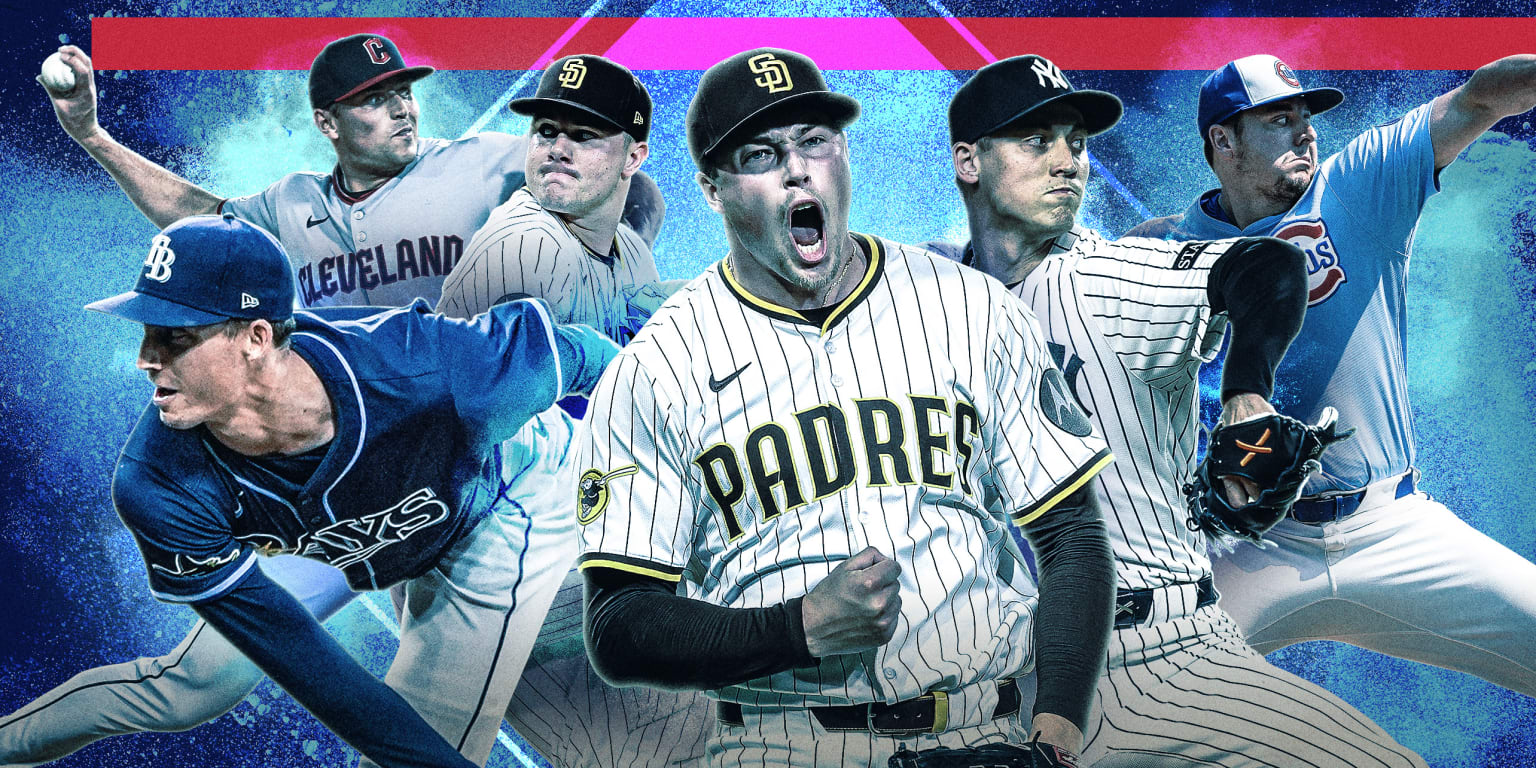
With this in mind, we’re taking a look at six pitchers (including two current free agents) who could make the transition from the bullpen to the rotation in 2026 and examining why it might — or might not — work for each player.
Why it could work: Miller has already been a starter in the past during his collegiate years with Gardner-Webb University and Waynesburg University (38 starts), in the Minors (15 starts from 2021-23) and in his debut season in 2023 (six starts, four relief appearances). Miller also threw 60-plus MLB innings in each of the last two seasons, flashing some of the durability needed as a starter.
And, of course, Miller’s stuff is so outlandish and the numbers have been so remarkable — he has a 2.56 ERA and 208 strikeouts in 126 2/3 innings since ‘24 — that the right-hander could see a small decline in stuff and still be one of the most electric starting pitchers in the game. Plus, the Padres are in desperate need of an impact starter after losing Dylan Cease and Michael King to free agency and Yu Darvish to injury (he’ll miss all of 2026 due to UCL surgery). Padres general manager AJ Preller has already hinted at this being an option, which is no surprise considering their own success stories with King and Lugo in recent years.
Why it might not work: As the old adage goes, if it ain’t broke, don’t fix it. Miller has reached such a dominant level of success in the bullpen that it simply might not be worth trying to make the switch. Sure, Miller could always hypothetically return to the bullpen if things go awry, but he simply might be too valuable of a reliever to even attempt this.
Then there’s the injury component and limited workload as a starter. Miller missed significant time in the 2023 season with a mild right UCL sprain. He also didn’t throw many innings as a starting pitcher at any point in the past, with his 98 2/3 combined innings between Gardner-Webb and the ACL Rookie-Ball Athletics in ‘21 representing the most innings he’s thrown in a season. Miller is under club control through 2029, so the Padres have the option to experiment with him, but they might not want to mess with it.
Why it could work: Sticking with another potential Padres pitcher, Morejon could make the transition considering the need San Diego has in the rotation. A former top starting pitching prospect, Morejon debuted in 2019 and had mixed results in limited time as a starter and reliever through the 2023 season before he switched full-time to a relief role in 2024. Morejon has excelled in that time, throwing more than 60 innings in each season with a 2.83 ERA in 2024 and a 2.08 ERA in ‘25.
Where Miller has dominated with top-shelf stuff, Morejon has been elite in terms of inducing weak contact (99th percentile hard-hit rate in 2025), getting the ball on the ground (54.3 percent) and limiting free passes (5.9 percent). To be clear, Morejon still features big stuff — his fastball averaged 97.7 mph in ‘25 and he generated a 38.3 percent whiff rate on his slider — but his game is less about missing bats and more about elite command and producing weak contact. Additionally, Preller also discussed moving Morejon to the rotation in the same interview about the possibility of Miller doing the same.
Why it might not work: Similar to Miller, there’s an if-it-ain’t-broke-don’t-fix-it element for Morejon. He’s been dynamic since becoming a full-time reliever and, with Miller, he forms one of the best one-two punches of any relief combo. There’s also the same reality that Morejon has never thrown a ton of innings, topping out at 73 2/3 innings last season.
You also can’t ignore Morejon’s 37th percentile whiff rate last season, which would figure to suffer even more in a transition to the rotation. Morejon has excelled in other areas as a pitcher, but allowing even more balls in play than he’s allowed in his time as a reliever could lead to more variance as a starting pitcher.
Why it could work: Jax debuted in 2021 as a starter but has since shifted to becoming one of baseball’s top relievers. However, Jax admitted to being open to starting during the 2023 season and had a lot of buzz about him making the switch when he was with the Twins heading into last year. That transition didn’t occur, but Jax still has the building blocks to make this a possibility.
Jax has thrown at least 65 innings in every MLB season since ‘21, including three seasons of 70-plus innings. He’s been about as durable as they come for relievers and has a remarkably diverse arsenal for someone in the bullpen. Jax threw four pitches at least 10 percent of the time in ‘25, including a four-seamer, sinker, sweeper and changeup. Jax misses bats (career 27.3 percent strikeout rate), throws strikes (7.0 percent walk rate) and has proven to be a durable option in relief. In a forward-thinking Rays organization, Jax could be an option to start in 2026 and has the ingredients to succeed.
Why it might not work: Beyond your usual pitcher risk, there aren’t a lot of reasons to doubt that Jax could make this work. Sure, Jax struggled mightily as a starter in ‘21 (6.37 ERA and 6.47 FIP in 82 innings), but he’s developed into such a strong reliever with enough of a diverse skillset that he’d probably have better success this time around.
If there’s one area that could prove problematic, it’s his 9.3 percent barrel rate from 2025 (up from 8.0 percent in 2024), which ranked in the 32nd percentile. If Jax made the transition to the rotation, that elevated barrel rate could be an issue as he navigated a lineup for a second or third time. Since barrels often turn into home runs, Jax could develop a home run issue as a starter.
Why it could work: Keller is coming off a breakout season as a reliever in the Cubs’ bullpen, throwing 69 2/3 innings with a 2.07 ERA and 75 strikeouts. Keller, who transitioned to the bullpen in 2024, saw his average fastball velocity jump from 93.7 mph in ‘24 to 97.1 mph in ‘25. That sizable velocity increase plus a diverse arsenal similar to Jax’s — Keller threw five pitches at least 10 percent of the time last season — has teams interested in the right-handed free agent as both a starter and reliever.
Keller also demonstrated that he can handle the demands of throwing every fifth day in the Majors, compiling 633 2/3 innings as a starter from 2018-22, the 30th-most innings of any starting pitcher. Keller has made meaningful changes in terms of his stuff, arsenal and ability to limit weak contact that he might have the package to make this all work. Keller also recovered quite well from thoracic outlet syndrome (TOS) surgery after the 2023 season, a serious injury that some players have struggled to bounce back from.
Why it might not work: Keller was a solid starter in his first three MLB seasons but he really struggled in the rotation from 2021-23, necessitating the transition to the bullpen in 2024. Other than those struggles and the surgery he underwent after the ‘23 season, there aren’t many red flags for Keller’s possible return to the rotation.
Even if Keller’s fastball velocity drops a bit in the move back to the rotation, he’s added enough velo recently and has enough of a balanced profile that he might find success yet again as a starter.
Why it could work: Like Keller, Weaver is another former starter-turned-reliever that could find his way back to the rotation in 2026. Weaver has already said the “door was open” to return to starting in the final month of the regular season. Weaver moved to the bullpen full time in 2024 and had a breakout first season with the Yankees, throwing 84 innings with a 2.89 ERA and closing games in October for New York. Things were bumpier in year two, but Weaver still had a solid 3.62 ERA and 72 strikeouts in 64 appearances.
Unlike Jax and Keller, Weaver tightened up his arsenal since moving to relief, becoming a four-seamer-changeup-cutter guy and getting much better results, especially on his changeup. If Weaver can maintain the roughly 2 mph jump in velocity on his changeup and keep those results as a starter, he could ride that pitch to success in the rotation.
Why it might not work: Weaver had wildly inconsistent results as a starting pitcher, which saw him demoted and promoted on multiple occasions before he ultimately settled in as a great reliever in New York. Because of his results, Weaver also never threw a ton of innings, only clearing 100 in two seasons (2018 and ‘23). Between the results and the fact that he’s only thrown 130 innings in a big league season once, Weaver might have a larger bar to clear than the previously listed pitchers.
There’s also the fact that Weaver had a brutal ending to the 2025 campaign, posting a 9.64 ERA in the final month before allowing five earned runs in three postseason outings while only retiring one batter. Had Weaver reached free agency last season after a dominant ‘24 performance, the likelihood of this transition might have been higher.
Why it could work: This one might be a bit more unlikely, but hear us out. The Guardians could use another impact starter, and the organization has churned out quality relievers for years. Even with Emmanuel Clase suspended indefinitely, Cleveland could think outside the box by transitioning Smith to the rotation and trusting in its development to produce more bullpen arms.
Smith hasn’t started a single game in professional baseball but he has thrown 70-plus high-quality innings in each of the last two seasons, as well as 13 1/3 combined postseason innings. Smith’s 5.4 Wins Above Replacement (FanGraphs) are tops among relievers in that time and he has done pretty much everything well. He’s generated boatloads of strikeouts (207 since 2024), doesn’t walk batters (6.1 walk percentage) and limits hard contact. With a fastball-splitter-sweeper trio that has befuddled opposing hitters, Smith has the profile to become a starter.
Why it might not work: As mentioned before, Smith has never started a professional game. His last start at any level came with the University of Hawaii in 2020. Even with his demonstrated track record of durability in the bullpen (he also threw 60-plus innings in the Minors in both 2022 and ‘23), Smith still hasn’t remotely approached a modern-day starter’s workload.
Perhaps none of that matters. Smith is a legitimately great pitcher without any meaningful flaws in his profile. Cleveland simply might not want to create even more uncertainty in its bullpen, but this outside-the-box idea could give the Guards a legitimate starter in 2026.
