
A classic program with new, groundbreaking features
This year’s version is called ChessBase’26, introducing a new naming convention for future releases. While building on many traditional features, the new version shifts the focus away from mere game and engine variation collections towards a deeper understanding of decision-making processes, patterns and practical playing reality.
This shift in focus is evident in almost all of the new features. ChessBase’26 is not just a tool for ‘objective’ analysis anymore, but is increasingly becoming an active training platform. Users should learn not only what the best move is, but also why certain decisions are practical, risky or sensible in the long term. The programme responds to a key development in modern chess: while engines are ubiquitous, their usefulness depends crucially on how well humans can interpret their results.
I very much welcome this step personally, as it offers self-taught players new opportunities to explore chess in general and their own approach to the game in particular.
Monte-Carlo-Analysis
In my opinion, Monte Carlo analysis is one of the most exciting new features in ChessBase’26. Unlike traditional engine analysis, this approach uses simulation-based methods. Instead of outputting a single main variation with an evaluation, numerous plausible continuations are simulated and statistically evaluated.
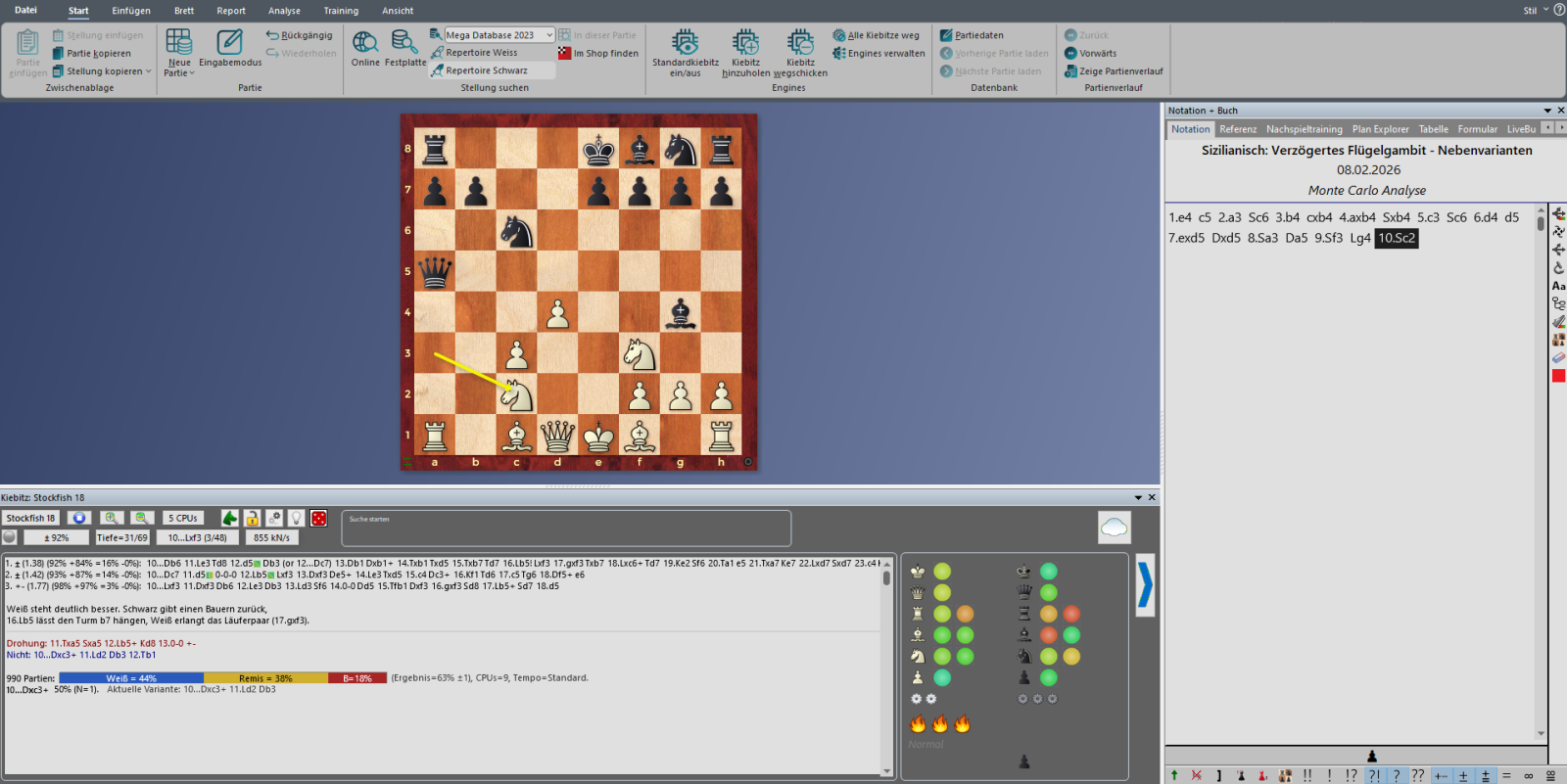
For players and coaches, this means a change in perspective. Positions are no longer labeled as “+0.34” or “−0.12,” but rather presented as usable game material with varying probabilities of success or failure. Especially in middlegame positions with multiple playable moves, Monte Carlo analysis provides a more realistic picture of practical chances. It shows which plans are stable, which lead to desirable results, and where small inaccuracies can have a big impact.
From a coach’s perspective, this approach is particularly valuable from a didactic point of view. Players learn to assess risk and complexity more consciously instead of sticking to seemingly exact figures.
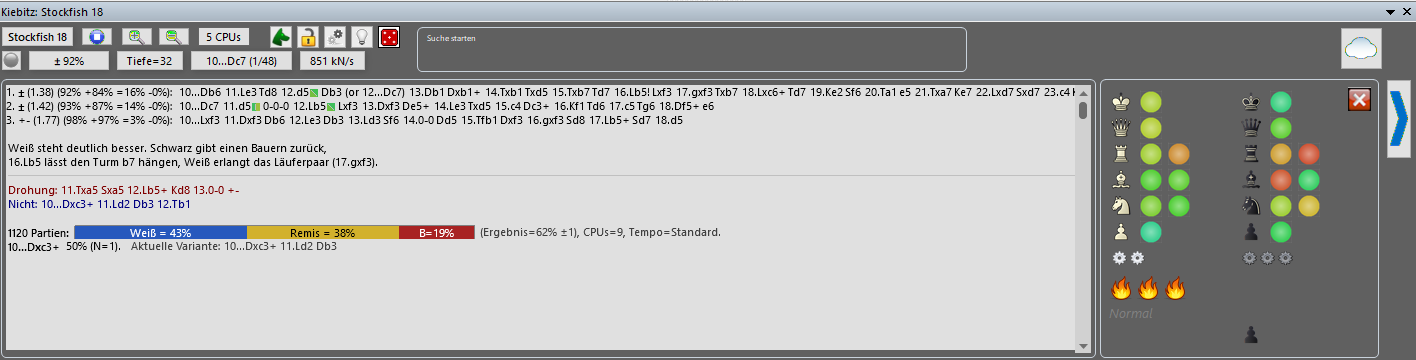
For tournament players who have to make decisions under time pressure, this is a huge advantage: the analysis approximates the actual game situation, in which it is not perfection but increasingly the practical value of ideas that counts.
Deeper understanding, better preparation, and more effective training – ChessBase’26 and FRITZ 20 take your chess to the next level.
Data, plans, practice – the new Opening Report In ChessBase there are always attempts to show the typical plans of an opening variation. In the age of engines, chess is much more concrete than previously thought. But amateurs in particular love openings with clear plans, see the London System. In ChessBase ’26, three functions deal with the display of plans. The new opening report examines which piece moves or pawn advances are significant for each important variation. In the reference search you can now see on the board where the pieces usually go. If you start the new Monte Carlo analysis, the board also shows the most common figure paths.
During my testing phase of this feature, I generated game simulations for various opening positions that were generally considered advantageous for White. The Monte Carlo analysis simulated approximately 1,200 games for a specific opening position on my computer in just under five minutes. As a rule, the games lasted a similar amount of time (around 50 moves) with different outcomes. The results of the games were also striking. Despite an initial advantage, White also lost some games, which is probably due in part to the short thinking time in which the games were played with a move length of around 50 moves. The longer the game lasted, the more frequently it was marked by mistakes. This shows that the first moves are primarily decisive.
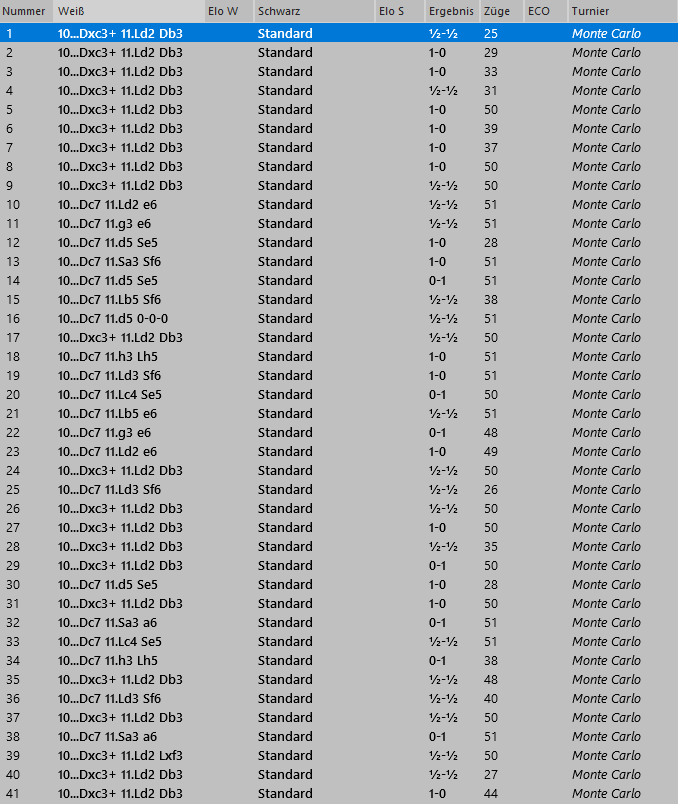
For users, a major advantage of these simulations is the ability to save and replay the games. For my own work, these engine games allow me to generate specific patterns and motifs within a range of positions. I personally use the data obtained to create special databases with typical positional ideas.
All in all, this is a very useful feature, but it still requires some fine-tuning on the part of the user to weed out the erroneous data and retain the relevant information. There is a lot you can do with this data, and overall I consider it a good introduction to a new feature that should deliver outstanding results with a little practice.
EXPAND YOUR CHESS HORIZONS
Data, plans, practice – the new Opening Report In ChessBase there are always attempts to show the typical plans of an opening variation. In the age of engines, chess is much more concrete than previously thought. But amateurs in particular love openings with clear plans, see the London System. In ChessBase ’26, three functions deal with the display of plans. The new opening report examines which piece moves or pawn advances are significant for each important variation. In the reference search you can now see on the board where the pieces usually go. If you start the new Monte Carlo analysis, the board also shows the most common figure paths.
AI Assistent
The AI assistant represents another important step toward explanatory analysis. While earlier versions of ChessBase primarily provided tools, the assistant now takes on an active mediating role between computer and human. It comments on positions in terms of piece placement and strategic elements, highlights typical plans, and warns against wrong decisions.
What is remarkable here is the focus on relevance. The assistant deliberately reduces the flood of information and presents clear clues instead of endless variations: What are the long-term plans? Which pieces are poorly coordinated? Which pawn structures determine the game? This form of analysis corresponds more to human thought processes than classic engine outputs.
For self-study, this means a significant increase in efficiency. Analysis time is used more productively, as the focus is more on understanding and less on computing power. The AI assistant also opens up new possibilities for trainers, as it can be used as a didactic tool to present complex positions in an understandable way.
However, one problem I encountered repeatedly was discrepancies between the AI’s statements and ongoing engine analyses. For example, positions were rated only slightly better by the AI, whereas Stockfish clearly rated a position as +2. At times, the AI assistant’s statements seemed generic and generalized. It would be interesting at this point to link the AI statements to the specific variations during an engine analysis in order to provide realistic interpretations of the ongoing analysis.
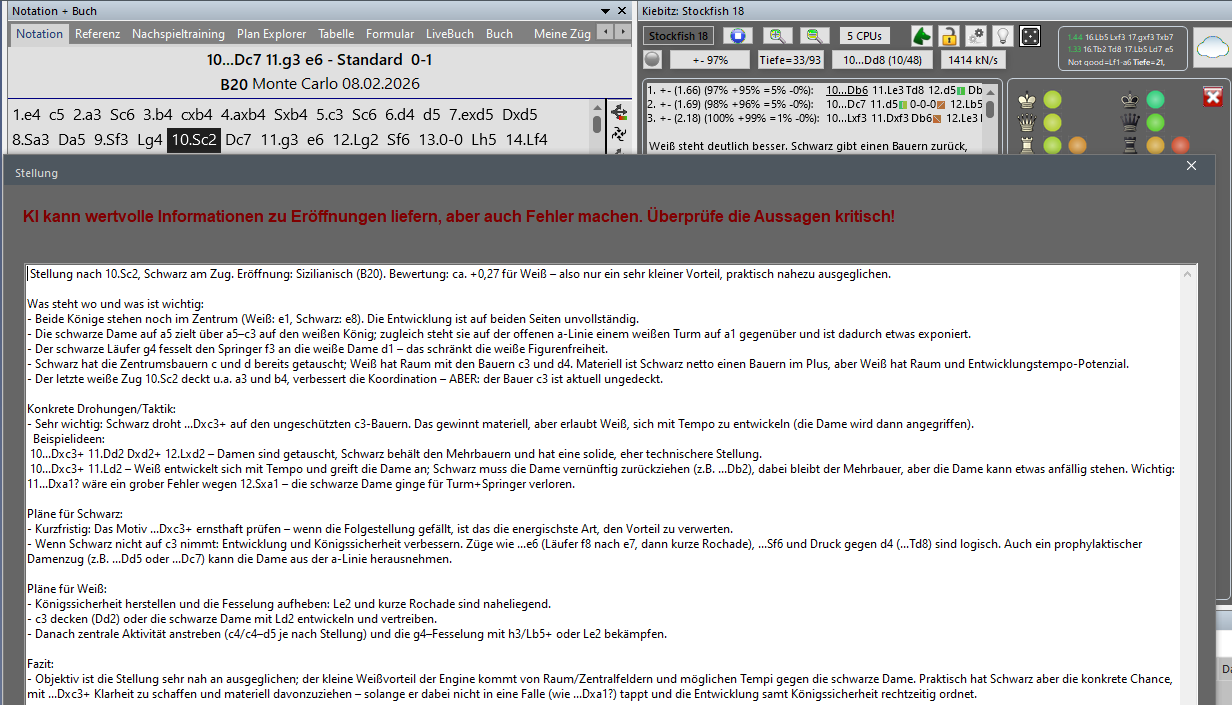
With regard to software that is increasingly tailored to learners, this step toward AI-supported analysis and commentary certainly represents a groundbreaking direction. However, I believe there is still room for improvement in order to maximize its benefits. It may be one of the weaker options at present, but it is the one with the greatest potential.
New opening report
The revised opening report is one of the most practical improvements in ChessBase’26. It combines the enormous database of current games with a more differentiated evaluation. In addition to success rates, trends, typical deviations, and playing strength-specific preferences are made visible.
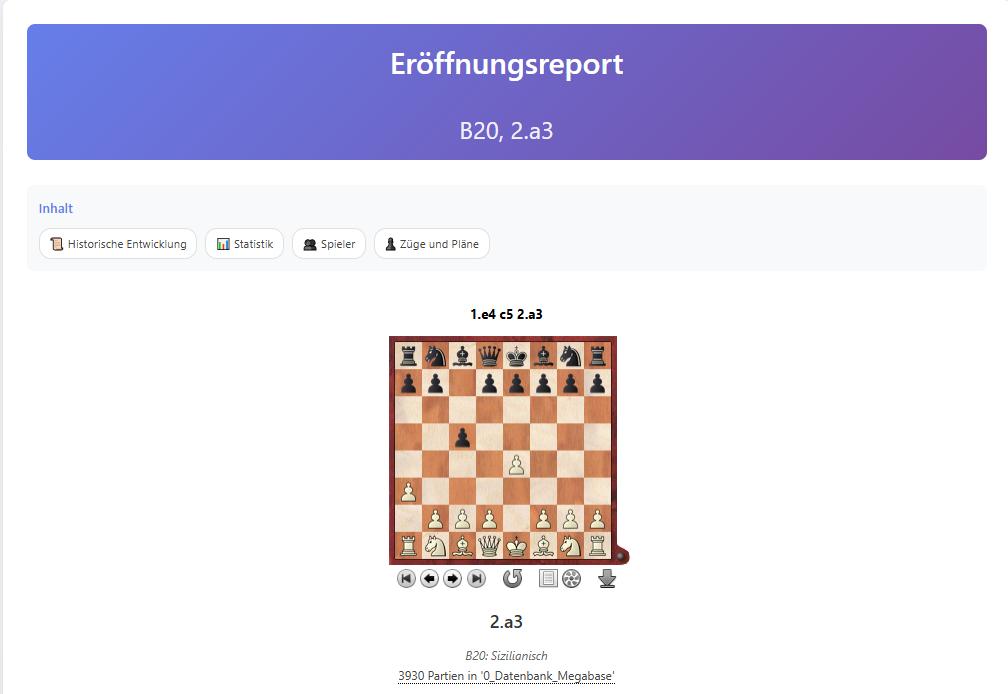
In addition to basic information on the classification and categorization of the given position, historical data is also provided. This allows you to see which pioneers were involved in the development of an opening.
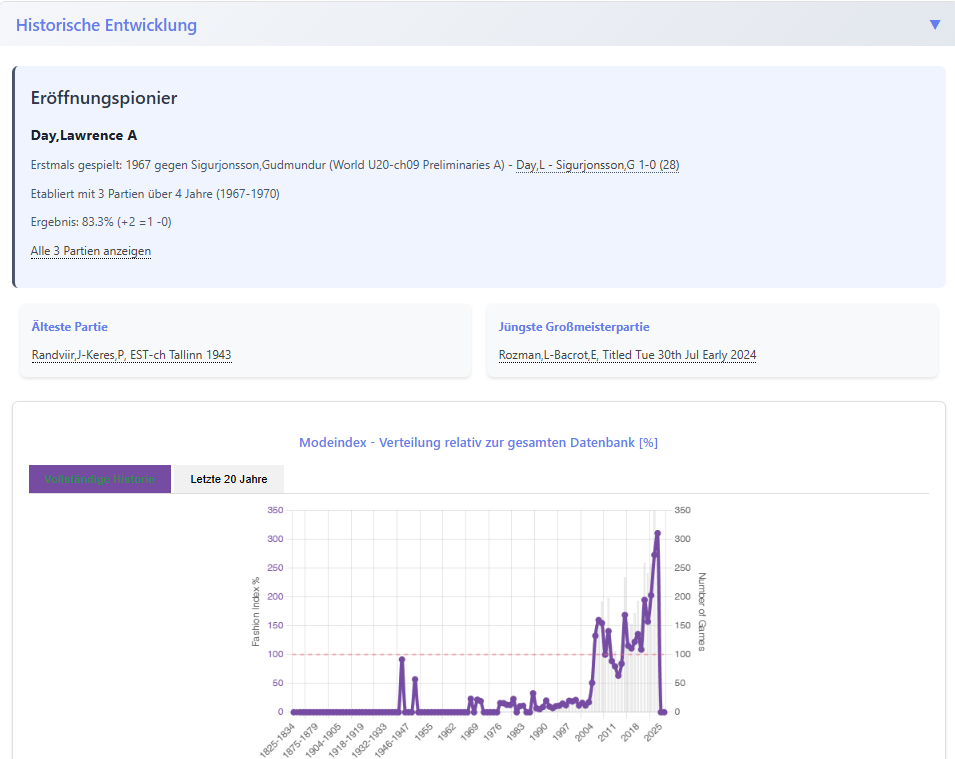
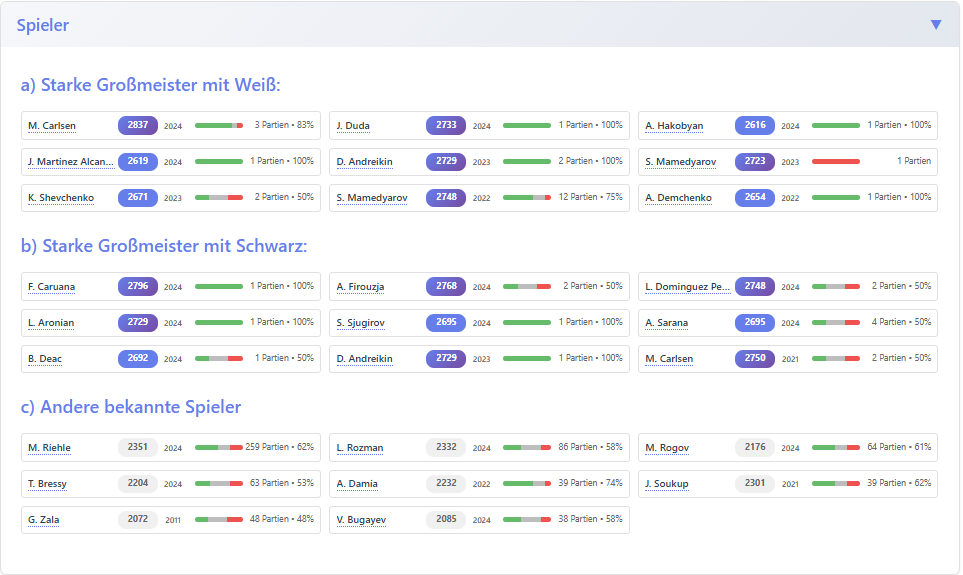
The ability to evaluate openings not only globally but also contextually is particularly helpful. A variation that is solid at grandmaster level may prove to be practically unsuitable at amateur level—or vice versa. The new report takes this reality into account and enables a much more targeted repertoire design.
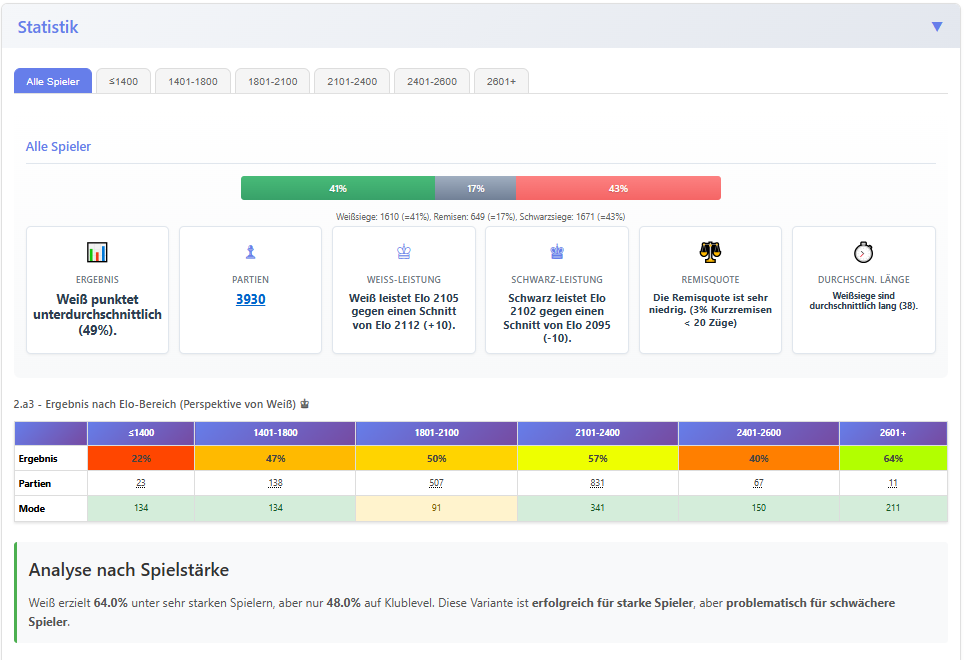
This transforms the opening report from a statistical overview into a strategic tool for your own playing practice. Players can tailor their repertoire more consciously to their playing strength, time controls, and personal preferences, rather than simply following theoretical trends.
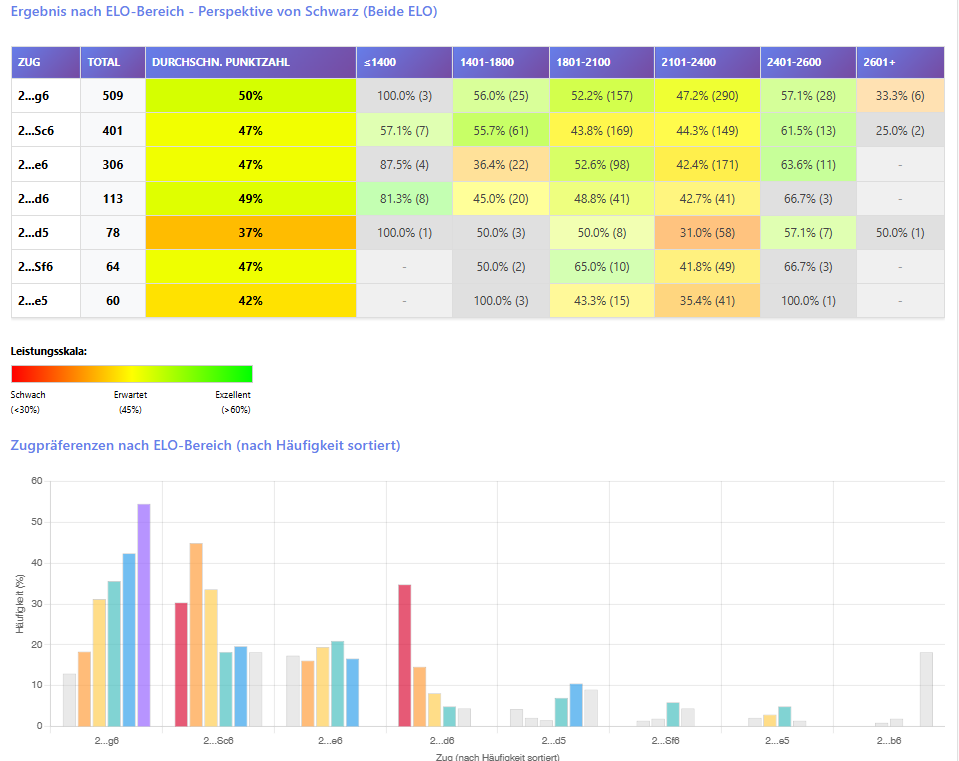
As with the game filter feature based on time control, this function depends largely on how well maintained and organized the reference database is. A database such as the in-house Megadatabase is probably best suited for this purpose. Statistically speaking, I have obtained the best results here, which provides a wealth of material, especially for training specific opening systems or endgames.
EXPAND YOUR CHESS HORIZONS
Data, plans, practice – the new Opening Report In ChessBase there are always attempts to show the typical plans of an opening variation. In the age of engines, chess is much more concrete than previously thought. But amateurs in particular love openings with clear plans, see the London System. In ChessBase ’26, three functions deal with the display of plans. The new opening report examines which piece moves or pawn advances are significant for each important variation. In the reference search you can now see on the board where the pieces usually go. If you start the new Monte Carlo analysis, the board also shows the most common figure paths.
Visualization of piece maneuvers
From a didactic point of view, one of the most exciting innovations is the visualization of typical piece maneuvers. ChessBase’26 makes recurring routes of pieces visible and highlights strategic regroupings graphically. This is particularly valuable for understanding long-term plans.
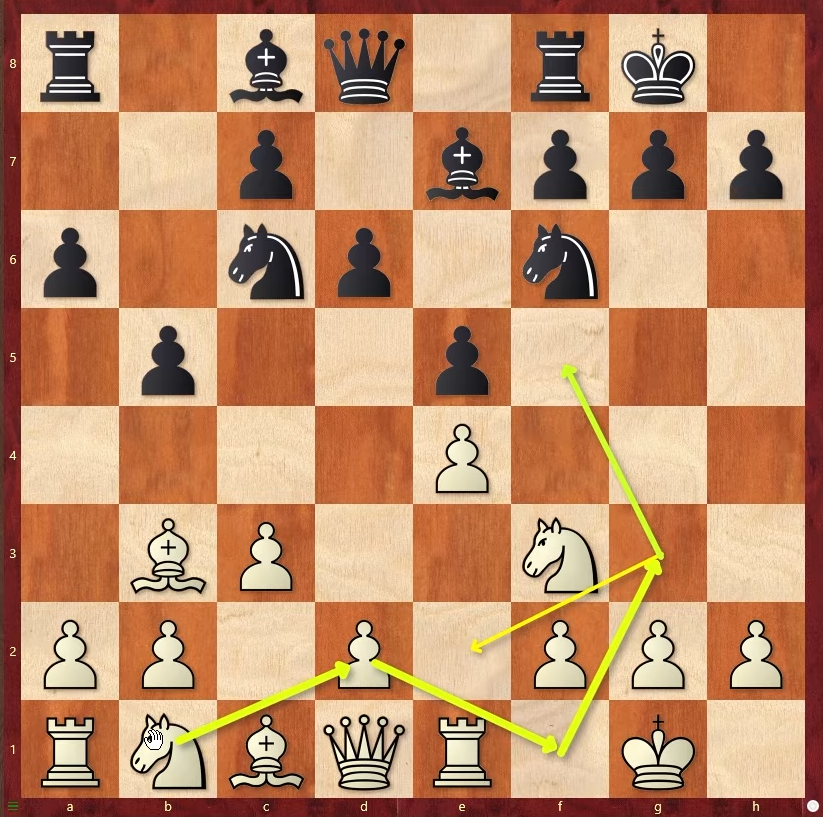
Many strategic concepts—such as rerouting of knights, doubling rooks or activating your bishops —are difficult for learners to grasp because they span several moves. The new visualization translates these abstract ideas into clear, visual patterns. This not only makes learning easier, but also makes it easier to remember and apply in your own game.
This feature opens up additional teaching opportunities for players and coaches. Strategic motifs can be explained clearly without relying on long verbal descriptions. Creating a thematic database for specific positions or sequences is a good way to do this.
However, in order to make full use of the feature, I believe it is important to be aware that these are only tendencies and that thematic motifs must always be assessed in light of the specific position at hand. Nevertheless, keeping these ideas in mind can have a positive influence on various areas (e.g., calculating variations and decision-making).
Game filter (by time control)
The differentiated filtering of games by time controls under the Reference tab rounds off the overall package of ChessBase’26 in a meaningful way. Blitz, rapid, and classical games can be specifically separated and analyzed in theory. This distinction is more than just a convenience feature, as playing style, types of errors, and decision-making quality vary considerably depending on the time format.
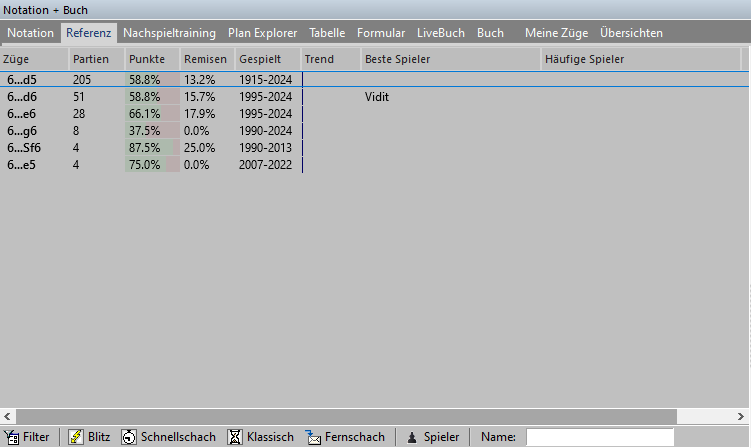
By specifically evaluating certain time controls, players can identify their weaknesses more precisely. Openings that work well in blitz chess are not necessarily successful in classical chess – and vice versa. ChessBase’26 consistently takes this differentiation into account, thereby supporting more realistic preparation for modern tournament practice.
However, this feature is heavily dependent on the reference database. If the database is well maintained and well classified in terms of time controls, it is possible to generate very useful data that highlights practical problems with low time controls. Since I have been using this function more intensively, I have been paying particular attention to entering the time control in my database management, as my initial attempts often resulted in games with other time controls being displayed. For this reason, the reference database is the decisive factor here. During my own test phase, blitz games were displayed at the beginning (Titled Tuesday), even though a filter had been set specifically to exclude this time control.
The premiere chess database with over 11.7 million games
The ChessBase Mega Database 2026 is the premiere chess database with over 11.7 million games from 1475 to 2025 in high quality.
Conclusion
The latest version of the database software called ChessBase’26 represents a genuine enhancement of the software with potentially groundbreaking features. Even though the intention is clearly to provide users with tools for extracting and designing their own training, the biggest hurdle to efficient work is still the user’s skill in handling this information, whether and to what extent it can be used.
Nevertheless, the innovations are clearly aimed at understanding, decision-making, and practical application. Monte Carlo analysis, AI assistant, and visualizations complement the classic engine analysis with more human perspectives without negating its strengths.
I myself have now permanently replaced my previous version with the new one and use the new features on a daily basis. For me, ChessBase’26 consolidates its status as an indispensable tool for serious chess training. The software is thus increasingly aimed at club players who are willing to engage intensively with their game—and are looking for a tool that not only calculates but also explains. Those who are willing to accept the necessary data maintenance can benefit greatly from the latest version.
access your chess data in cloud databases – and 13 million games.
ChessBase Mobile has everything you need as a chess player on the go:
- Access the ChessBase online database – with more than 13 million games: search for players, positions, openings etc.
- Save your own games and analyses in cloud databases
- Synchronise your personal databases across all your devices
- Analyse your games with the built-in engine
- Live opening book: use the most comprehensive and up-to-date statistics for every opening position
- Access your opening repertoire in the cloud: create and edit your personal opening repertoire
- 300 opening overviews, with repertoire suggestions: get started with new systems!
- Practise opening variations with three modes.
- Advanced notation: add comments, symbols, variations, arrows and markings to your games
- Advanced sharing options: share games and positions via link, image, GIF, FEN or QR code
- PGN compatibility: upload and download games or databases as PGN files
