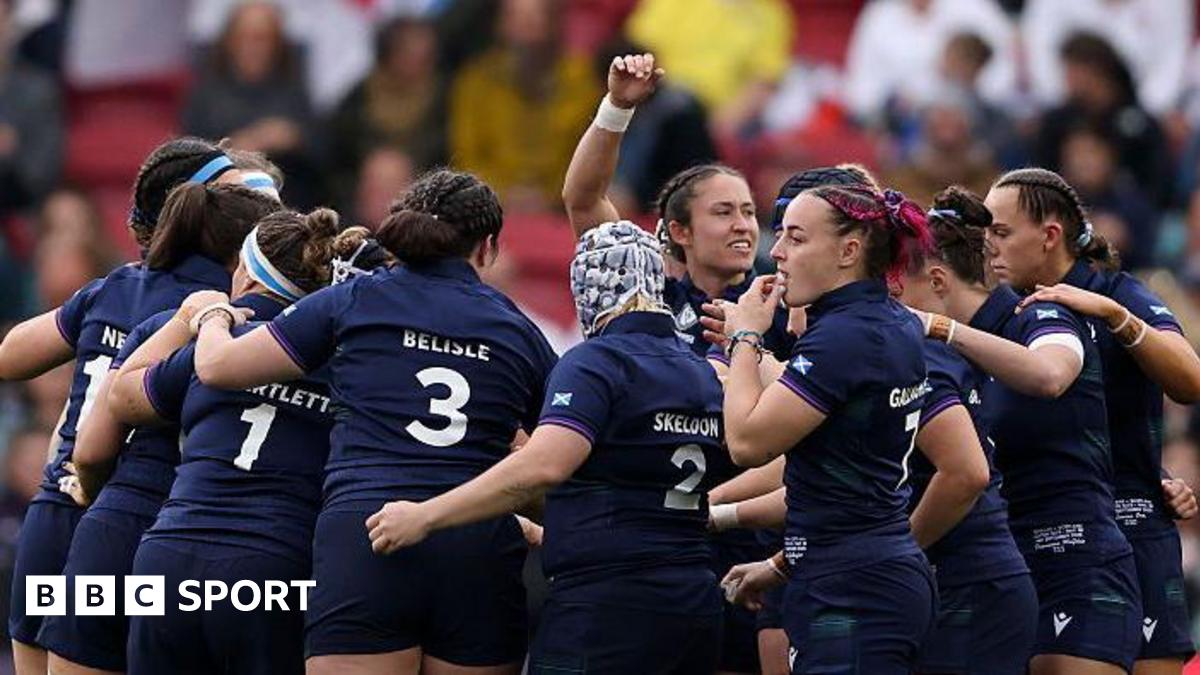
Players told BBC Sport that the squad discussed boycotting one match during the 2025 Women’s Six Nations – five months before the World Cup began – to try to reach a resolution with Scottish Rugby on its request for 12-month contracts.
All the players contacted say they were told contract decisions were based on performance and that they may still get a new contract should they perform well at the tournament, adding further pressure.
“It literally was a do or die lifeline,” one player said.
“It’s like I need to do everything I can on this rugby pitch, otherwise I’m not going to have a job and I’m going to struggle to pay my rent.
“When you’re not sleeping, you don’t have an appetite. You’re just miserable most of the day. It’s really hard to then put in a performance or do yourself justice.”
Scottish Rugby’s response said that players were told “on a number of occasions that their standalone playing performance at the World cup was not the sole criteria for any possible change to their contract situation”.
Told her contract would end in October, one player said she was on job search websites “most nights” during the tournament looking for jobs “that were appropriate” for her life as a club rugby player.
She said: “Before you even started a job, you’re trying to bargain and speak with a new employer and be like, ‘Can I finish at this time?’ Because I have to actually go to my other job [club rugby training].
“Then I’m going to come in tired in the morning because I’ve not got into bed until midnight.”
Players no longer on contracts can still represent Scotland, but they now fall under the country’s National Team Agreement, which offers them £75 a day, not including rest days, for attending Scotland training camps.
One player said “she can’t be involved” for that amount, adding: “I won’t be able to afford to pay my mortgage.”
Another player said concerns over her future took “an emotional toll”, adding: “I didn’t want to be there. I look back on it with exhaustion. It was such a big opportunity but I have nothing but negative thoughts around it.
“[After the tournament] I removed myself from social settings, any settings where people could ask me loads about rugby.
“If I did get into that environment, I would try to remove myself as quickly as possible because it made me panic and stress.”
The player said Scotland Rugby had not been in contact about any follow-up support.
“There’s been no kind of input about, ‘do you need psychology?’ or anything like that,” she said.
