A
very happy New Year to you. Time to plan your diving trips for next year. Read on for ideas.
|

Liveaboard Diving Offers: Dive for Less
Get up to 31% off at some of the best diving spots in the world. Plus, automatically get 5% off any subsequent trip.
- Freedom III, Egypt, SAVE 15%: Prices from just £426. For those wanting a shorter trip, dive the famous Straits of Tiran, Gordon Reef, Thomas Reef, Woodhouse Reef, Ras Mohammed and the Dunraven.
- Unlimited Shark Diving in the Bahamas with Shear Water. SAVE 10%. This steel liveaboard is the only one in the region offering unlimited diving – thanks to high-capacity tanks, a full Nitrox supply, and a dive-anytime approach. She is also the fastest liveaboard to Tiger Beach and Bimini, giving you more time where it matters most: underwater with sharks. The experience is made even more special with Jim Abernethy, renowned marine conservationist, photographer, and advocate for cage-free shark diving.

- Resolute, Philippines, SAVE 31%. Exceptional value for money, the Resolute visits the renowned Tubbataha Reef, Apo Reef, Coron and Anilao. The ultimate bucket list classic.

- Gentle Giant, Thailand, SAVE 15% Diving across the Andaman Sea, including the fabulous Hin Daeng and Hin Muang in the south and the Similans in the north.

- Calipso, Galapagos, Save $1439. The top destination on the planet for pelagic species and a healthy marine environment. Swept by both the cold and warm water currents, the Galapagos is where polar meets tropical which is reflected in the marine life. The northern islands of Darwin and Wolf have the largest shark biomass in the world. A must-visit destination for experienced divers.

- Malaillo, Indonesia. Visit Indonesia’s finest dive sites such as Raja Ampat, Komodo, Alor and Banda. SAVE 30%
- Dune Silky, Egypt, SAVE 20%. Newly constructed liveaboard with a steel hull. Free nitrox. Choice of Brothers, Daedelus, Elphinstone or northern wrecks.


Wonderful World of Christmas Tree Worms
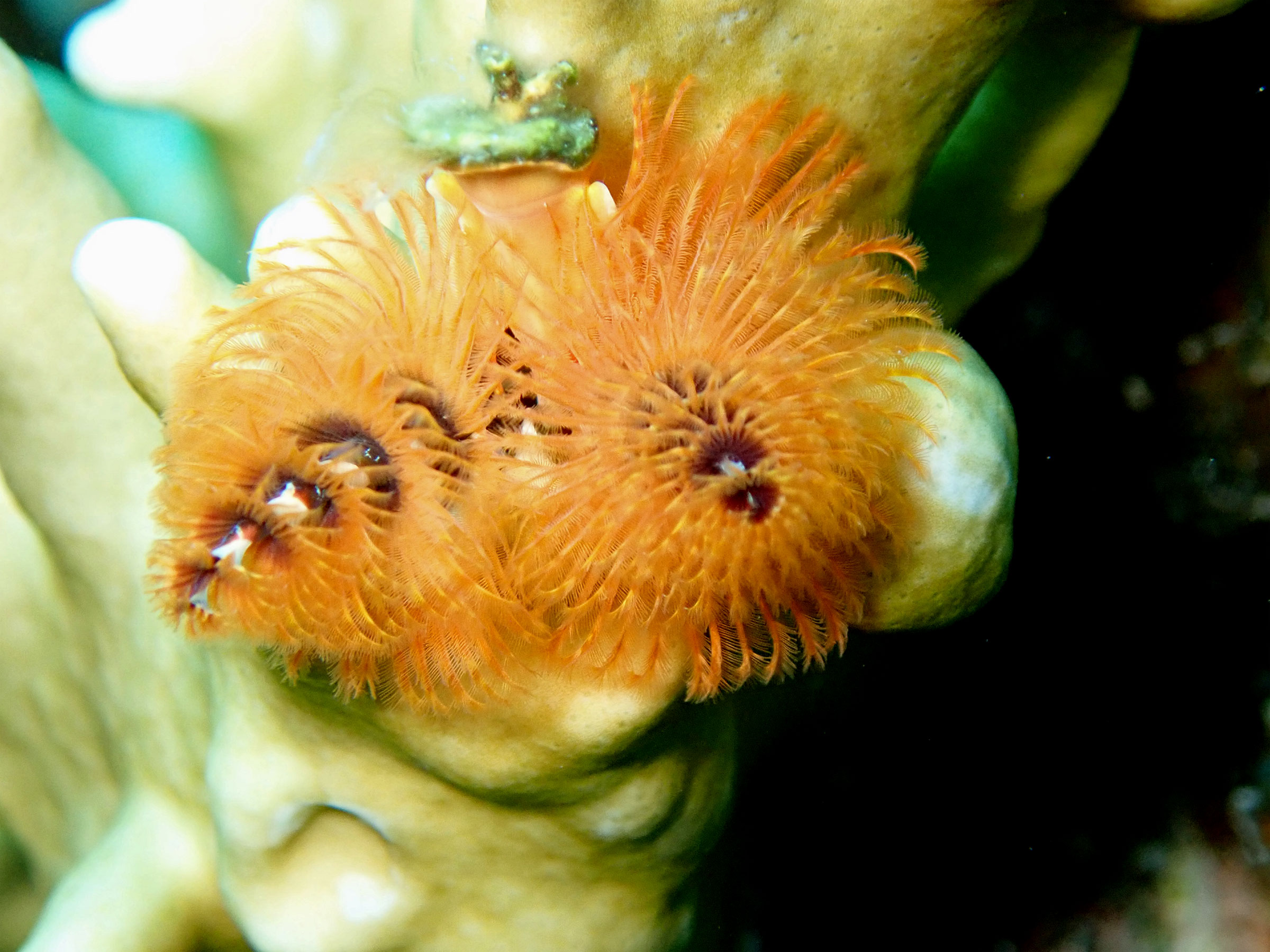
Colourful Christmas tree worms are captivating during any dive, adding a touch of festive magic to coral reefs around the world.
What are Christmas tree worms?
They might look like colourful Christmas trees but they’re actually segmented worms. Most of their structure is hidden in tubes within the coral with only their crowns or Christmas trees protruding. These creatures can live for 40 years!
 Christmas Tree Worm, Spirobranchus giganteus
Giant Spiral-Gills
Their scientific name is Spirobranchus giganteus, meaning Giant Spiral-Gills. Although the visible part is only 1.5 cm long, together with its hidden part it is in fact one of the largest worms in its family. The branching crown is important for respiration, hence the “spiral-gills” name.
2 Trees; 1 Worm

Each worm has two crowns or Christmas Trees. The worms come in a myriad of colours, but an individual’s two crowns are always the same colour. As well as being used in respiration, the the feathery Christmas Tree gathers food, wafting it down to the worm’s mouth.

Disappear when danger threatens
On sensing danger, the worm quickly retracts its crown into its tube in the coral and closes the entrance with a trapdoor called an operculum. It will stay down there for about a minute, before re-emerging very slowly to check that the danger has gone.

Males and Females
There are both male and female Christmas tree worms and they are choosy; spending their entire life on the same coral – often massive porites. They are important for the health of coral reefs and help protect corals from invasive sea stars whilst also preventing the coral being overgrown with algae.

Where to see them?
The great thing about Christmas tree worms is that you can see them around the world on most tropical reefs. They’re easy to find and very photogenic, making them great subjects for macro photography. As long as you have the patience to wait and not disturb them into shooting back into their tubes. You might see them down to depths of 30 m.

By Jill Studholme and the divers and writers of liveaboard.com
Class: Polychaeta > Order: Sabellida > Family: Serpulidae > Genus: Spirobranchus
Diving news from around the World
|
|
|

|
|
|

|
|
|

SCUBA News is licensed under a Creative Commons Attribution 4.0 Unported License. This means we are happy for you to reuse our material for both commercial and non-commercial use as long as you:
credit the name of the author, link back to the SCUBA Travel website and say if you have made any changes. Most photos though, are copyright the photographer. Please get in touch for details.
Photo credits: Tim Nicholson, Jill Studholme, CC BY 4.0, John A. Anderson, Carol Buchanan/DepositPhotos, Robinson/Bigstock, divebooker.com
UNSUBSCRIBING
Visit {?$optout_link?} to remove yourself from the mailing list. Any problems
contact [email protected].
ADVERTISING
Should you wish to advertise in SCUBA News, please
see the special offers at
https://www.scubatravel.co.uk/newsad.html
Other advertising opportunities are at
https://www.scubatravel.co.uk/diving-advertising.html
CONTACTING THE EDITOR
Please send your letters or press releases to:
Jill Studholme
SCUBA News
The Cliff
DE6 2HR
UK
[email protected]
SCUBA News (ISSN 1476-8011)
Every month we send out a free newsletter featuring the best diving areas, underwater life, diving book reviews and interviews with authors. To receive this please fill in your e-mail address below. For an archive of previous issues see the SCUBA News page.
