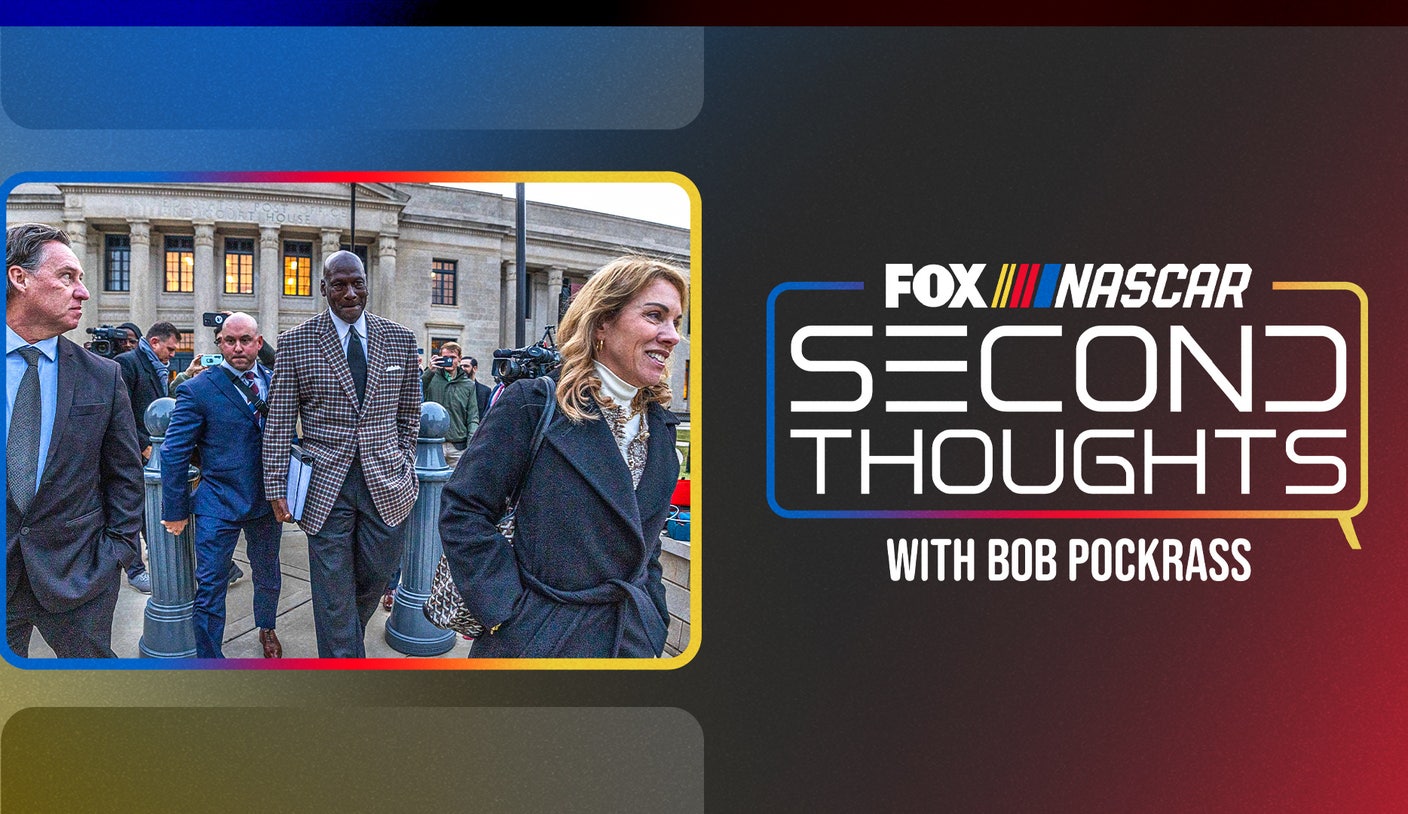
CHARLOTTE, N.C. — The first person the jurors likely see as they walk to their seats each day in the biggest NASCAR trial ever is Michael Jordan.
They haven’t just seen him. They have heard from the basketball icon and many others on the team side in the first seven days of the 23XI Racing and Front Row Motorsports antitrust trial against NASCAR.
So, who is winning?
First a caveat: Having covered NASCAR for more than 30 years, I know a lot about the inner workings of the sport. Therefore, it is impossible for me to view anything through the lens of someone who doesn’t have this knowledge. When I look at the people in the sport who I’ve known for several years, their mannerisms and persona seem normal to me. But how would someone that’s meeting or seeing these people for the first time perceive them? It’s difficult to know.
That being said, so far, the teams likely have the edge. This would be expected since NASCAR hasn’t gotten to present witnesses that could be more favorable to its side. That should start Wednesday after NASCAR CEO and Chairman Jim France finishes his testimony and 23XI and FRM rest their case.
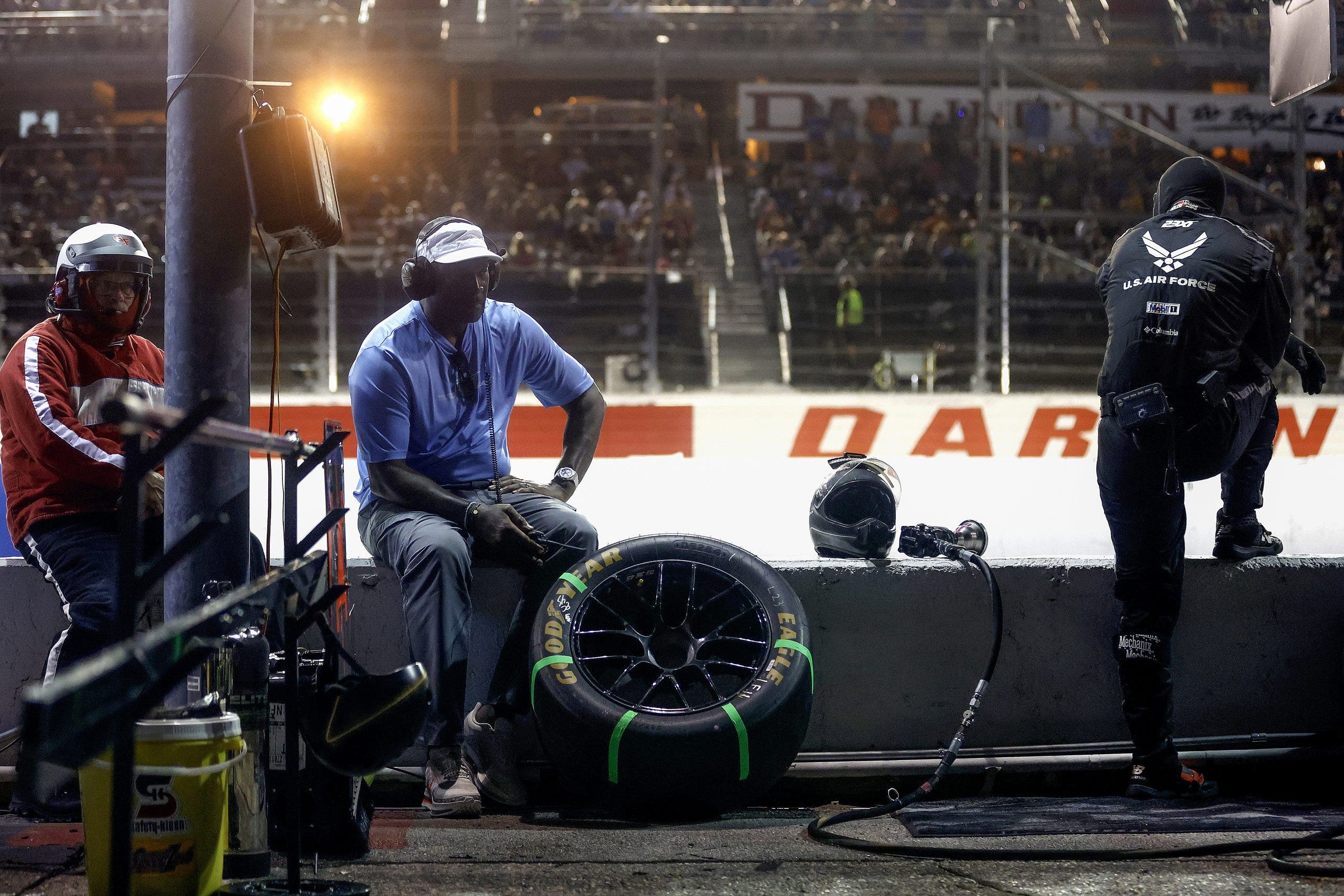
Michael Jordan watches the Cook Out Southern 500 at Darlington Raceway.
It can’t hurt to have Jordan sitting in the front row each day. But the jury, while seemingly a little more perked up when Jordan testified Friday on behalf of his race team, didn’t appear too starstruck. And Jordan received mostly softball questions from NASCAR attorney Lawrence Buterman.
That’s nothing against Buterman. Winning an argument with Jordan in North Carolina would be tougher than trying to gain several spots on a green-white-checkered without fresh tires.
Jordan was smooth and appeared comfortable and confident while on the stand. The same has been true for most of the 23XI and FRM ownership, while the four NASCAR executives have appeared less comfortable, more evasive and on the defensive.
The final witness for 23XI and FRM is the 81-year-old France, a soft-spoken introvert and a man of few words. NASCAR recently had a valuation of $5 billion, and France’s family trust owns 54 percent of the league (his niece, Lesa, has a family trust that owns 46 percent).
France is coming off as a CEO who won’t give many details. As the person who has been described as the “brick wall” in the teams’ quest for permanent charters, he almost appears to be a brick wall as the team attorneys dig for information.
Is he being evasive as part of a strategy? As someone who rarely speaks at news conferences or on a stage, is he just uncomfortable in the witness chair? Or maybe it’s that he’s more of someone who delegates and he’s more accustomed to people putting his vision into action.
He isn’t coming off as mean-spirited. He’s coming off as the grandfather who is still ruling the family business no matter what the kids want.
The kids have shown more emotion and deeper knowledge, but it is apparent that he is the leader who typically gets his way and doesn’t need a bold persona (at least outside any internal meeting room) to get it done. He has done nothing on the stand to change the perception that he owns the series and what he says goes. He will break on some issues, bend on others and put his foot down when he feels he is right — no matter what anyone else thinks, whether it’s his friends or not.
Business is business and you don’t build a company worth $5 billion by letting someone tell you what to do. And he’s heard that from pretty much every witness on the stand, including seeing the critical texts and emails from people who work for him. It has made the NASCAR executives who have testified appear to squirm.
That likely won’t help NASCAR’s case.

Denny Hamlin and 23XI are hoping to win the antitrust trial against NASCAR.
The team owners Denny Hamlin, Michael Jordan and Bob Jenkins came off as likable, as did Joe Gibbs Racing co-owner Heather Gibbs. It was hard to tell how Richard Childress, who got flustered when NASCAR attorneys brought up a potential sale of his team, played with the jury.
The team economist, Edward Snyder, used a presentation that will be understandable for those whose minds work in a mathematical way. It likely confused others despite its step-by-step explanation.
And on the flip side, NASCAR’s attorneys are doing a relatively good job in finding any hole they can in the 23XI and FRM side. They have shown enough inconsistencies and contradictions — certainly some points being stronger than others (it is simple to wonder why spend so much money in a business that is so unfair) — to make jurors think.
The one thing that might actually help them is the judge has ruled they are already a monopoly. The jurors just have to figure out if NASCAR’s monopoly has been sustained by anticompetitive acts.
It would be a lot easier case if there was a failed team also suing but there isn’t. The teams’ economist could only look at NASCAR documents and actions and try to tie them together. It isn’t like 23XI and FRM have tried to form a separate series and there will be no witnesses from non-NASCAR racetracks who will claim they have been stifled by NASCAR policies.
NASCAR has been able to challenge the validity of the teams’ claims or whether they are exaggerating any financials or whether NASCAR’s actions truly were a response to being worried about competition.
Will it be enough? Right now the case seems to weigh toward 23XI and FRM. All they need is the weight of the evidence in their favor (compared to a criminal trial with a beyond a reasonable doubt standard).
If the jury decides that NASCAR did employ anticompetitive acts, then they have to decide on how much money to give the teams. The economist says it should be $215.8 million for 23XI and $148.9 for FRM.
Will they really give billionaire like Jordan than much? Will they give Jenkins, the owner of hundreds of fast-food restaurants, that much? Or will they be like, “Yeah, NASCAR has been unfair but you are racing because you love racing and have you truly been injured with all that fancy math of your economist?”
The true impact still could very well come down to the judge, who would be the one to determine any antitrust remedies if the teams win. The judge decides whether NASCAR sells the tracks, gets rid of charters, gets rid of the Next Gen car, gets rid of exclusivity clauses — anything (or combination of things) he views as a way to break up the monopoly. That could mean things neither side wants, although they could then settle that on appeal.
Yes, an appeal. The winner is only winning the first half. There will be appeals.
It’s time to start the second quarter with NASCAR presenting its case. It’s going to need a strong one to be convincing. They don’t need a half-court short, but they do need a well-executed play against a strong opponent.
Bob Pockrass covers NASCAR and INDYCAR for FOX Sports. He has spent decades covering motorsports, including over 30 Daytona 500s, with stints at ESPN, Sporting News, NASCAR Scene magazine and The (Daytona Beach) News-Journal. Follow him on Twitter @bobpockrass.
