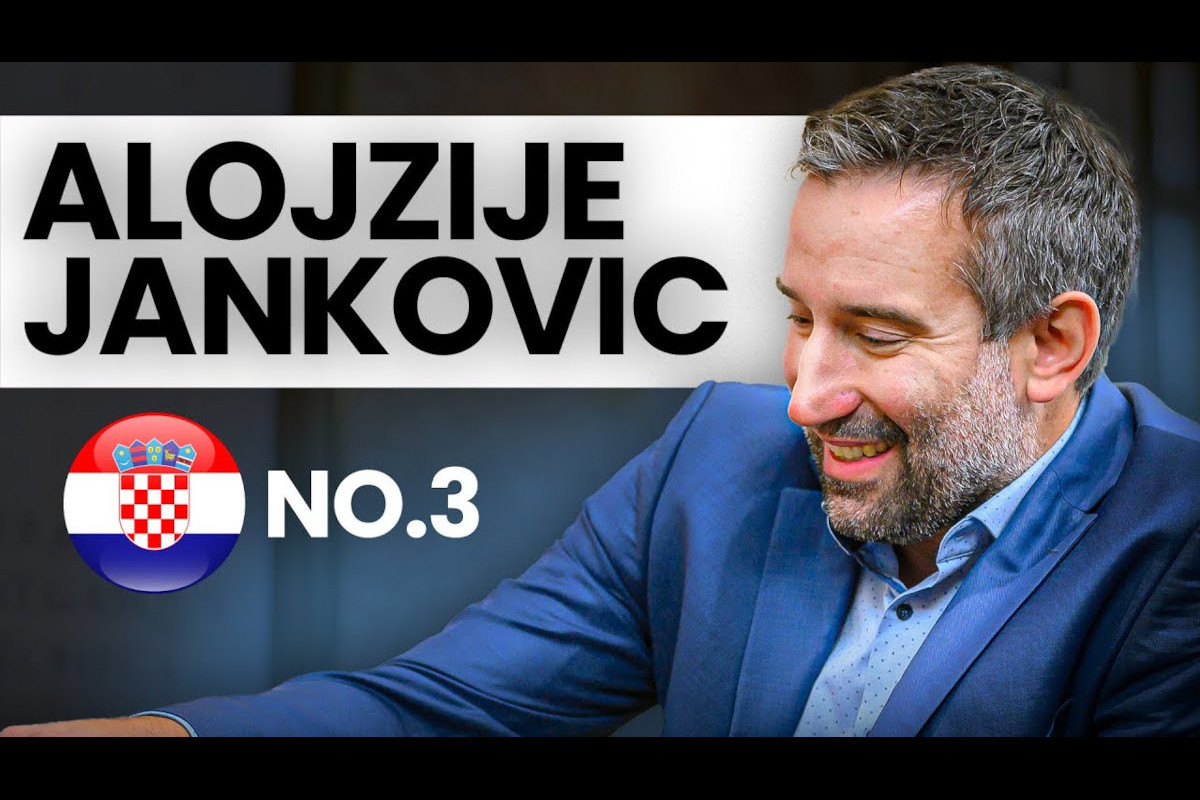
A man of many roles in the world of chess
Jankovic started the conversation with a beautiful line as he mentioned that he is a big fan of chess and that he believes that chess is fantastic.
“Chess formed me as a person”
Alojzije Jankovic
Jankovic grew up during the turbulent breakup of Yugoslavia, moving between schools and environments. Chess, he says, became the stabilising force in his life. “Chess helped me form myself as a person… to travel, to gain self-confidence”.
GM Alojzije Jankovic in action | Photo: Walter Kastner
It’s this gratitude that fuels his desire to give back. “Some people play chess better than me, but not many can do these promotional things. That’s why this is my focus now”.
A chess promoter unlike any other
Data, plans, practice – the new Opening Report In ChessBase there are always attempts to show the typical plans of an opening variation. In the age of engines, chess is much more concrete than previously thought. But amateurs in particular love openings with clear plans, see the London System. In ChessBase ’26, three functions deal with the display of plans. The new opening report examines which piece moves or pawn advances are significant for each important variation. In the reference search you can now see on the board where the pieces usually go. If you start the new Monte Carlo analysis, the board also shows the most common figure paths.
For over ten years, Aloizije has hosted a prime-time 20-minute chess show on Croatian national television – something unheard of in most countries. The show mixes storytelling with instructive game analysis, and it has made him a recognizable public figure. “Sometimes people change channels, stop and suddenly realize – there’s a Grandmaster explaining chess”. From there, he built a YouTube channel with 17,000+ subscribers, wrote opening surveys and books, and became a commentator for major European events. “Chess players are now part of public life. You see footballers and athletes everywhere – now you also see chess players respected alongside them”.
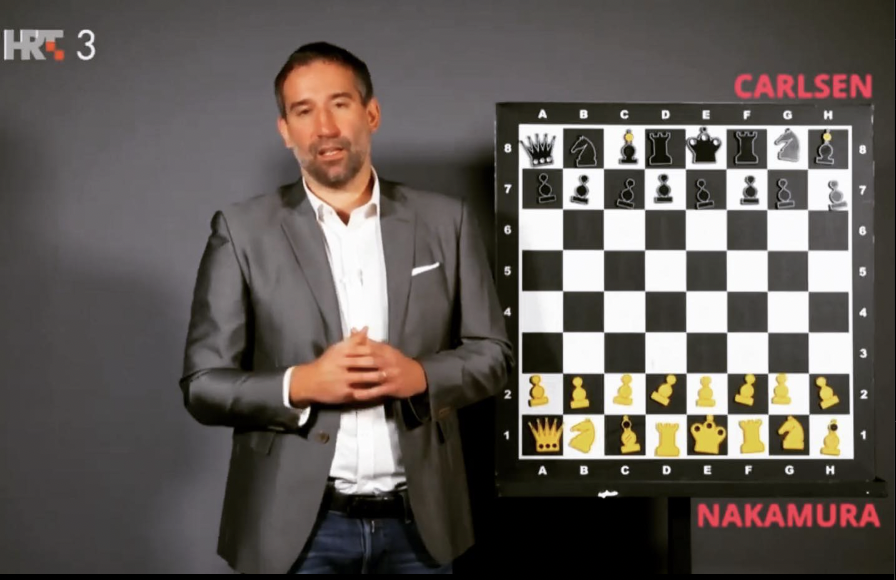
Alojzije Jankovic hosting a show | Photo: Jankovic’s Instagram profile
Grandmaster, author, thinker
Jankovic has written two books – including his latest, Grandmaster Mindset, which explores how top players actually think. He challenges the myth that elite players magically “find best moves”. “They collect information. If you know 80% of the factors in a position, decision-making becomes easier”. Some of the concepts he touches on: sensing tactical motifs, identifying unprotected pieces and recognizing decision-making triggers. His goal is to help readers understand how strong players think, rather than just what moves they choose.
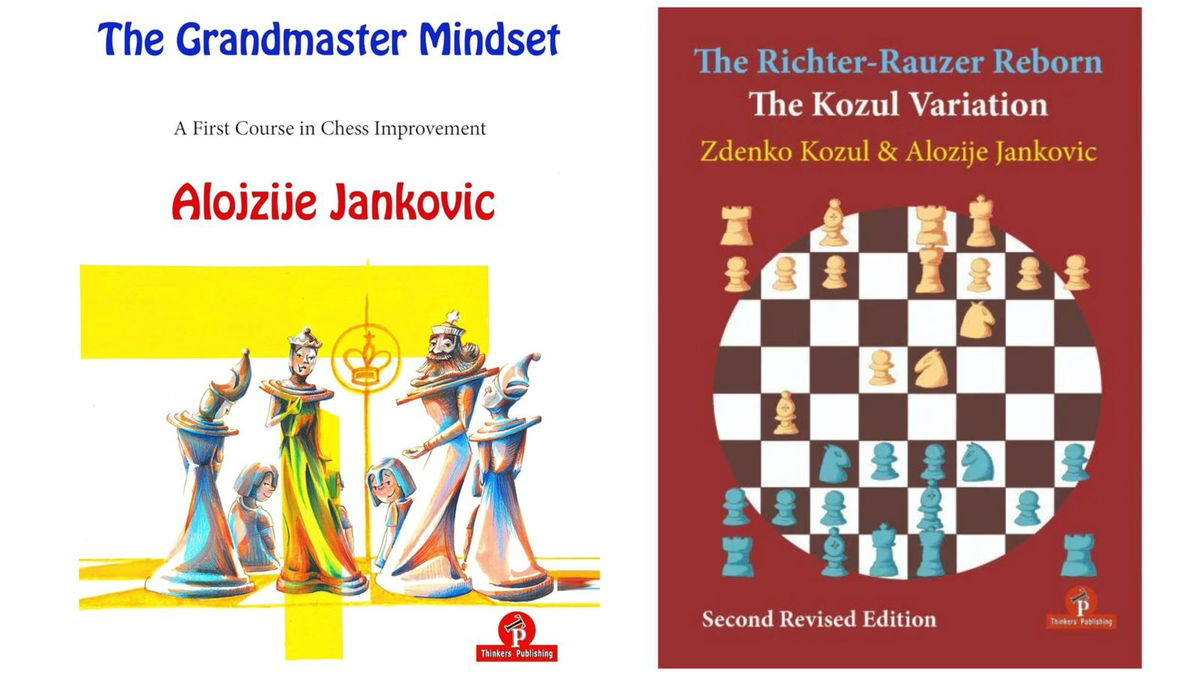
Alojzije Jankovic’s books
The Richter–Rauzer and the openings that shaped him
Jankovic has also written a book on the Richter–Rauzer variation of the Sicilian, an opening he explored with GM Zdenko Kozul, the 2006 European Champion and his former coach. This sharp, double-edged opening gave him many memorable victories – and painful losses.
Facing the Sicilian doesn’t have to be complicated. The Alapin Variation (1.e4 c5 2.c3) offers a simple yet highly effective solution to all major Sicilian lines, by sidestepping them with 2.c3. Whether your opponent plays the Najdorf, Taimanov, or Dragon, the Alapin lets you take control of the game as early as move two.
Free video sample: Introduction
Free video sample: 2…g6
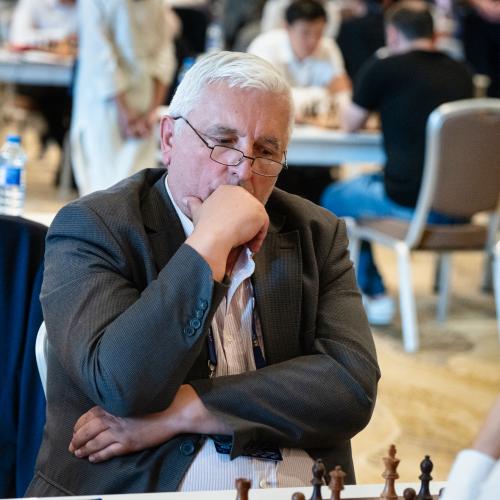
GM Zdenko Kozul
When you play the Rauzer, it’s a statement… Every day you show up to play something risky.
He recalls his games against Ray Robson, where he achieved a completely winning position, and Michael Adams, whom he was outplaying before the complexity turned the tables in Adams’ favour. These experiences, he says, shaped him into the dynamic player he became.
Chess as a tool – for kids, adults and companies
Perhaps the deepest part of our conversation came when he shifted from chess skill to life skill. Jankovic argues passionately that chess is not just a game – it is a tool for building character. “Kids learn concentration, creativity, decision-making, time management… You learn to lose, you learn to shake hands”.
But he also believes chess can transform corporate culture. “You want employees who can make decisions. Chess players make decisions daily, they evaluate, reassess, adapt. This is extremely valuable in companies”. His vision includes expanding chess as a corporate activity, creating new markets, and bringing more sponsorship and attention into the sport.
Love for India and Indian chess
Your players… the way they behave… you can be proud. The hospitality is incredible. I learned so much in Chennai for the Chess Olympiad 2022 and now in Goa.
Jankovic has followed Indian players closely while commentating at European events. He smiles while recalling meeting Gukesh Dommaraju at the recently concluded European Club Cup and what a thorough gentleman the World Champion was.
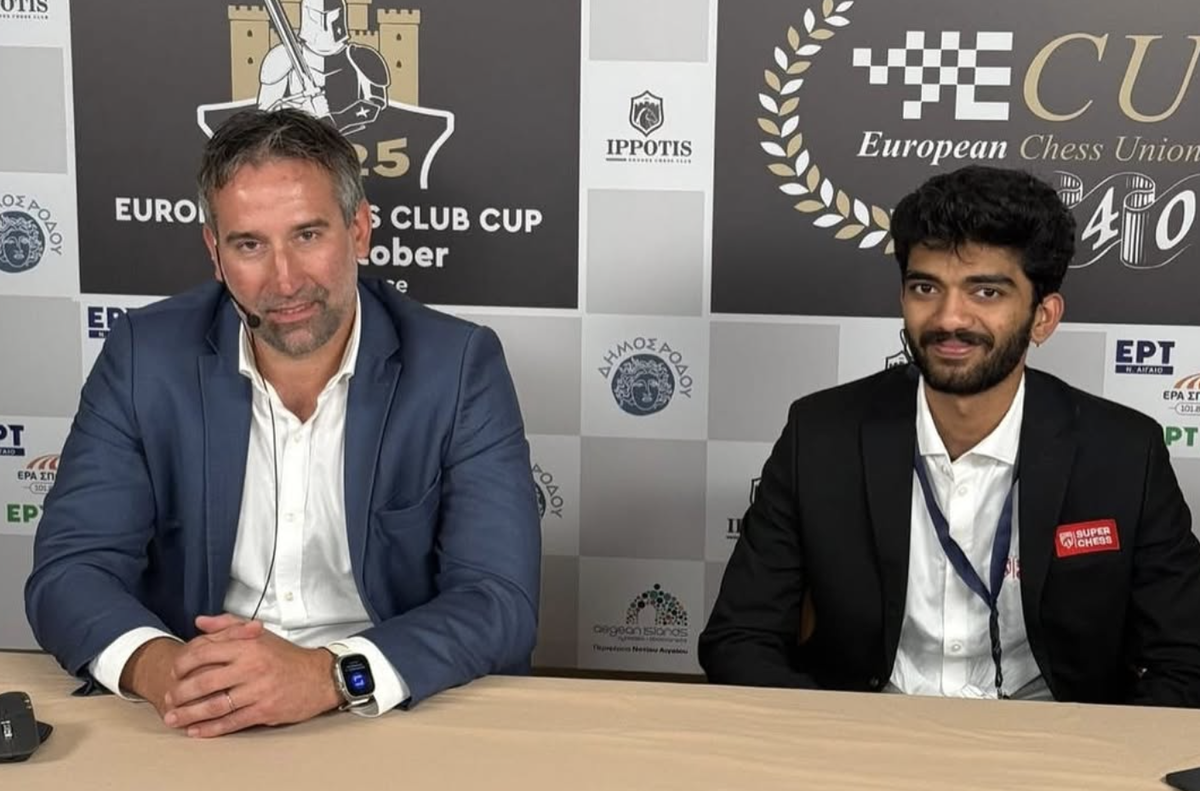
Alojzije Jankovic with Gukesh Dommaraju
His favourite game
When asked for his best game ever, he chose a brilliant win over Yuri Kryvoruchko at the Cappelle-la-Grande Open: an isolated pawn position, a powerful rook lift, kingside pressure and a beautiful final combination. It remains one of his finest memories.
GM Alojzije Jankovic vs GM Yuriy Kryvoruchko, Cappelle-La-Grande
A unique figure with a unique mission
Few people in the chess world combine competitive achievements, academic background, media presence, organizational work, positivity and energy as naturally as Alojzije Jankovic does. His mission is clear: to spread chess, promote its values and make it a tool for improving people’s lives. In his own words:
Everyone who enters chess is already a winner. It is a lifetime hobby – like learning a language, like knowing how to swim. It improves your quality of life.
You can watch the full interview here:
Full transcript
Sagar Shah (SS): Welcome to India.
Alojzije Jankovic (AJ): Yeah. Thanks, Sagar!
SS: This is, I think, the second or third time I’m meeting you. One of the things that has always captured me is your enthusiasm for chess and, in general, the love for the game.
AJ: Yeah, I am a big fan. And you know how they say that you should be congruent, that you should believe what you are saying. I don’t know if I would sell some medicine, some placebo which I don’t trust, but I really believe that chess is fantastic. I am curious to know how the world existed before ChessBase India! Because what you guys are doing is really fabulous, and I am sucking up a little bit of that energy and that positive vibe.
The King’s Indian Defence is one of the most dynamic openings in chess – and Pirc structures share much of the same DNA. With colours reversed (the King’s Indian Attack), these setups can be just as powerful. What may look modest at first often transforms into highly complex middlegames, where timing, precision, and a deep feel for dynamics make all the difference.
Free video sample: Introduction
Free video sample: Misplaced Pieces
SS: That’s so nice to hear! You have so many different roles that you play. For example, you are a very strong chess player. You were close to 2600 at your peak. You are also the Vice President of the European Chess Union. You have written books. You have written opening surveys, a contributor to New in Chess. You have also worked on projects which are research-oriented, to show the benefits of chess. You are also a commentator and TV host. It’s incredible the width and the breadth of things you have done.
AJ: Yeah. Actually, I think the reason is that I didn’t become super strong too early and I didn’t focus on just one thing. So I could finish faculty, I finished economics, sports management and I was always someone who balanced playing with studying. So you get used to doing something alongside chess. In that sense, I am quite happy with the things you mentioned. Now I am even more motivated in terms of promoting chess and doing some organizational activities. Unfortunately, I don’t have time to play, but from time to time I play some games, I play in some leagues in Hungary, and also the Norwegian League for one club, because I can spare a couple of days for that.
As I said, I really believe that chess is a great thing and I love being part of these promotional activities. Because, you know, Sagar, there are people who are playing chess better than me, but not many people can do this promotional thing. So this is actually my main focus. As I said, I truly believe chess is a wonderful thing, and I love being part of these promotional activities. Because you know, Sagar, there are many people who play chess better than I do, but not many who can do this promotional work. So that has become my main focus.
Alojzije Jankovic analysing a Sarana v. Saric game | Video: Biblija I Duhovna Znanost
SS: There is this one thing you have done, which is 20 minutes of a chess show on prime-time television in Croatia.
AJ: Yeah. Actually, this has been going on for the last ten years. Earlier, in Yugoslavia, back in the 80s, chess was quite popular, and somehow the older generation remembers this. Now it’s the same. Some Grandmaster is analysing games (on TV) and more importantly, it’s regular, shown during prime time, like you mentioned. People get used to it. Sometimes people are changing channels and they stop, and they tend to recognize me, as you mentioned. They treat the Grandmaster as the chess expert. I share stories. I commentate on international games and also on games of some Croatian players. I have commented on many Indian players too. They suddenly hear about Praggnanadhaa and some others. I think that was quite useful to have.
Then I built other things. I started doing my YouTube channel, where I could be a little bit more relaxed. I have 17,000 subscribers. I was, as you mentioned, doing some articles. So I created many things around this work. Now people tend to recognise me as some kind of public figure. And earlier at events you would see footballers and other athletes, but not chess players. Now chess players are also part of public life. It makes me quite proud that people are getting used to seeing chess players respected at events outside the chess world.
SS: So the way in which you see chess is a very positive tool in the world in general. What is it about chess that made such a deep impact on you? Like, for example, I also see it the same way. For me, chess gave me everything that I have in life. Like, for example, I met my wife through chess. I travelled the world because of chess. What is it for you that chess gave you that made such a deep impact on you?
AJ: Yeah. You mentioned one important thing. I am sort of now doing something additionally, maybe more than it’s normal, just as you said to give back something to chess because chess really helped me a lot as a kid. Because there were some circumstances like the breakup of Yugoslavia. So I had to leave my home. I was changing primary schools. So chess really shaped me as a person, to start travelling, to get some self-confidence and in that sense, I am trying to give something extra than regular because it really helped me.
I travelled around the world. I met so many great people. I am visiting places. As I said, I am starting to get recognised. Nadal once said that he will never break a record because there are some people who do not have any record. For me, it is similar. I would never abandon this. I would always try to be positive when chess is around. I can have a bad day, but I never show it when I am doing commentary. I am commenting mostly on European events. I think that my bad day should be somewhere else, not in the chess society.
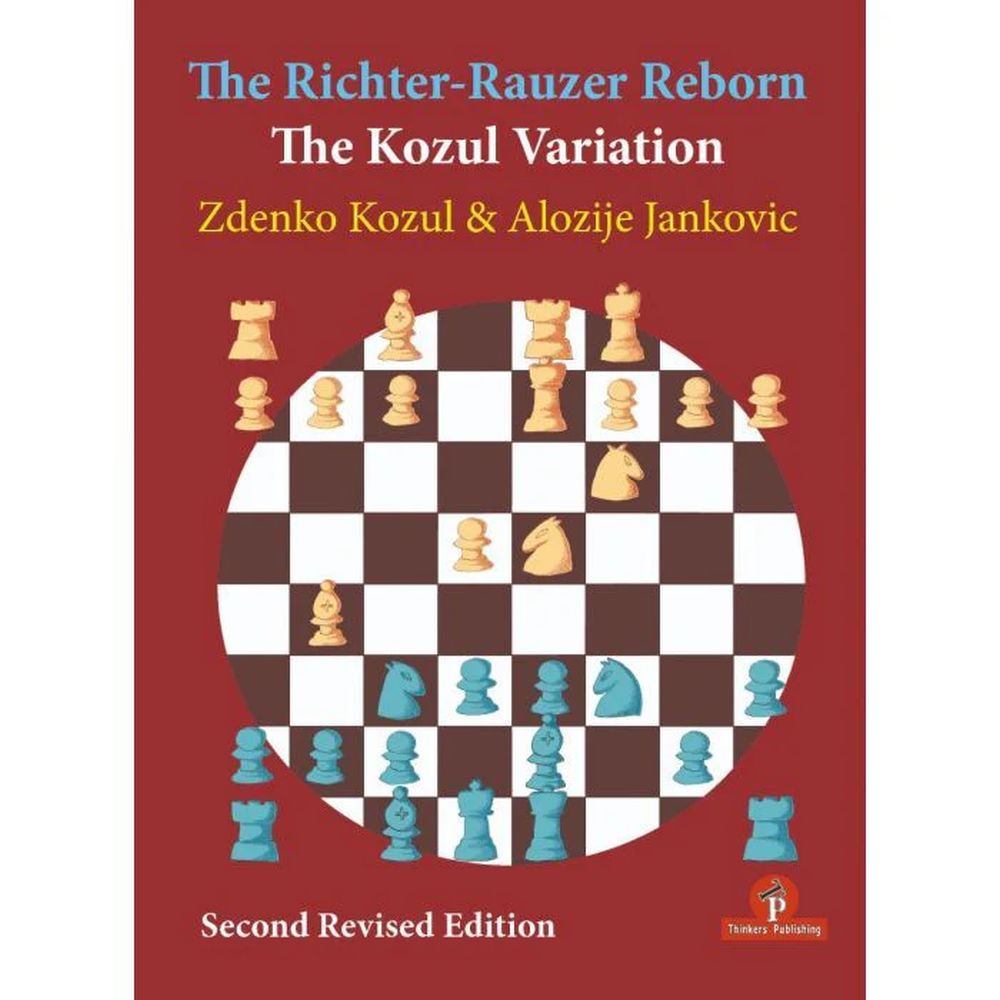
Check out this amazing book by Zdenko Kozul and Alojzije Jankovic
SS: Amazing! The books that you have written on chess, an opening book on the Richter-Rauzer. And then there is another book which is not an opening book. I think it’s a very recent one. What was the subject of that one?
AJ: Yeah, that is Grandmaster Mindset. It’s about chess examples, studies, openings and so on. My point is that people think Magnus Carlsen and Gukesh just throw the best moves in every position and they do that because they can find it. No! They have skills. They are gaining more information because let’s say that you are trying to find the best move with 20% of information. It’s hard. But when you collect 80% from some details, from some motives, then of course your decision-making process is much easier. So I am trying to explain how we sense the motif because now there are a lot of chess players who are solving puzzles, which is good. But puzzles tell you that there is one best move. Whereas if you can recognize factors, which should lead to execution, to some combination, then you are much better…
SS: …Then you know when the critical moment comes.
AJ: Exactly! There is an unprotected piece. An unprotected piece is any piece which is not protected by the pawns. This is something I am trying to explain to readers. So if you have your position with many pieces which are not protected by the pawns, there is a possibility of a double attack. Suddenly, you start to sense those factors. Top players like Arjun, Gukesh and Magnus, see those factors. They collect information and suddenly moves come to mind. I also do this, but at a much slower level. I can make mistakes, but they have the same skill. I am sure that they have the same skill as I do, even you. I was trying to explain this through the book. Regarding the Richter-Rauzer, when you are playing it, it’s a statement. Because it’s quite a tough opening and at some point, my coach was GM Zdenko Kozul. He was the European Chess Champion in 2006. We became friends. We were working on chess together.
In one article, American Grandmaster Alexander Yermolinsky mentioned the Kozul “Suicide Variation”. It’s so tough to play.
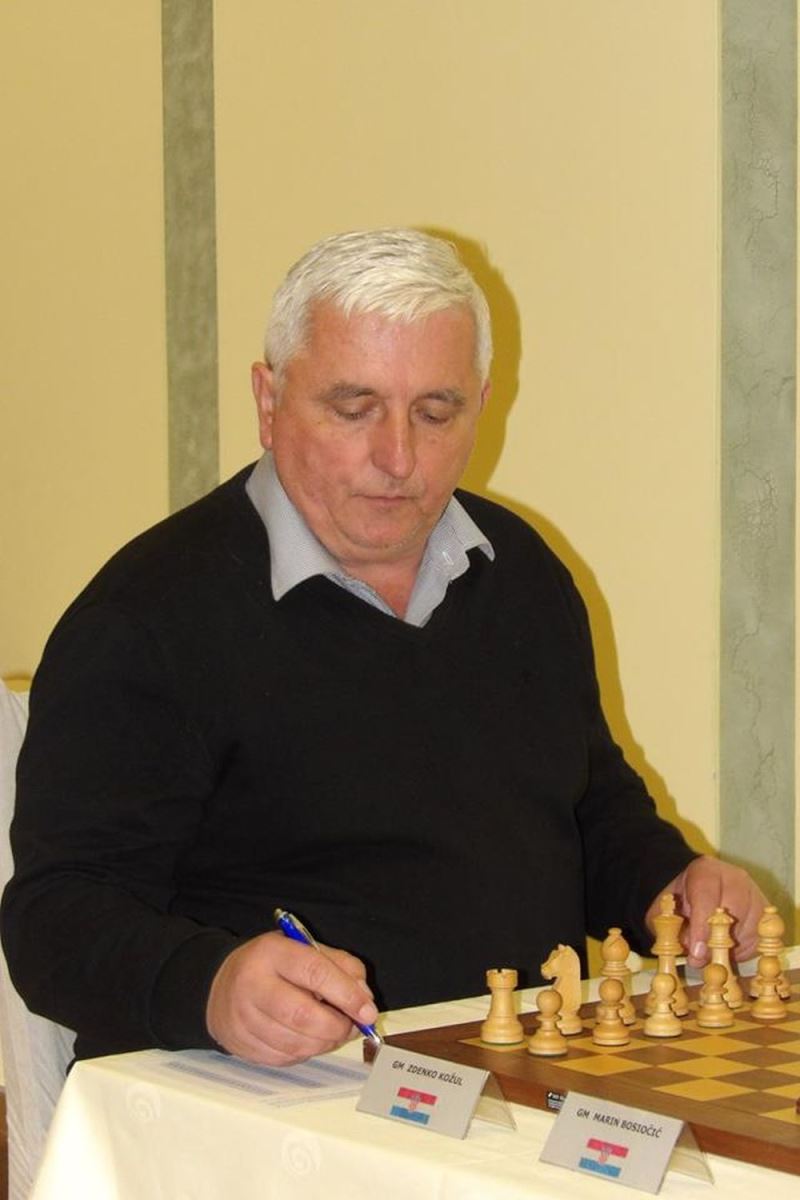
GM Zdenko Kozul is a master of sharp and strategic play – he is known for his deep understanding of the Richter–Rauzer Attack | Photo: Croatian Chess Federation
SS: From White’s side or Black’s side?
AJ: It’s from Black’s side. You have doubled pawns, your king is in the centre. So, it’s basically Bg5 and then taking on f6 a6 Bd7 b5. White usually takes on f6 and plays f4. And suddenly, you have this tough position. I got fed up a bit because every day you come to your job and you need to play something super risky. But it also gave me a lot of positive emotion, positive victories, because I was playing mainly in open tournaments, Sagar. When you play open tournaments, you don’t need to be solid. You need to have a chance. It’s better to finish three times in 15th place and once to finish first than to be 8th four times. So it was very important for me to have that kind of opening.
I was playing a game in the US. There was a World Open in Philadelphia and I played versus Ray Robson. Very popular player, very strong. He was 2750+ rated. And since in the US you don’t know your opponent prior to the round, this came as a surprise. Since I was an expert in this, I got a totally winning position. You can check that game. But I was impressed how he made my life harder. In the end, it was a draw. But those kind of opening helped me.
Also I had some games against Ivan Saric, Croatia’s best player. So this Rauzer helped me a lot. This is the reason why I haven’t played against many 2700-rated players. Because they were not playing 15 years ago, 10 years ago, during my prime. They were not playing in open tournaments. They were playing in round robins. I played for the national team – one Olympiad and three European Championships. I was on the third and fourth board, so I could play against some strong players, but not someone like Aronian, unless I was on board one for my country.
In this insightful video course, Grandmaster David Navara shares practical advice on when to calculate deeply in a position — and just as importantly, when not to.
Free sample video: Introduction
Free sample video: Invisible moves
The World Cup back then had 128 players, and the qualification system was different. In the 2007 European Individual Championship in Dresden, I shared 7th place. I finished just half a point behind the winner. There were 400 players, 100 Grandmasters, and I started as the 140th seed approximately. I lost out in the end because at that time we had to play tiebreaks. Today, you qualify with Buchholz, but back then all players who tied had to play tiebreaks for the top 23 spots. I was playing from 8th to 46th place. And do you know who I was paired against? Pavel Eljanov! He was a 2700-rated player at that time, and I lost. I was better in the first game. So for me, qualifying for the World Cup, where I could finally be paired against top players, was very difficult. That’s why I don’t have too many games against top players. But I have played against Dubov in the European Championship. It was an interesting game. I also played a rapid game with MVL. I played one against Adams in the European Championship. He was the world number four at the time. By the way, I was winning against him in the Rauzer. But again, since it’s a complicated opening, my victory slipped and I lost the game.
SS: So basically, if someone wants to learn the Rauzer, he should check your games.
AJ: Kozul was the first expert. He saw an article in a magazine. There was a Russian Grandmaster, Panchenko. He wrote an article and suddenly Kozul liked it. He improved a bit and it became his main weapon. I was his student. So I also put it into practice. Later, we were sort of abandoning the opening and suddenly, some Iranian players like Maghsoodloo started to play it and they created some new ideas. It got popular again.
SS: How was it working with Kozul? Because I think he is kind of an aggressive or creatively inclined players. I have seen many of his games, but never really met him.
AJ: He is a very strong practical player. I was the one with the computer and he was the one sitting opposite. The idea was to come up with some ideas. He was the one checking some practical ideas. For example, Angel would say it’s equal and Kozul would still find some problems. Then we would come up with those kinds of openings.
We both liked initiative-style play, and we created many new ideas that way. Sometimes it is funny. You see a game like Mamedyarov v. Grischuk. Suddenly they play a worse move than we had prepared. Or there is a top novelty by Nisipeanu. We have had it in our notes for two years. It inspired me a lot.
But going back to the beginning of this interview, I had my studies and different interests. So I was never completely deep inside chess – 2597 was my peak rating. I became the Croatian Chess Champion. But I immediately spotted that I would love to do something in chess. I love chess. But I wanted it to be connected with other things as well. That’s why I organize many European events in Croatia and, as you mentioned, those promotional activities.
SS: Right now, what do you think is one of the main aims that drives you? Is there something you think now that chess is evolving so rapidly? What is it that you think is missing in chess that you want to solve?
AJ: First of all, we need to see how important chess is now in terms of numbers. Your channel has around 3 million now, right? Chess.com has crossed 220 million. Other sports would say 1 billion people are playing our sport. How did you come to this number? They will say, “We just compared the number of schools in the world and then we rounded it up. In chess, we have an exact number: 220 millions. Okay, 10% can be duplicate accounts or fake accounts, but let’s say it’s 200 million. And then when you say we have people registered, sending emails regularly, at least playing a game. I think we should point it out. Because, for example, in the Croatian Chess Federation, there are four-thousand registered players, while Chess.com has half a million. That shows there is a huge group of people who are not involved in tournaments, but they still exist. They play chess regularly. Since I studied economics and sports management, I clearly see the potential.
When we organized the World Corporate Chess Championship, many participants in the qualification stage did not even have a rating. But they follow chess. They know about you. They know about Praggnanandhaa, Gukesh and others. They are working in some companies. They are ready to pay for some subscriptions, books or others. There is a real market there. My idea is that we should start focusing on these people. Then the World Chess Federation will grow, the European Chess Union will grow. We will get sponsors.
Because it’s very important to explain to sponsors, chess is not just the four-thousand registered players in Croatia. Chess is much bigger than that. It’s maybe 10% of the European population. Maybe 10% of India. They are around, and they know how to play chess. This is our market.
Masterclass with GM Alojzije Jankovic at the FIDE World Cup 2025 | Video: ChessBase India
SS: Amazing! I think you being part of the European Chess Union, you are trying to push events like World Corporate Chess, can bring in new sponsors for chess, can bring in people who love chess who have the resources.
AJ: There was my masterclass, and you were shooting that as well. So the viewers can clearly see that I am trying to explain things through real examples.
Of course, we already know that chess is beneficial for kids. It helps with concentration, creative thinking and problem-solving. Maybe you can also get some of these things from mathematics, but here you are playing, you are socialising, you are interacting with your opponent. You learn how to shake hands, how to lose. There is time management, often with a clock. These are the benefits kids are getting. So I think this is super, super valuable.
But it is known for kids. But now I am thinking in another direction. I would like to see employees playing chess as well. They will get used to some new position, they will get used to make decisions. Even my wife, maybe she won’t watch this interview. She sometimes cannot make a decision. She is not a chess player. For me, for you, it’s normal. Every day, you decide the route to work, which additional training program you will take, which book to buy, so you are making decisions on a daily basis. For a chess player, it’s normal. Sometimes, you are wrong. You reassess. You learn. You get some new information. These are the things which I think are very useful for employees, also for CEOs, maybe for management.
So I believe that chess is a tool. We had a meeting with the Minister of India yesterday. I was trying to point out many things. The All India Chess Federation is also trying to make a breakthrough with chess in schools and everything.
Chess can also be played casually, like a card game. You are going by train somewhere and you want to pass two hours, you can play chess. You are waiting for the doctor for half an hour, you can play chess. That is fine. But chess is a tool. I have seen many examples. There are kids who struggle to make decisions. When they are forced to decide, I put a clock on them. There are kids who have trouble with memory, so I focus on that part. You can take different elements of chess and use them to improve some character traits or skills.
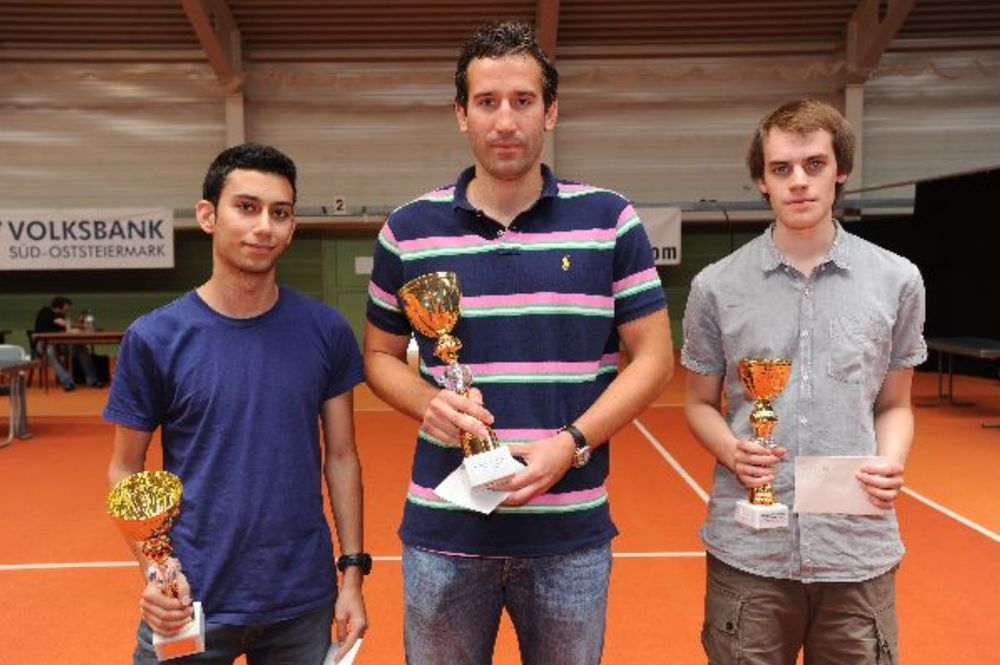
Photo taken after the Styrian Open Tournament in 2014 | Photo: Walter Kastner
SS: It’s amazing! You are trying to teach things, but you are not a chess trainer in the conventional sense, where you want to teach good players chess. You want to teach chess in a very different way.
AJ: Yeah. As you mentioned, I have a role in different parts. I am involved in the training process. Let’s put it this way. I can be an ordinary Grandmaster, but not many Grandmasters can do what I do now. It is not that I am super brilliant, but I have this experience. I was educated for this, I got this diploma. So I think I can be valuable in that direction. Same for you. You could probably be good in some bureaucratic office or something else, but you are here instead. You are doing a great job. People admire you. You should stay here. We need you in chess, more for this role. I am a big chess fan. I love to see players. I know them. I know their games. So I like to stay around this world. This actually inspires me a lot.
A few days ago, when Aronian lost against Arjun, he stayed back with his wife and was showing some study examples. We were discussing some rook endgames. This is something that inspires me. During the Chennai Olympiad, we were travelling together to the venue every day. We discussed a lot of things. He is my hero. Peter Leko is here as well, and many others.
SS: Amazing! You are here in India for some time now. How do you like the energy of this country for chess? What is your feeling in general about Indian chess?
AJ: What more can I say? Come on. You are doing fantastic things. You have top players, and the way your players behave and represent your country is truly impressive. I was a commentator at the European Club Cup, and I was on the same floor as Gukesh. He even came to my studio, so he knows me. When I entered the elevator, we were just chatting a bit.
But honestly, the way your players carry themselves, the way they represent India, I think all of you can be really proud. Also, the hospitality of not just the All India Chess Federation, they are doing a marvellous job – Nitin Kumar and everyone, but also the hospitality of other people. I already felt this in Chennai.
I learned a lot about your country. Now I know Tamil Nadu, I know the regions and states. I truly feel that chess has helped your country a lot. Croatia is a very small country. We have about 4 million people. But we played football in the World Cup. Luka Modric led us to the semifinals and a bronze medal. Before that, in Russia, we reached the finals. Through sports, we represent our country. We also have a beautiful coastline.
And I believe chess can be another way for India to attract even more tourists. I am so impressed with the surroundings here. The trees, the palms, everything looks fabulous. I am sharing all this on my social media with my friends. And they say, this looks different from what we had heard. So I really think that chess events can help your country gain even more global attention.
SS: And lastly, I want to ask you – you have played so many open events, you have won so many tournaments, I was reading through it. You won many, many strong tournaments. If you had to choose one of your best games ever that you have played, which one would it be?
AJ: Oh, that’s a tough question. But I was very proud… There was a Cappelle-la-Grande Open. Have you played it?
SS: No. But I have heard about it.
AJ: At that time, it was a huge open tournament. Players flew in from the US, from different parts of the world, and even from India. It had A, B, C and D categories, with more than a thousand players in total. After five rounds, I had the maximum score. I had beaten a few Grandmasters by then. Then came a very critical game. I was playing with the white pieces against Yuriy Kryvoruchko, the Ukrainian player. He was rated around 2700. Very solid, very stable. He almost never loses. You can barely even get an advantage against him. Later, when I checked, I saw that he was making easy draws with the black pieces even against 2750-rated players. But that day, I crushed him.
It was an isolated pawn structure. I made a rook lift. This is my favorite thing in chess. When I get the rook from first rank to the third rank, I transferred it to the kingside and then pushed h4, and then I made the breakthrough and final combination. This petite combination with Be6 and then returning the bishop. So I was very proud. I almost won that tournament in the last round. I had a winning combination. It even ended up in a book of Jacob Aagaard.
SS: It was against Gajewski.
AJ: Gajewski, who is the coach of Gukesh. So this is also my connection when I see him. I suffer a bit because I needed a draw…
SS: …because you sacrificed your knight on f2 unnecessarily.
AJ: Actually, I saw that something is on the diagonal. But I made the wrong move. He deservedly won. Kudos to him. He won the game and won the tournament. I was fifth, but actually that should have been my tournament. I have a deep memory of that. There was Daniel Naroditsky, he passed away a few weeks ago. I was actually commentating during European Club Cup and announced it in the live program. It was very tough. I didn’t know him personally. I was following him. And when I was recently checking this Cappelle-la-Grande tournament from 2012, I found that there was an interview of Naroditsky, which is on YouTube – you can find it. And I was shocked a bit! So this made me emotional. So he was probably walking around, checking who is this Grandmaster from Croatia who is playing well. So, yeah, these are pleasant memories I have.
SS: Beautiful. Well, I personally think you have a very unique story and also a unique place in the world of chess. Also, with your excitement and enthusiasm, you attract so many people to the game. So a huge kudos to you! I hope that you are able to achieve your vision of spreading chess to more people.
AJ: Thanks, Sagar! I was mainly focused on European events. I did some commentary of the FIDE Women’s Grand Prix, FIDE Women’s Team Championship. Now it’s in Linares. Two years ago, it was in Poland. I was the commentator there. I really appreciate that you gave me this chance to give my opinion.
SS: In fact, when you joined us during the commentary, I think people loved you. Amruta was telling me it was so much fun to have you, even for 30 minutes. So much energy. It was amazing!
AJ: Thanks! This is actually what I like. As I said, I would love to see more and more people. I want to send greetings to your viewers, your subscribers. Everyone who comes is a winner already. Start opening the doors of chess. Chess is a lifetime hobby. Sometimes you have more time, sometimes you have less time. But for me, it’s like driving a bicycle, like knowing how to swim. It improves your life. It should be something like learning a new language. It’s something that helps to get a better quality of life.
SS: Amazing. Thank you so much, Alojzije, for your time, and I hope you have a great few days in India left.
AJ: Thank you very much!
EXPAND YOUR CHESS HORIZONS
Data, plans, practice – the new Opening Report In ChessBase there are always attempts to show the typical plans of an opening variation. In the age of engines, chess is much more concrete than previously thought. But amateurs in particular love openings with clear plans, see the London System. In ChessBase ’26, three functions deal with the display of plans. The new opening report examines which piece moves or pawn advances are significant for each important variation. In the reference search you can now see on the board where the pieces usually go. If you start the new Monte Carlo analysis, the board also shows the most common figure paths.
