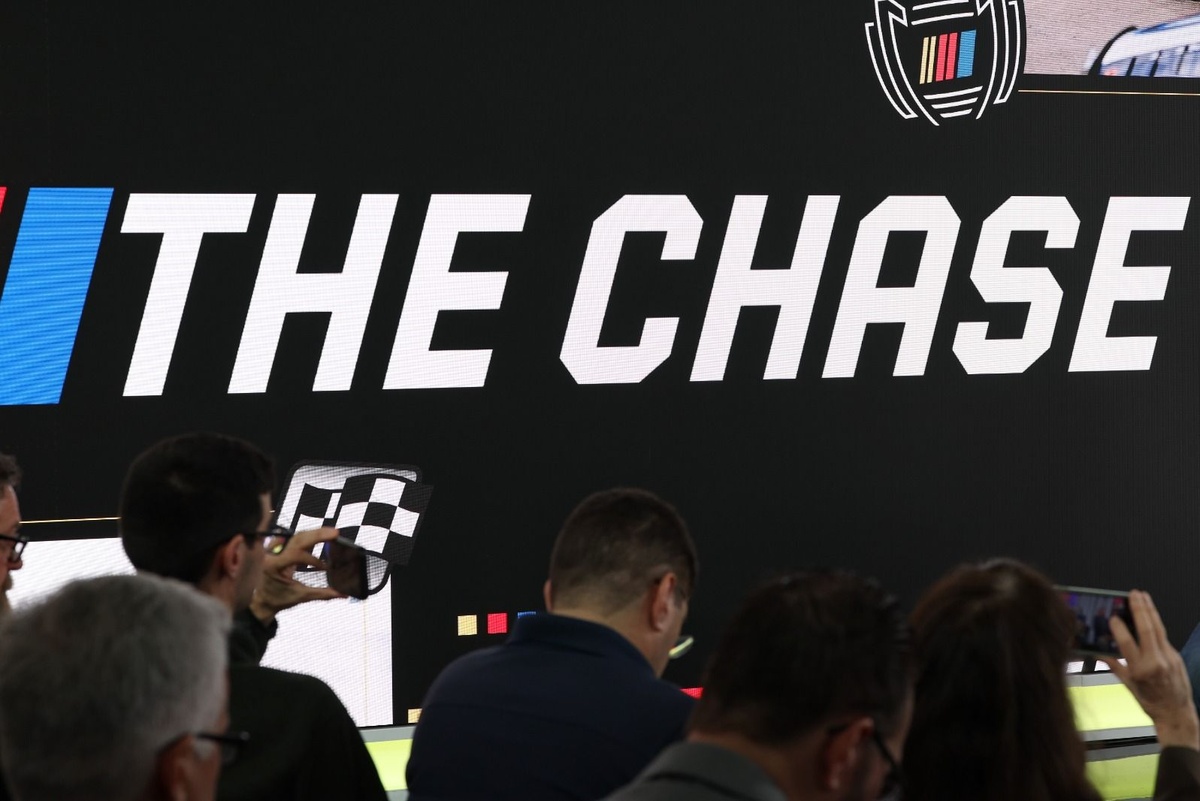
NASCAR has a new championship format for 2026, and the overwhelming reaction has been positive. But what exactly has changed with this latest iteration and why is it such a good thing? Let’s take a look:
Looking over the format, it is much better in regards to rewarding the best driver during each particular season. The eliminations and multiple rounds/resets are completely gone, replaced by a single reset after Race #26. The 16 title finalists will then have ten races to execute better than their rivals and accumulate the most points en route to earning the title.
Advertisement
This is a huge bonus. Between 2014 and 2025, drivers had to jump through hoops, surviving chaotic three-race rounds only to compete in a one-race showdown with four drivers tied on points. Naturally, the driver who dominated the year often failed to win the crown, drawing the ire of NASCAR fans. Even when they were 100% deserving, it somehow felt wrong. Last year, Kyle Larson scored more points than most of the field over the final ten races, and yet his title felt cheap to some due to the circumstances of that final race.
More good news
Kyle Larson, Hendrick Motorsports Chevrolet
Kyle Larson, Hendrick Motorsports Chevrolet
But what about the 2026 reset? It’s not based on bonus points gathered throughout the year, and it’s fairly simple. Whoever is leading the standings at the end of the regular season will be granted 2100 points. The driver in second will have 2075, third will have 2065, and then it drops five points per position until the last driver to make it into the postseason has 2000, and is 100 points behind the leader. This is a good way to reward the most consistent drivers over the entire year and about as close as the sport has gotten to a full-season format since 2003. It’s also very simple which is a bonus, as the complexity of previous formats has been a key criticism.
Advertisement
This ‘new’ format is basically The Chase, so it makes since that NASCAR has resurrected the term. The Chase resulted in some incredible battles, like the 2011 season when Carl Edwards and Tony Stewart tied for the championship after finishing 1-2 in the finale. Game 7 moments weren’t manufactured like with the eliminations, and they felt more real.
However, the original version of The Chase also featured the most dominant run in NASCAR history as Jimmie Johnson won five consecutive titles from 2006 through 2010. But with the modern car and how close the field is, I don’t think we will ever see a runaway performance like that again.
Another positive change was putting more incentive on race wins without making it all about the playoffs. No longer will we hear ‘X driver wins the Daytona 500 — and they’re in the playoffs!’ A win does not guarantee you a spot, so the driver 34th in points who wins a race can’t supplant the winless driver sitting seventh in the overall standings. Instead, NASCAR has increased the points haul for race wins from 40 points to 55. Second-place rewards 35 points, so there is a massive 20-point gap between race wins and runner-up finishes.
Advertisement
Not only will that incentivize drivers tempted to ‘points race’ to race harder for that extra spot, but it really rewards those collecting the most checkered flags. If a driver like Shane van Gisbergen goes out and wins another four road courses, he won’t automatically earn a spot in The Chase, but that’s a lot of extra points that will help him in reaching 16th. No longer can a driver rely solely on winning, as it is now part of a bigger picture. And in the postseason itself, those wins are going to be incredibly valuable as the gap between first and second in the running order is now the same as the gap between second and 22nd.
The negatives
Championship 4 drivers William Byron, Joey Logano, Ryan Blaney, Tyler Reddick

Championship 4 drivers William Byron, Joey Logano, Ryan Blaney, Tyler Reddick
Okay, so this all sounds great, but the title of this story is pros AND cons, so what are the negatives? Thankfully, there aren’t many unless you were a proponent for the full-season points or bust crowd. A glaring problem to me is the number of drivers taking part in the 2026 version of The Chase. 16 drivers is a lot, and carving a few off would have been better. However, it’s understandable why NASCAR’s hands were a bit tied here with the chartered teams and their sponsors not wanting to limit the opportunity to be part of The Chase. There will be a smaller field for the lower divisions as 12 drivers make The Chase in the O’Reilly Auto Parts Series and ten for the Truck Series.
Advertisement
Stages remain, as do the points they offer, and that’s not something I’m excited about either. Ignoring the fact that we’re still artificially breaking up races, those stage points, especially during The Chase, will be like gold. Yes, it will push drivers to race harder for them which could be a good thing, but it also feels like it will have too much of an influence on the final standings with the way this new format is structured. There are up to 20 points on offer through stages alone, and a driver finishing deep in the field could match the points scored by someone placing 20 positions higher, and that seems wrong.
Despite those minor gripes, the majority of these changes are fantastic for adding legitimacy back to the NASCAR championship, and calming frustrations born from recent years. Last year, we were all holding our breath hoping the ‘right’ driver prevailed throughout championship weekend, and that’s not how a champion should be decided. There could be a surprise with this format with drivers getting hot at the right time, but certainly no flukes. Winning will matter quite a bit, but consistency and performance over the entire season will be paramount, as it should be.
Read Also:
Advertisement

NASCAR drivers, legends say new format is about legitimacy

The evolution of NASCAR’s championship format over the years

NASCAR reverts to the Chase for the Championship format in 2026
To read more Motorsport.com articles visit our website.
