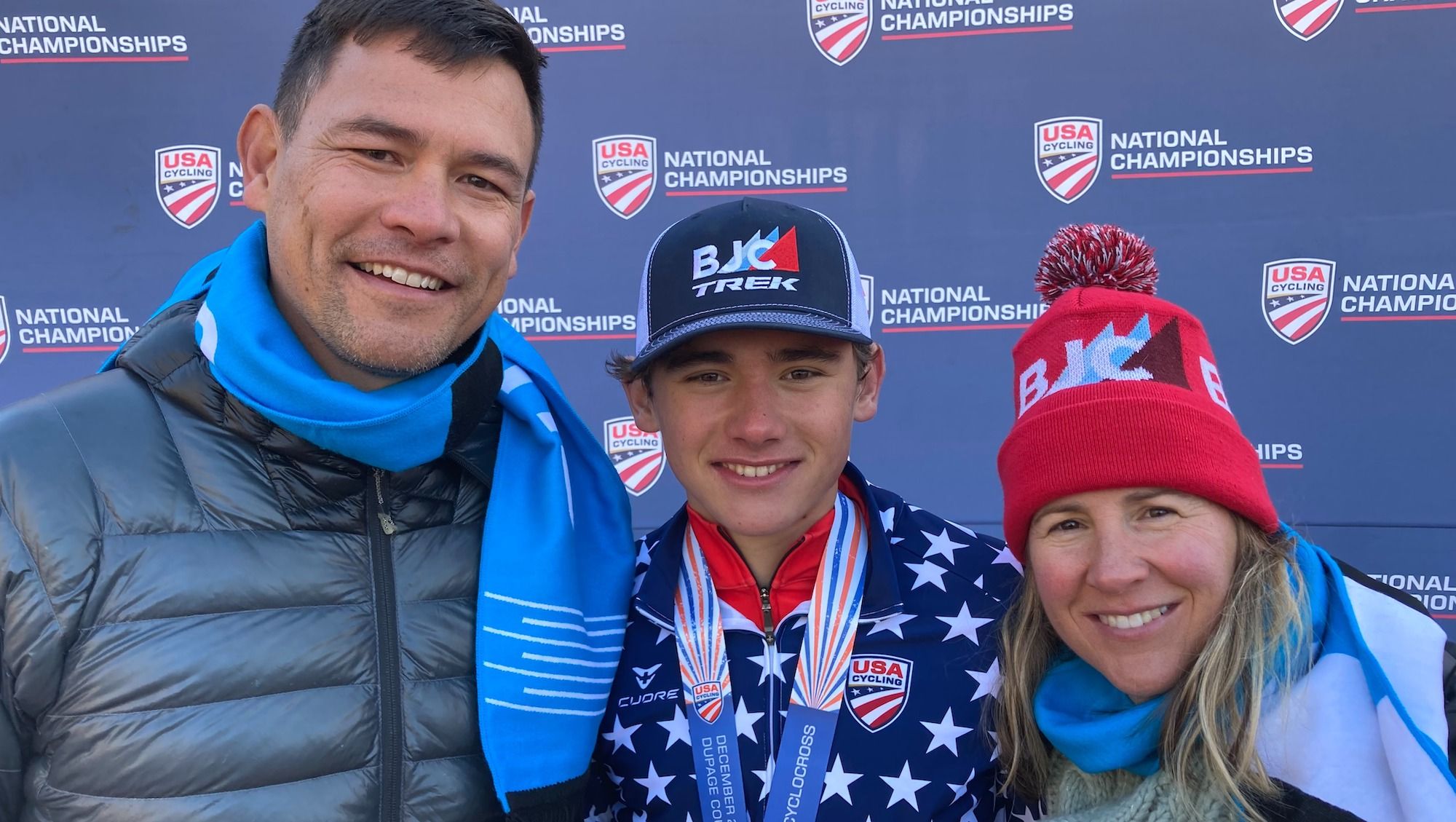
Just six months after beginning her prison sentence for killing Team USA teen cyclist Magnus White, driver Yeva Smilianska is being considered for transfer to a halfway house. This development has disappointed and angered the White family, which fought for nearly two years to secure criminal accountability in their son’s death.
In June, Smilianska was sentenced to four years in state prison for vehicular homicide and reckless driving, followed by three years of mandatory parole. She is not eligible for parole until April 1, 2027, and her mandatory release date is set for April 1, 2029.
A Denver news source reported that Jill and Michael White, Magnus’s parents, were blindsided by the notification, particularly because Smilianska’s parole eligibility is still more than two years away.
“It sends a message to the drivers: you can lie for two years, deny accountability and responsibility, and you’ll get off with a very light, easy joke of a sentence,” Michael White said. “The State continues to just keep on letting us down. Letting the community down.”
The news arrived during the same week Magnus would have turned 20. To mark the occasion, the family placed a decorated Christmas tree beside Magnus’ ghost bike memorial along Boulder’s Diagonal Highway, where he was killed.
“To be hit with this news yesterday…it just knocked us down,” Jill White told Denver7. “Cruel is the word, I feel. It’s very cruel.”
After the June sentencing, the family believed they would have a measure of stability before revisiting release considerations. Instead, Michael said they now feel they are “back fighting again” much sooner than expected.
“It’s the system,” he said. “The system is giving [a] convicted felon of vehicular homicide every opportunity to get out and not be held accountable for their crime.”
Twentieth Judicial District Attorney Michael Dougherty, who prosecuted the case, doesn’t disagree with Michael, stating: “We had the trial in April, and the defendant was then sentenced to four years in state prison [in June], and here we are, and it’s November. That’s not how the system should work… This case shows the retraumatization for victims’ families and the injustice that can result.”
The authority to deny or approve Smilianska’s transfer into a halfway house lies with the Community Corrections Board, which reviews referrals and determines whether an inmate is an appropriate candidate for supervised community-based placement.
Michael told Cycling Weekly that the family hopes community engagement might influence the outcome. “Our avenue to stop the release is to write letters to the Community Corrections board,” he said.
