With drivers and fairway woods marked down by as much as $200, Titleist is making a move we almost never see—and the timing raises some interesting questions.
The headline is straightforward: Titleist has discounted the majority of its GT metalwoods lineup by up to $200.
The finer points, as is often the case, are all about timing.
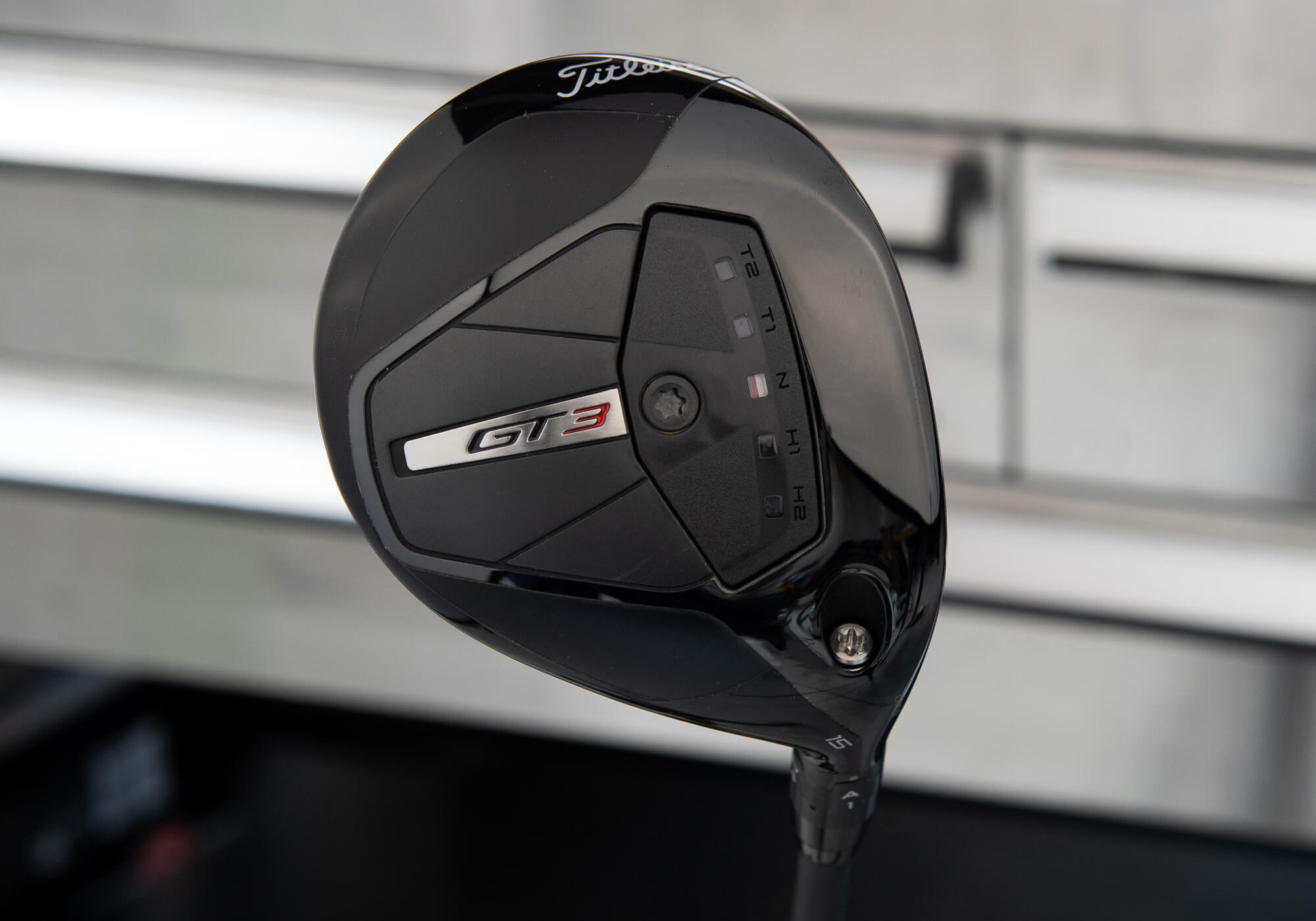
At face value, the discounts are simple enough. GT drivers are now priced at $449, while GT fairway woods have dropped to $329. Hybrids, however, remain $329, and the GT280 mini driver stays put at $499—making it, somewhat oddly, the most expensive driver in the current Titleist lineup.
The timing of all of this is curious to say the least.
A break from the usual calendar
Unlike pretty much every one of its major competitors, Titleist didn’t announce a new driver in January. That’s normal. Historically, the company’s mainstream drivers and fairway woods arrive every other summer, with lightweight “1” series models along with hybrids following in January. Given that GT1 and GT hybrids launched last January, nothing new was expected from Titleist in the metalwoods category.
If the calendar holds, the next mainstream Titleist metalwoods would be expected sometime around July, with the next “1” series landing roughly this time next year.
That’s what makes the timing—and the breadth—of these price drops so curious.
GT drivers launched August 1, 2024, with full retail availability later that month. Late season, sure, but still within the playing window. Fast-forward to now, and with 2026 product beginning to hit shelves across the industry, Titleist suddenly finds itself offering what are inarguably some of the best-performing drivers on the market at prices $200 below most of the competition.
That’s not a (value) position we typically associate with Titleist.
Value, Titleist-style
The pricing shift also reframes the upsell conversation. With base drivers now at $449, upgraded builds featuring premium shafts from Graphite Design land around $650—roughly on par with, or below, what many competitors charge for entry-level stock offerings.
In other words, what used to feel like a premium splurge now looks a lot like a value comparison.
If you’re an industry leader looking to credibly undercut competitors without cheapening the brand, this is a hell of a play.

Moving the window—or bucking the market?
There’s an alternative theory worth considering.
If we spin the globe backward, back through 917 and 919 and on toward GT, you’ll find that Titleist has steadily, although not aggressively, moved its release dates earlier. When I first started writing about Titleist, October driver launches were common. Not exactly the heart of the buying season.
With successive TS offerings and into GT, those dates crept forward. Still late season, but at least golfers were actively playing.
Given that peak equipment buying generally happens in May, June, and July, it stands to reason that Titleist would continue nudging its launches earlier to better align with demand. Viewed through that lens, the current discounts may be less about disrupting the market or clearing shelves and more about resetting the calendar.
Undercutting the competition and moving up a release date aren’t mutually exclusive. Two things can be true at once.

Reading the tea leaves
It’s also worth noting what hasn’t discounted.
Every GT driver, including GT1, is part of the program. The same is true for GT1 fairway woods. Hybrids and the GT280 mini driver are not.
That distinction hints at the possibility that Titleist could be looking to roll GT1 into the mainstream lineup rather than treating it as a later, separate release. It also suggests that, at least for now, hybrids and mini drivers will continue on their own cycles.
Of course, all of this is speculation.

The bottom line
What is clear is the result. For the first time in recent memory, Titleist has the most affordable current-model driver among the major OEMs. Not good for a Titleist, not price competitive, but genuinely less expensive—by a margin large enough to force comparison shopping where there may not have been any.
Whether this is about moving the calendar forward, undercutting competitors, or both, the net effect is the same: In a world of $700 drivers, GT just became the best value in the driver market and that’s not the way most golfers are accustomed to thinking about Titleist.
Have your say
Does a $200 discount on Titleist GT drivers or a $70 discount on Titleist fairway woods cause you to rethink your early season purchasing decisions?
The post Timing is Everything: Titleist Discounts Most of its GT Metalwoods Lineup appeared first on MyGolfSpy.
