The fall in the U.S. dollar value last year cost UEFA about $55 million.
The dollar value dropped about 9% against a range of foreign currencies in the first months of 2025, which economists linked to investors’ waning confidence in the U.S. under President Donald Trump, who returned to office last January.
UEFA cited “economic, market and geopolitical dynamics” and a “sudden weakening of the U.S. dollar” for driving the foreign exchange losses which accounted for the loss in its accounts for the 2024-25 football season.
“In the past few years, UEFA benefited from a strong U.S. dollar leading to substantial gains on foreign exchange,” the body said on Thursday in its 52-page annual financial report which did not name Trump.
“In March 2025, however, the tides turned, and the U.S. dollar rapidly weakened by almost 9%, resulting in currency exchange losses of €47 million.”
That was equivalent to $54.5m at the exchange rate on Thursday.
That sum almost equated to the overall “net result” in UEFA’s latest annual accounts of minus-€46.2m ($53.6m) which was financed from its reserves.
The dollar-driven losses cut UEFA’s reserves to €521.8m ($605m) at the end of last June, just above the €500m level it seeks to maintain to guarantee funding for its 55 member federations and organize national team competitions from senior to youth level.
Though UEFA-organized club events like the Champions League earn billions each season, a big majority is paid as prize money and does not generate profits for the organization based in Nyon, Switzerland.
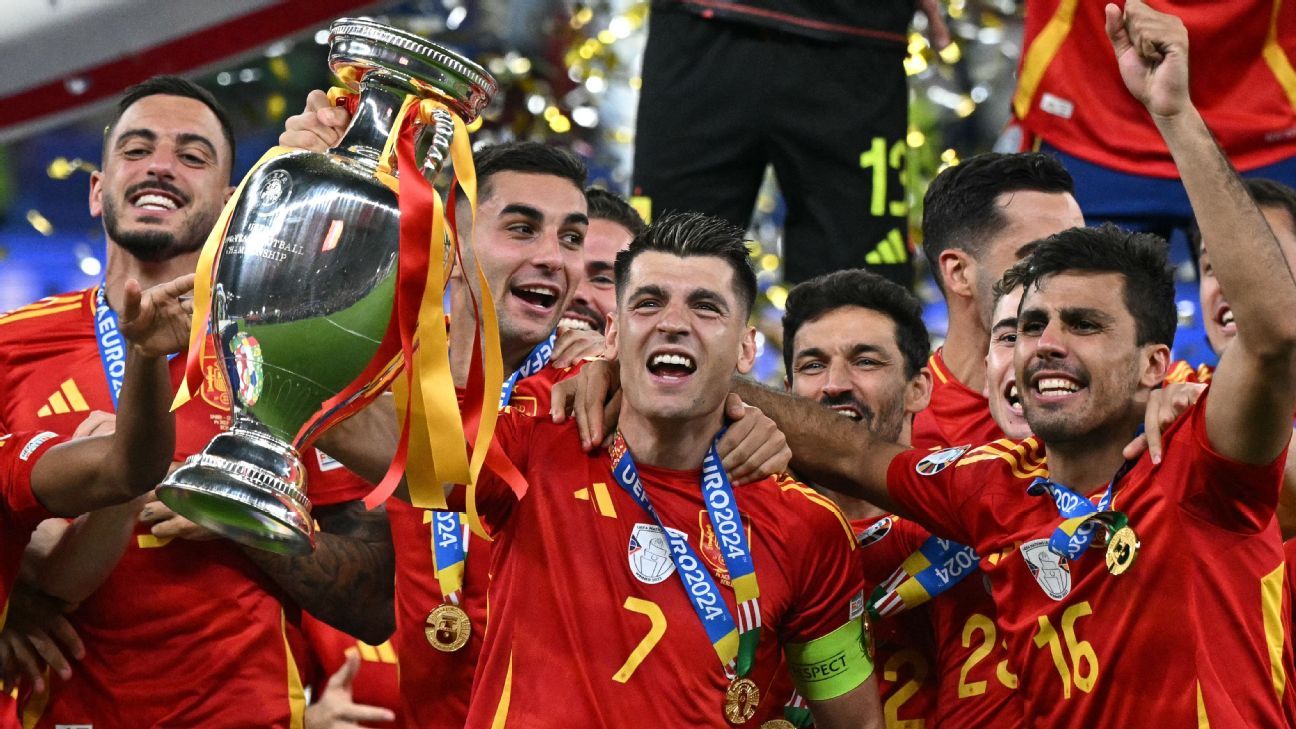
The four-yearly men’s European Championship that earned about €2.5 billion for the 2024 edition in Germany fuels UEFA’s reserves and main funding program known as “HatTrick” that pays members double what they get annually from FIFA.
UEFA said in the financial report it “needs to hold a big U.S. dollar position to back outstanding hedge transactions,” and so when the value started falling a year ago “substantial losses were inevitable.”
“The foreign exchange result had been consistently positive for several years, but this unfortunately changed in spring 2025 when the U.S. dollar suddenly weakened for various reasons, including economic, market and geopolitical dynamics,” the UEFA document said.
UEFA acknowledged a “disappointing” outcome for its asset management last year compared to a “very exceptional 2023-24,” which was the last full financial year during the previous U.S. administration.
