Video assistant referee causes controversy every week in the Premier League, but how are decisions made and are they correct?
This season, we take a look at the major incidents to examine and explain the process both in terms of VAR protocol and the Laws of the Game.
Andy Davies (@andydaviesref) is a former Select Group referee, with over 12 seasons on the elite list, working across the Premier League and Championship. With extensive experience at the elite level, he has operated within the VAR space in the Premier League and offers a unique insight into the processes, rationale and protocols that are delivered on a Premier League matchday.


Referee: Anthony Taylor
VAR: Michael Salisbury
Time: 90+11 minutes
Incident: A mass confrontation between 20 players.
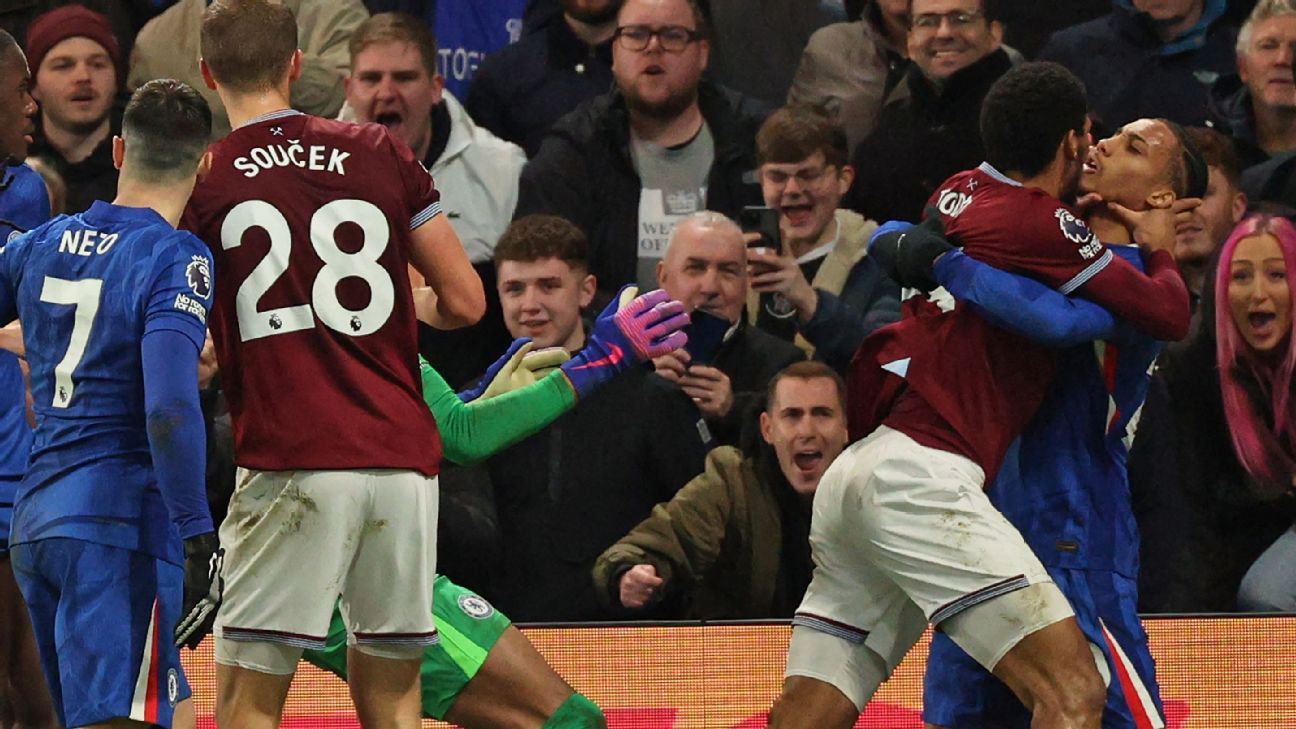
What happened: The mass confrontation in the final moments of Saturday’s thrilling London derby between Chelsea and West Ham highlighted the benefits of VAR.
With the best part of 20 players involved in the melee at the end of a crazy last-gasp 3-2 win for the Blues, the challenge for the on-field officials was to identify all offenders and their actions. But it was hugely difficult given the number of players involved.
The issues began in the 11th-minute of stoppage time, shortly after Enzo Fernández had scored. West Ham winger Adama Traoré threw Marc Cucurella to the ground and then clashed with João Pedro, who came in to defend his teammate.
The melee saw a host of other players arrive on the scene and Traore and Pedro were cautioned, but a VAR check saw West Ham defender Jean-Clair Todibo dismissed for putting his hands around the throat of Pedro.
What is the process? A VAR review of the replays will be meticulous, but remember that VAR can only intervene if they identify a violent act not picked up by the on-field officials.
Referee Anthony Taylor would have briefed his team before the match over the process he expects in such a moment. However, every situation is unique and with three separate groups of players engaged in altercations at one stage, Taylor and his team needed to work hard to manage the situation and work out who to discipline.
The VAR and assistant VAR follow a similar process externally, as they look to identify standout players and their actions initially from the live feed, while the third member of the VAR team, the RO (replay operator), lines up all the available angles for the VAR to review once the melee has settled and the on-field team have dealt with any transgressors in the moment.
The VAR has full access to the live on-field communication, so they will have worked through each action identified by Taylor to confirm that the reading of the incident was correct and didn’t meet the threshold of a violent action, rather than just a player showing aggressive behavior.
Once VAR has confirmed all the on-field sanctions — in this case, the yellow cards for the two instigators, Traoré and Pedro — the RO will then present alternative angles which are not initially available on the “live” feed for VAR to review and identify any additional offenses for violent conduct.
VAR review: The reverse angle of this incident showed Todibo grabbing Pedro around the neck in a violent manner, which clearly met the criteria for a red-card offense, and was bookmarked by VAR Salisbury and added to the package to be presented to the referee in the OFR (on-field review).
Taylor didn’t need a second look when he was sent to the monitor, as Todibo’s actions made the decision straightforward and he was sent off for violent conduct.
Verdict: A good use of VAR to sweep up the on-field work done by Taylor and his team.
The refereeing team are always looking to identify the instigators for yellow cards, but also any additional acts of violent conduct and red-card offenses, and sometimes they need help.
In this case, Traoré and Pedro were cautioned for starting the whole thing, while Todibo crossed the line and received a straight red card for his actions. Which was all correct.
