The video assistant referee causes controversy every week in the Premier League, but how are decisions made, and are they correct?
This season, we take a look at the major incidents to examine and explain the process both in terms of the VAR protocol and the laws of the game.
All screenshots photo credit: NBC
Andy Davies (@andydaviesref) is a former Select Group referee, with over 12 seasons on the elite list, working across the Premier League and Championship. With extensive experience at the elite level, he has operated within the VAR space in the Premier League and offers a unique insight into the processes, rationale and protocols that are delivered on a Premier League matchday.
Referee: Craig Pawson
VAR: Darren England
Incident: Possible red card
Time: 45+2 minutes
What happened: Brighton’s Diego Gómez challenged Liverpool attacker Florian Wirtz. The challenge was late and high, with referee Craig Pawson deeming it a reckless challenge, giving Gómez a yellow card for his actions.
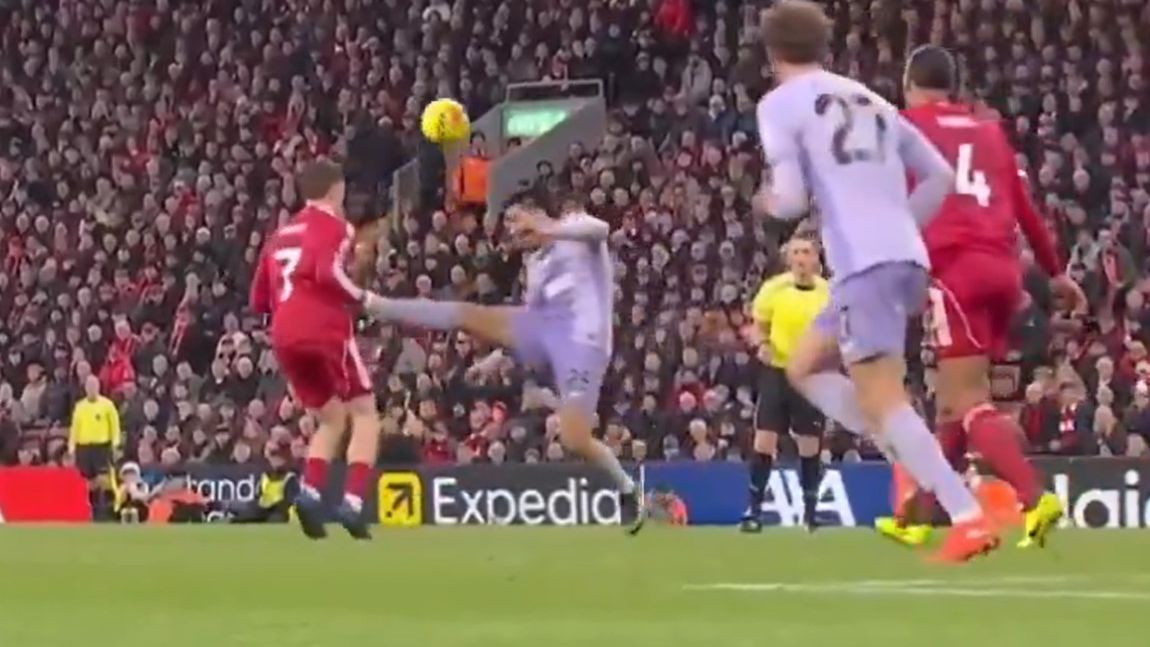
VAR decision: The referee’s call of a yellow card for Gómez was checked and confirmed by the VAR — with the challenge deemed not to be with excessive force and not serious foul play.
VAR review: Pawson’s communication would have described the challenge by Gómez as high and reckless, with a level of contact; however that contact lacked any force to meet the threshold of serious foul play.
The VAR review centered around Pawson’s wording, with any intervention only considered if the replays evidenced the contact to be different to that described on-field.
These types of situations are judged against one of two wordings in law:
• A disregard for the safety of their opponent: yellow card
• Endangering the safety of their opponent: red card
The VAR was comfortable that the referee’s judgement was sound and that it met the criteria for a yellow card.
Verdict: A correct on-field judgment by Pawson, with Gómez showing a disregard for the safety of his opponent as opposed to endangering him, and the VAR was right not to intervene.
However, Gómez was fortunate. It is a fine line with these types of challenges, and more direct contact to the chest of Wirtz with his straight-legged approach, and the VAR review would have produced a red card for the Brighton player.
Referee: Rob Jones
VAR: John Brooks
Incident: Possible red card
Time: 59 minutes
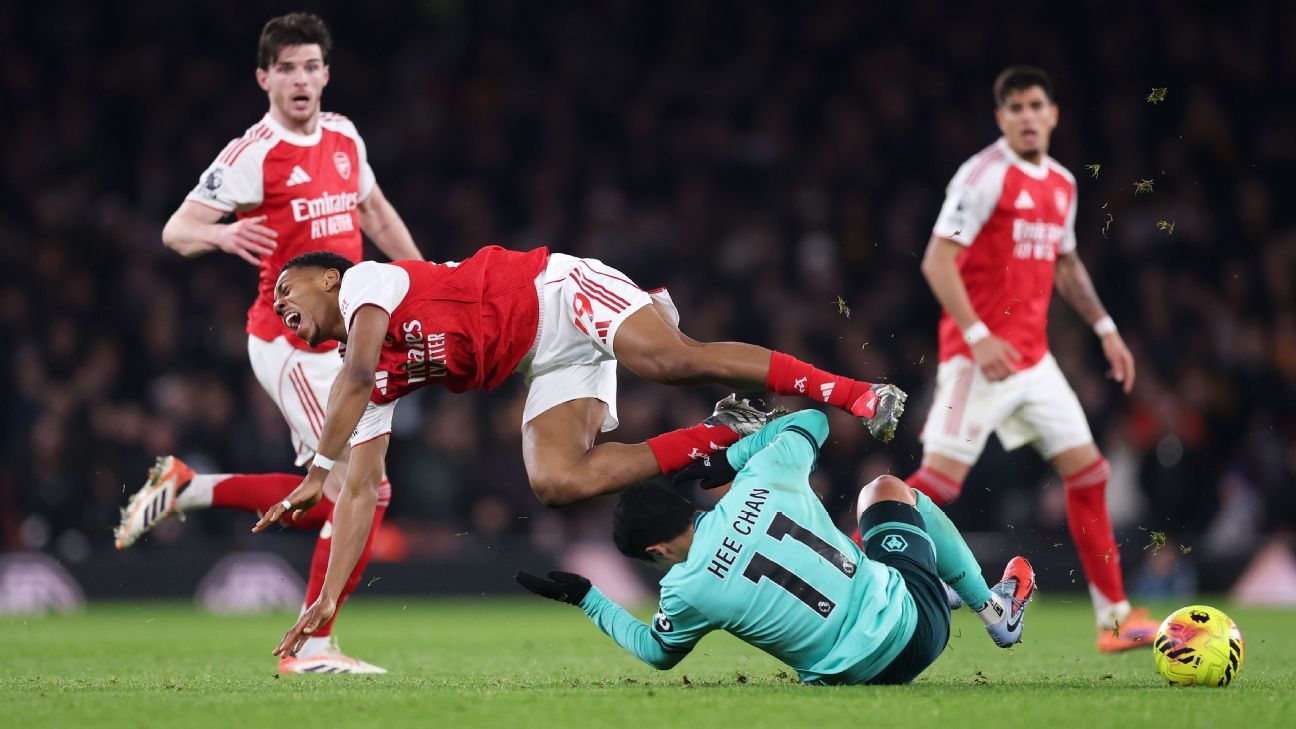
What happened: Wolves midfielder Hwang Hee-Chan, having overrun the ball in midfield, threw himself into a challenge on Arsenal defender Myles Lewis-Skelly from distance. Jones deemed the challenge to be reckless, as opposed to serious foul play, and only cautioned the Wolves player.
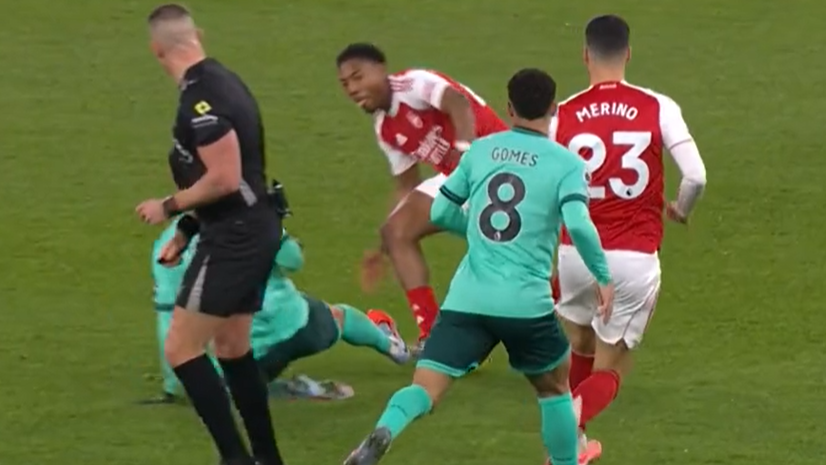
VAR decision: The referee’s call of a yellow card was confirmed by the VAR — with Hwang deemed to be pulling out of the challenge on Lewis-Skelly and the contact on the foot deemed to be just a reckless foul and nothing more serious.
VAR review: Watching the live feed, this challenge would have immediately caused concern for Brooks in the VAR hub and his initial thought would naturally have gravitated toward upgrading it to a red card.
But Jones and his team took their time to process the information between them. Brooks’ review would have been thorough, looking at a number of replays, as the challenge was borderline against all the criteria considered for a red card offense. However, for him to recommend an on-field review, he needed clear and obvious evidence that an error had been made.
Hwang did overrun the ball and was, to a degree, out of control, while he did make contact with his opponent at speed. The contact, however, was on the top of Lewis-Skelly’s foot, with Hwang attempting to retract his leading foot at the point of contact, which reduced the force to a low level.
These considerations led the VAR to agree with the on-field decision of a yellow card.
Verdict: The VAR was correct to not intervene in this event, and the process he employed highlighted a high level of application in his role. The initial challenge looked a poor one in real time, however, it is the role of the VAR to remove all emotion and operate only with the facts and pictures presented.
Hwang can consider himself fortunate that his reckless challenge was at a low point of contact, which is the only thing that saved him.
On reflection, Jones will be disappointed with his body shape and positioning at the point the challenge was made. He was caught pivoting on the spot, so his view of the tackle was blocked and he left himself without the opportunity to view the contact in full. Instead, he was forced to rely on his assistants to feed the information as best they could.
