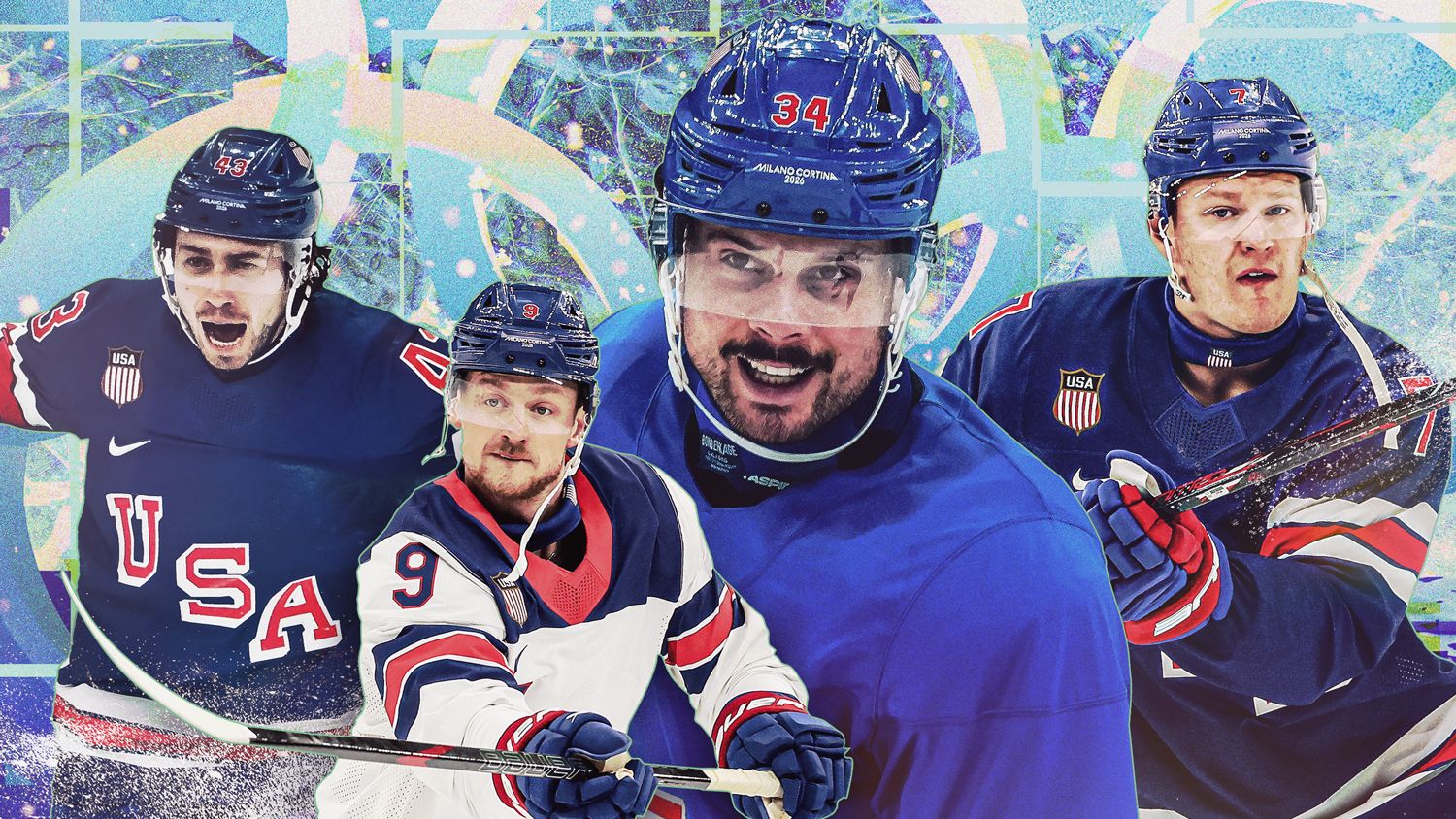
The 2026 Winter Olympic men’s hockey tournament has ended with Team USA players wearing gold medals around their necks.
That means it’s time to start thinking about who will represent the United States at the 2030 tournament in the French Alps — keeping in mind that the NHL and the NHLPA agreed to send players to those Games in their collective bargaining agreement.
Predictably, many of the players who battled Canada in the gold medal game Sunday will be back for more in France. But due to the age of some players and the maturation of the next wave of American stars, there will be roster turnover.
We’ve organized the candidates for the 2030 U.S. men’s Olympic hockey team into several tiers and included how old they’ll be when that tournament plays out. Who makes the cut for the next shot at Olympic glory?

The locks
Jack Eichel, C, Vegas Golden Knights (33)
Jack Hughes, F, New Jersey Devils (28)
Quinn Hughes, D, Minnesota Wild (30)
Dylan Larkin, C, Detroit Red Wings (33)
Auston Matthews, C, Toronto Maple Leafs (32)
Charlie McAvoy, D, Boston Bruins (32)
Tage Thompson, F, Buffalo Sabres (32)
Brady Tkachuk, F, Ottawa Senators (30)
Matthew Tkachuk, F, Florida Panthers (32)
Zach Werenski, D, Columbus Blue Jackets (32)
If there’s a core group for Team USA, these are the players who encompass it. This group includes the first six players named to the 2026 roster as well as some of the players who were integral in the Olympic tournament.
Eichel and the Tkachuks played on the same line for coach Mike Sullivan. Matthews was the team captain, and it’s hard to imagine Team USA without him provided he’s still scoring goals at his current clip in the NHL. Quinn Hughes was Team USA’s best all-around defenseman, and Werenski was in the conversation, too. McAvoy was usually second to Hughes in average ice time during the tournament.
That fact that Jack Hughes’ status was never in question for the 2026 team is a testament to how much Team USA values his singular talents. He battled through injuries in the NHL regular season. He looked lost as a winger at 4 Nations. But he rewarded that faith but being one of the team’s most productive offensive forces in Milan, looking more like Patrick Kane 2.0 than a center flailing on the wing. And of course, scoring the golden goal to win the tournament helps.
Jack Hughes started on the fourth line but played his way up to skate with Larkin. The Red Wings center followed up his outstanding 4 Nations tournament with an Olympic run filled with huge moments. Eichel, Matthews and Larkin gave the Americans some of their best center depth ever on a national team, and they could run the trio back in 2030.
Thompson was potentially the only player whose “lock” status I had a question about. Unlike everyone else here, Thompson wasn’t named to the 4 Nations roster. He used that snub as motivation to stake a claim on an Olympic spot, and his worthiness became undeniable: From the end of 4 Nations to the beginning of the Olympics, only Nathan MacKinnon (51) scored more goals than the Sabres star (48). His play in the 2026 Games only bolstered his case.
BLINK AND YOU’LL MISS IT.
Tage Thompson extends the USA’s lead. pic.twitter.com/6CQUSRxdYA
— NBC Olympics & Paralympics (@NBCOlympics) February 20, 2026
Strong candidates from 2026
Matt Boldy, F, Minnesota Wild (31)
Brock Faber, D, Minnesota Wild (27)
Jackson LaCombe, D, Anaheim Ducks (29)
Jake Oettinger, G, Dallas Stars (31)
Jake Sanderson, D, Ottawa Senators (27)
Boldy was a borderline lock based on his play at 4 Nations and in the 2026 Games. He was one of the leading shooters on Team USA, and wasn’t afraid to go to the tough parts of the ice to generate those shots. He’s seventh in points among American-born player over the last two seasons (135 in 136 games) and figures to be a part of Team USA going forward.
Faber and Sanderson played regularly on the American blue line at the Olympics. Faber took his place next to Jaccob Slavin, as he did at 4 Nations. That’s the tournament where Sanderson replaced an injured Quinn Hughes and ended up scoring in their championship game loss to Canada.
LaCombe was added to the roster as an injury replacement for Seth Jones and didn’t see the ice during the tournament. That’s less about his abilities than it is about the Americans having the best depth in the tournament on the blue line. LaCombe has just scratched the surface of his talents in the NHL. His selection, and this experience in Italy, felt very much designed for LaCombe to have a role in 2030.
There’s little reason to believe that Oettinger won’t still be one of the NHL’s best goaltenders four years from now, which is one reason he’ll be strongly considered for the 2030 roster. It was curious that he didn’t see the ice in group play but was the backup during the medal round.
Question marks from 2026
Kyle Connor, F, Winnipeg Jets (33)
Noah Hanifin, D, Vegas Golden Knights (32)
Clayton Keller, F, Utah Mammoth (31)
Jeremy Swayman, G, Boston Bruins (31)
Only two American-born players have scored more goals than Connor (100) over the past three seasons. That earned him a healthy scratch for the 4 Nations championship game, and then a series of scratches in the Olympics as a spare forward. Who knows, maybe he’ll be a scratch in 2030, too?
Keller was used sparingly during these Olympics, and he played as a reserve in the medal round. He does a lot of good things, but ultimately does he do them better than other 2030 candidates?
Given his age in 2030 and his usage at the Milan Games, Hanifin is anything but a lock, but he has fans in Team USA management and didn’t do anything in Milan to shake their faith in admittedly limited ice time.
Swayman was a given a shot in group play against Denmark … and gave up a shot from center ice, which led to Oettinger becoming the backup in the elimination round. He’s still young enough to grab an Olympic spot — and certainly has experience on that stage that others won’t — but the U.S. goaltending pool is deep.
Noah sneakin’ one over 👀 #WinterOlympics pic.twitter.com/eoUfcgSlWD
— USA Hockey (@usahockey) February 14, 2026
If age is just a number
Connor Hellebuyck, G, Winnipeg Jets (36)
Jake Guentzel, F, Tampa Bay Lightning (35)
Seth Jones, D, Florida Panthers (35)
J.T. Miller, F, New York Rangers (36)
Brock Nelson, F, Colorado Avalanche (38)
Jaccob Slavin, D, Carolina Hurricanes (35)
Vincent Trocheck, F, New York Rangers (36)
At 32, Hellebuyck was older than the previous three Team USA starters in best-on-best Olympic tournaments: Jonathan Quick (28), Ryan Miller (29) and Rick DiPietro (24). Which is to say that he would be significantly older than the typical U.S. starter at the 2030 Games. But given how Hellebuyck has played for Team USA at 4 Nations and then in Milan, where he had a tournament-leading .947 save percentage heading into the gold medal game, the Jets netminder could certainly be in the mix again.
Defensive defensemen have a pretty long shelf life, so it’s hard to imagine Slavin won’t still be a foundational player for the Americans four years from now. Jones was named to the initial roster and unable to play due to injury. There might be better options by the time 2030 rolls around, but that can’t be ignored.
Guentzel is only here because he’s a few years older than the majority of the other forwards who could return from the 2026 team. He’s seventh in points among American players over the past three seasons (217 in 202) and should keep collecting them as a member of the potent Tampa Bay offense. Provided there’s no erosion in his game, Guentzel should be right back in the mix.
Nelson, Miller and Trocheck were USA GM Bill Guerin’s blue-collar veteran grunts down the lineup to balance out the pure skill guys. The Rangers forwards were vital on the penalty kill for the Americans. Nelson had a great scoring impact during group play until Jack Hughes was moved off his line. But given his age, Nelson is probably closer to retirement than a spot on the 2030 roster.
Everything coming up BROCK. NELSON. #WinterOlympics pic.twitter.com/yy7xGkXiR0
— NBC Olympics & Paralympics (@NBCOlympics) February 12, 2026
The 2026 snubs
Cole Caufield, F, Montreal Canadiens (29)
Alex DeBrincat, F, Ottawa Senators (32)
Adam Fox, D, New York Rangers (32)
Lane Hutson, D, Montreal Canadiens (26)
Jason Robertson, F, Dallas Stars (30)
Alex Tuch, F, Buffalo Sabres (33)
Fox was one of the few players from the 4 Nations roster that wasn’t invited back for the Olympics after being on the ice for McDavid’s OT winner. He had 28 points in 30 games this NHL season, playing fantastic hockey in a campaign truncated by injury. Could the former Norris Trophy winner restate his case over the next four years?
Neither Caufield nor Hutson were invited to USA Olympic orientation camp, after opting not to play in the 2025 IIHF world championships. Caufield is one of the most dynamic scoring wingers in the NHL, but his lack of size might have worked against him. Hutson, last season’s NHL rookie of the year, is one of the highest-scoring defensemen in the league, but he was seen as a redundancy based on the puck-moving defensemen already on the Olympic roster.
Along with Caufield, Robertson was considered the most egregious offensive snub for Team USA. He was third among all American-born scorers in points over the past three seasons (226). DeBrincat was 11th in that span (194 points), but like Caufield didn’t have the size Team USA was looking for on the wing.
Tuch has the size, the scoring and the tenacity that the Americans wanted up front. But he’ll have a few more miles on his frame come 2030.
0:42
Jason Robertson nets go-ahead goal with 1 minute to go
Jason Robertson scores goal with 1 minute to go to give Dallas the lead.
The orientation class
Logan Cooley, F, Utah Mammoth (25)
Luke Hughes, D, New Jersey Devils (26)
Matthew Knies, F, Toronto Maple Leafs (27)
Frank Nazar, F, Chicago Blackhawks (26)
Shane Pinto, C, Ottawa Senators (29)
Alex Vlasic, D, Chicago Blackhawks (28)
All of these players were on the USA Hockey Olympic orientation camp roster, but they didn’t make the cut for Milan Cortina.
Cooley would have been an interesting option for the 2026 Games, but his season was cut short because of injury after scoring 14 goals in 29 games. Knies was also an intriguing option, given his chemistry with Matthews. He’s going to be the American power forward of the future. Pinto might need to find another gear over the next four seasons to make a serious run at a roster spot, but he’s got a strong two-way game.
Could the 2030 Olympic team unite the Hughes Triforce? Luke Hughes would have to break through within the deepest position in the American talent pipeline, but he’s got the talent to do so.
Vlasic is a defensive defenseman for the Blackhawks, while Nazar has a loud of offensive upside.
1:14
Logan Cooley tallies 4 goals in Utah win vs. Vegas
Logan Cooley puts on a show with four goals in the Mammoth’s 5-1 win over the Golden Knights.
The next wave
Matty Beniers, C, Seattle Kraken (27)
Jackson Blake, F, Carolina Hurricanes (26)
Zeev Buium, D, Vancouver Canucks (24)
Josh Doan, F, Buffalo Sabres (27)
Cutter Gauthier, F, Anaheim Ducks (26)
James Hagens, C, Boston Bruins (23)
Spencer Knight, G, Chicago Blackhawks (28)
Ryan Leonard, F, Washington Capitals (25)
Will Smith, F, San Jose Sharks (24)
Jimmy Snuggerud, F, St. Louis Blues (25)
Dustin Wolf, G, Calgary Flames (28)
This tier is a collection of young players that have either made an impression in the NHL or have the potential to do so.
Beniers is in his fifth season with the Kraken, having won rookie of the year in 2022-23. It’s not too difficult to see him maturing into one of those “do-everything” bottom-six forwards on Team USA.
Smith gets understandably overshadowed by teammate Macklin Celebrini on the Sharks, but he is one of the best young offensive players in the NHL. Ditto Gauthier, who has 45 goals in his first 138 NHL games. Leonard has 30 points in 52 games with the Capitals as a rookie, and like others on the list has some impressive Team USA history in world juniors.
Blake, Doan and Snuggerud all have some work to do before the next Olympics to make their cases. Hagens is just 19 years old and in his second season at Boston College after being selected seventh overall by the Bruins last summer, but the potential is there.
Buium was the centerpiece of the Quinn Hughes trade for the Canucks, and the San Diego native could blossom into a top puck-moving defenseman.
Wolf was second in the rookie of the year voting last season, but he has struggled for an encore. Knight, conversely, is having a star-making season with the Blackhawks in his best NHL season to date.
