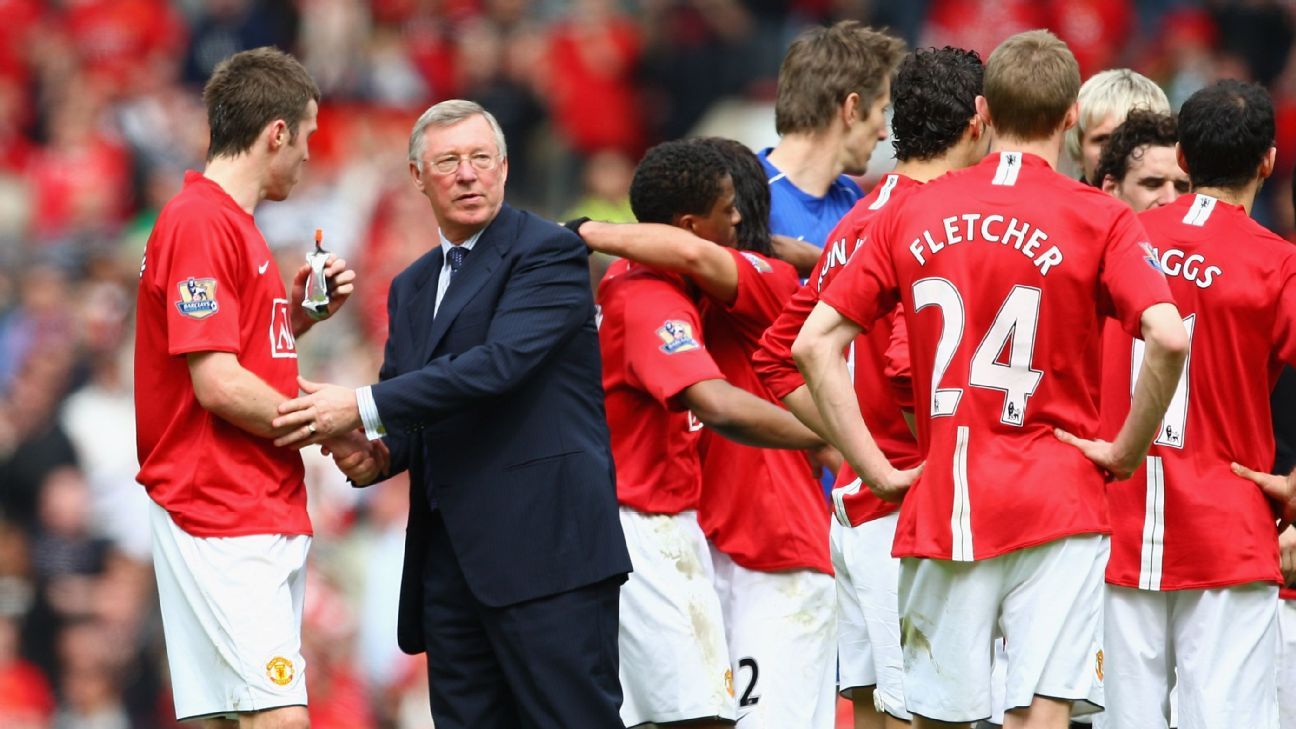
Michael Carrick has Manchester United DNA and, just one game into the interim head coach role at Old Trafford, is being heralded as the club’s savior, while the absence of any Tottenham Hotspur DNA in Thomas Frank’s background or football philosophy means he is now fighting to save his job.
OK, it’s not quite that simple, but it is heading that way. Coaching a leading football team has now become a zero-sum game whereby you either embrace the club’s traditions or do it differently and risk alienating supporters, as well as an increasingly vocal and influential cohort of former players — worse still, legends.
If you go your own way and ignore the club’s so-called DNA, you had better win … and win quickly.
But what is football DNA? It is a term that seems to be used only when a manager/head coach is struggling and the supporters and former players boil their difficulties down to that one simple, catch-all term for dissatisfaction.
When Man United fired Ruben Amorim earlier this month after a dismal 14-month reign as head coach at Old Trafford, former club captain and now pundit Gary Neville gave a clear statement as to what the club needed to pull itself out of a malaise that extends back to Sir Alex Ferguson’s retirement in May 2013.
“Man United have got to appoint a manager that fits the DNA of their club,” he said on Sky Sports. “Ajax will never change for anybody, Barcelona will never change for anybody. I don’t believe Man United should change for anybody.”
Whether by accident or design, United heeded Neville’s comments by interviewing three former players — Carrick, Ole Gunnar Solskjaer and Ruud van Nistelrooy — for the role of Amorim’s successor until the end of the season.
Carrick won the race and masterminded a 2-0 win against Manchester City in his first game in charge. United played fast, attacking and winning football to beat Pep Guardiola’s side and revive hopes of a top-four finish. United DNA? Absolutely.
But here’s where the theory breaks down. No manager has won more trophies in United’s illustrious history than Ferguson’s 48, but when he arrived from Aberdeen to take charge in November 1986, he had no connections to United whatsoever. He had spent his entire playing career in Scotland and the only “United” on his résumé was a year with Ayr United in 1973-74.
Similar stories apply to Arsene Wenger, who had no Arsenal DNA before arriving at the club from Japanese side Nagoya Grampus Eight in September 1996, and Jose Mourinho before his move to Chelsea from FC Porto in the summer of 2004.
Until Wenger took charge, Arsenal’s DNA was one of defensive organization and little flair — opposition fans would sing “Boring, Boring Arsenal” when facing the Gunners — but the Frenchman ripped up the Arsenal playbook and turned them into serial winners that played jaw-dropping attacking football.
Chelsea were regarded as entertainers without a winning mentality when Mourinho arrived, but he imposed his own brand of power, organization and direct football to spark an era of success at Stamford Bridge with a style of play that had not a single root in Chelsea’s DNA.
Meanwhile, Manchester City arguably bought Barcelona’s DNA by hiring Guardiola in the summer of 2016. The club’s owners wanted City to win everything by playing Barcelona-style football and Guardiola duly delivered. So what kind of DNA will their fans and legends call for when Guardiola vacates his post?
One thing is certain: No Arsenal, Chelsea or City fan will ever complain about Wenger, Mourinho or Guardiola changing their club’s DNA and turning them into winners.
Football DNA is ultimately nothing more than a code word for nostalgia; a comfort blanket in times of struggle when the warm glow of the past makes everything in the present day appear to be wrong and misjudged. And if you are Man United and the embodiment of the club’s DNA — Ferguson — is a constant presence at games in the directors’ box, the temptation to measure today’s team and head coach against the feats of the 84-year-old is impossible to resist.
2:52
Michallik: I can’t see Thomas Frank staying at Tottenham
ESPN FC’s Janusz Michallik reacts to Tottenham’s shocking 2-1 defeat to West Ham in the Premier League.
Spurs coach Frank doesn’t have an army of successful former players and managers to worry about because his club has become a byword for overpromising and underdelivering. If Spurs have a DNA, the code is recurring failure, yet the supporters still hark back the traditions of the 1950s and 1960s when the club won league titles and played an exciting brand of possession-based attacking football.
If a modern-day coach is expected to honor the traditions of the past, especially those from almost 80 years ago, they have no chance of success unless they are bold enough to face forward and do the job their way. As Ferguson, Wenger and Mourinho did.
But having some connection to a club’s DNA does give coaches the benefit of a longer honeymoon period than those who don’t.
Spurs supporters embraced the appointment of Frank last summer after several impressive seasons at Brentford, but as soon as they saw goalkeeper Guglielmo Vicario taking free kicks from inside the center circle and defender Kevin Danso hurling long throw-ins into the penalty area during the UEFA Super Cup final against Paris Saint-Germain at the start of the season, alarm bells began to ring.
Such direct football is definitely not part of Tottenham’s DNA, so Frank had to win to avoid his style of play becoming a problem. But, six months on, Spurs aren’t winning and Frank’s football has become a lightning rod that could, as early as this week, lead to him losing his job.
Carrick has no such concerns; United beat City by playing Ferguson-style football — the same that Carrick played in a United shirt — so not only does he have plenty of credit in the bank, his United DNA means there will soon be a clamor for him to get the job permanently if performances and results continue to reflect the great teams of the past.
It is nothing to do with DNA, though. It is all about winning. Nobody complains about the wrong DNA when a team is winning.
