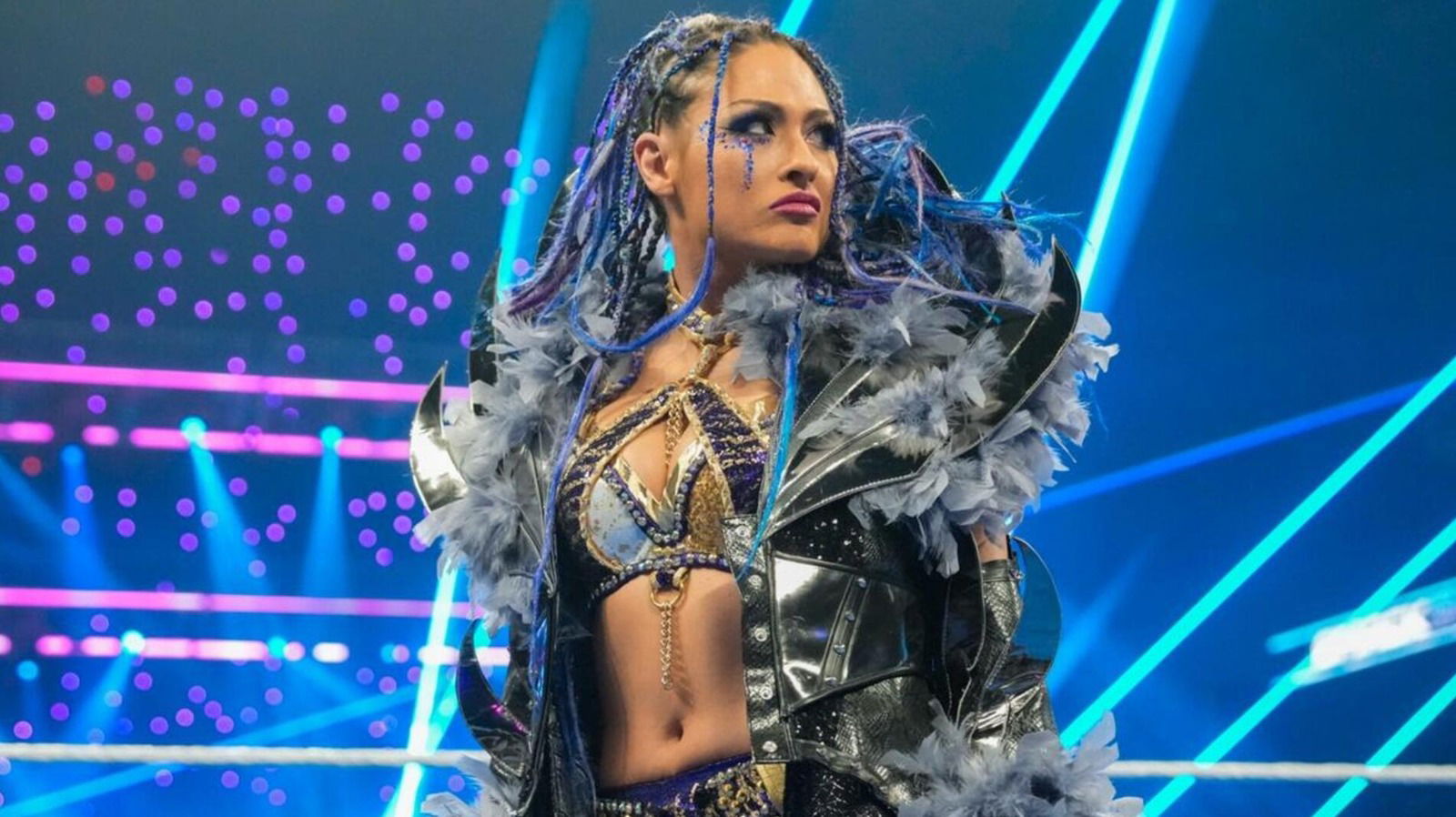
When Giulia signed with WWE, many fans assumed her trajectory was obvious. A global reputation, championship pedigree, and instant credibility all pointed toward fast tracking her as a centerpiece of the women’s division. Months later, the conversation around her role has shifted, and not in the way most expected.
Recent episodes of WWE SmackDown have quietly reframed that debate. Despite Giulia holding gold and sharing the ring with some of the division’s biggest names, the booking signals surrounding her partnership with Kiana James have led many observers to question who WWE actually sees as the priority.
That question gained traction after Giulia took the pinfall loss in a tag title match against Rhea Ripley and IYO SKY, despite being in her second reign as WWE Women’s United States Champion. Losses happen, but context matters, especially when paired with broader patterns.
On Wrestling Observer Radio, Dave Meltzer and Bryan Alvarez openly questioned whether WWE’s internal perception of the team has changed. Meltzer framed it less as speculation and more as an emerging conclusion. “I think that they have kind of come to the idea that Kiana James is actually the bigger star than Giulia,” he noted.
Alvarez pointed to recent results as evidence rather than coincidence. “Well, they are pushing her,” he added. “She got that big win a couple of weeks ago. She got the pin in the match to get them this match.” Meltzer expanded on that point by referencing the Royal Rumble. “She was also, I think, treated better in the Rumble too.”
The numbers back that up. Giulia recorded more eliminations, but her time in the Women’s Royal Rumble ended just over fifteen minutes in after being dumped out by Lyra Valkyria. James, by contrast, entered at number three and lasted nearly twenty eight minutes. Only a small handful of participants outlasted her, including Charlotte Flair, Raquel Rodriguez, IYO SKY, and eventual winner Liv Morgan.
In WWE, longevity and positioning often speak louder than championships, especially during transitional phases of a performer’s run. Who takes the fall, who gets the spotlight moments, and who survives the longest in marquee matches all shape how audiences are trained to perceive importance.
More broadly, this situation highlights a recurring tension in modern wrestling. Acclaimed international talent does not always translate into immediate booking dominance, especially when WWE prioritizes long term development and perceived upside over established reputation. Fan expectations are shaped by past success, but WWE’s evaluation criteria can follow a different logic entirely.
Whether this approach ultimately benefits Giulia or limits her momentum remains to be seen. What is clear is that SmackDown’s current presentation has complicated the assumption that her rise would be automatic, and that alone has shifted the conversation around her WWE future.
