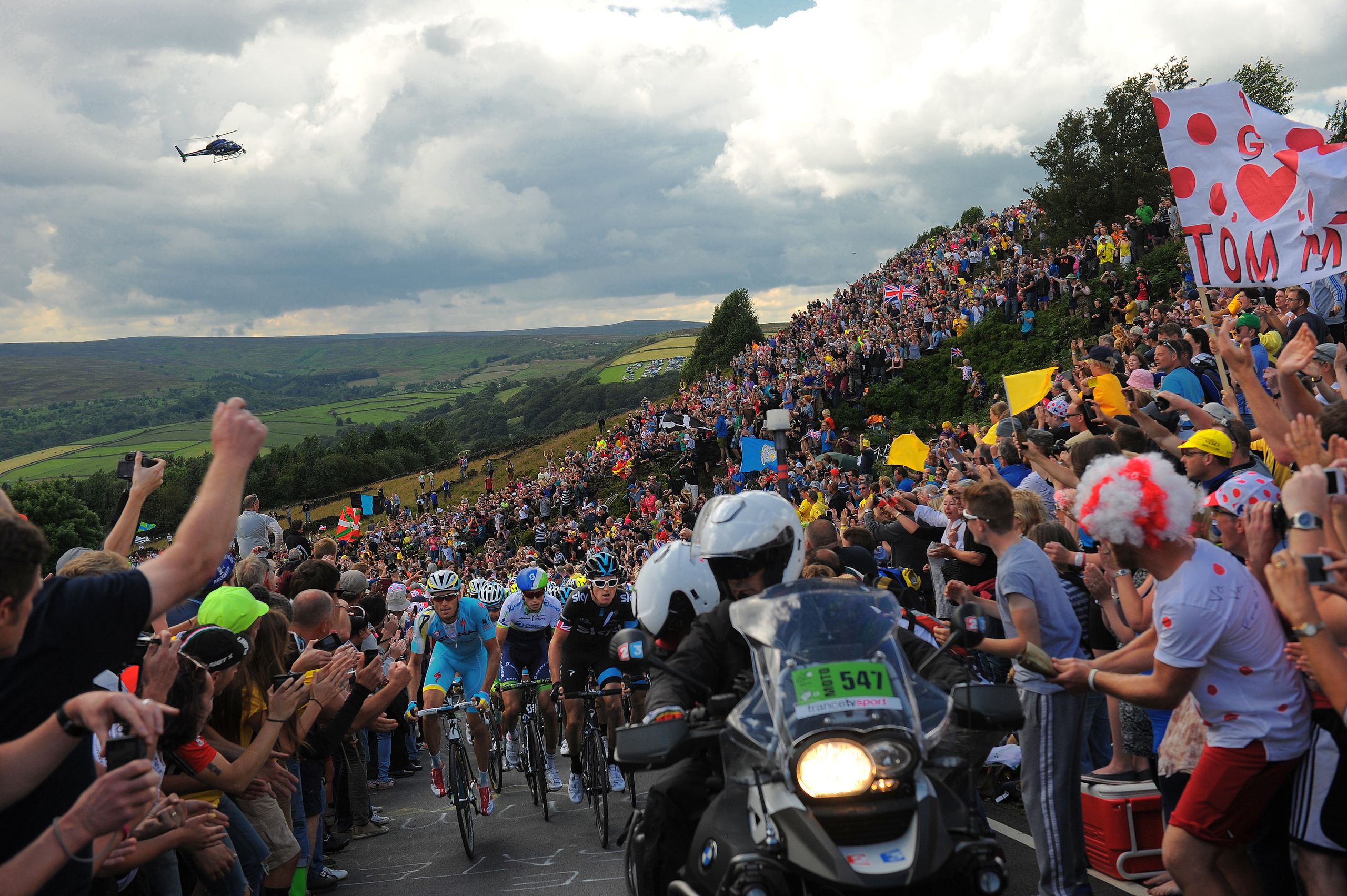
In was in a small town, just north of Leeds, when it first dawned on me. I was in the car, driving the route of stage one with our photographer Andy Jones when we came to a small rise in the road and had to stop. There were people at the side of the road, people walking up and down the road, people everywhere.
Leeds city centre had been packed for the roll out, but that was to be expected. The wide dual carriageway (A61, Scott Hall road) that took the riders north out of Leeds for their neutralised jaunt to Harewood House to meet the Royals was also busy with spectators. But here, in this little village, we got our first taste of what was to come.
“I think we’re going to see something special today.” I said to Andy as I took pictures through the windscreen. I tried to send them back to the office but the little mobile coverage there was, was clearly being taken up by everybody else who had descended onto the roads of Yorkshire that day.
Simon Richardson
12 years on from the 2014 Grand Départ, Simon can’t wait to see what the Tour de France looks like in Britain again.
Stage one of the 2014 Tour de France blew everyone’s expectations clean out of the water and set a new benchmark for Grand Departs. The two stages in London and Kent in 2007 (before the UCI changed it’s rules to allow a Grand Tour to have three days out of the country followed by an early rest day) had been a success, but Yorkshire was on another level.
ASO were clearly taken aback, as were the riders themselves, who spent most of the day ducking out of the way of mobile phones held out for a photo, and trying not to ride into spectators who were spilling onto the road.
On the day, the peloton came to the decision not to race. Jens Voigt was left out in front to get the KOM Points as the bunch, sensing the danger, played it safe. A tough parcours was essentially nullified, and the race was decided in a sprint finish in Harrogate, won by a dominant Marcel Kittel after Mark Cavendish crashed out and broke his collarbone.
Afterwards, rather than berate the crowds, riders said in interviews that maybe it was them who would have to adapt how they rode. Clearly amazed by the crowds, and clearly not wanting to complain about such a reception.
The Yorkshire team, led by Gary Verity, had pulled off a masterstroke. Two years on from the London Olympics, they proved the appetite for major sporting events was still there. While no Olympic events had spread that far north in 2012, sportspeople from Yorkshire famously won medal after medal for Team GB, and at one point, Yorkshire was sitting top five in the medal table.
2014 was Yorkshire’s moment in the spotlight, and they made the most of it. Yellow spray-painted bikes were everywhere, from shop windows to front gardens. Villages competed against each other to decorate and theme their high streets, while businesses and schools all went Tour mad in the build-up. The result was those two stages in Yorkshire setting a new standard for Tour de France Grands Départs.
Since then, foreign hosts have followed suit. The Netherlands in 2015, Germany in 2017, Denmark in 2022, then Spain, and Italy. Foreign Grands Départs have consistently raised the bar and almost become the norm. By the time the yellow jersey lands back in the UK it will be the fifth Grand Depart in six years.
Comparisons to 2014 will be unavoidable, but the 2027 bid has already set a new benchmark by becoming the first foreign Grand Depart to host both the men’s and the women’s race in the same year. Something that Sport England or exchequer funding will have insisted upon.
So already there’s more to look forward to. More towns to get involved and more opportunities for people to come out and cheer on the greatest sporting event in the world. So find an old bike, spray paint it yellow and start making plans to get out and see as much of it as you can.
Explore More
